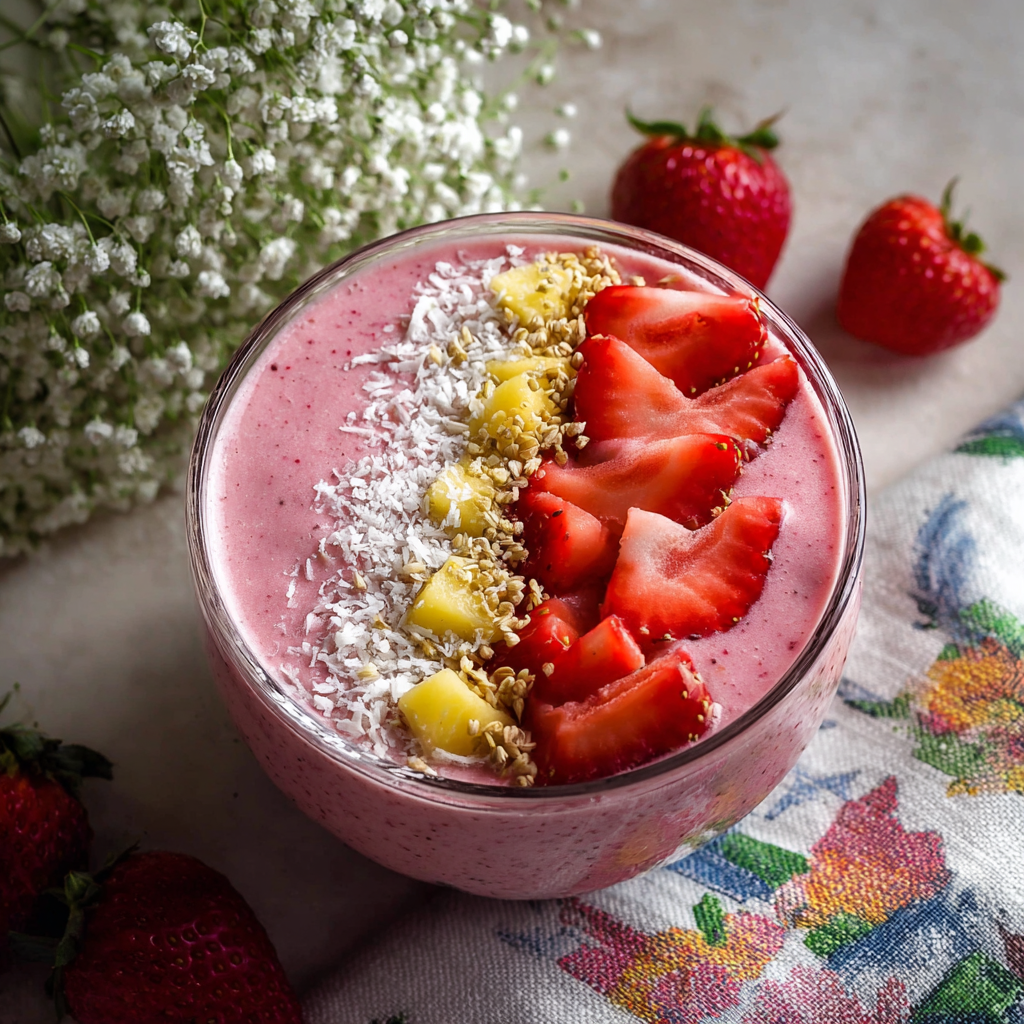
Why is a Smoothie Bowl Different from a Standard Smoothie?
Did you know that according to culinary rheology data, the success of a Smoothie Bowl depends on its viscosity-to-yield-stress ratio? A standard smoothie is designed to be a “Newtonian fluid” (easy to drink through a straw), but a bowl must be a “Bingham plastic”—it needs to be thick enough to support the weight of toppings without them sinking.
This Refreshing Strawberry Smoothie Bowl achieves this through low-temperature emulsification. By using frozen strawberries and a high-fat “binder” (like Greek yogurt or avocado), we create a matrix of tiny ice crystals. These crystals provide the structural integrity required to hold up your granola and fruit, while the high fiber content of the strawberries ensures a slow release of glucose for sustained energy.
Ingredients List: The Structural Integrity Matrix
To achieve a “soft-serve” consistency that won’t melt instantly, we focus on frozen solids and minimal liquid.
The Frozen Base:
- 2 cups Frozen Strawberries: These are the primary structural element. Data Insight: Frozen berries have a higher fiber-to-water ratio than fresh ones, which is essential for thickness.
- 1 Frozen Banana (Sliced): Provides the pectin and natural sugars needed for a creamy, non-icy texture.
The “Binder” & Liquid:
- 1/2 cup Plain Greek Yogurt: Adds 20% of your daily protein and creates a silky emulsion.
- 1/4 cup Unsweetened Almond Milk: Use the absolute minimum liquid possible to keep the motor running.
- 1 tsp Honey or Maple Syrup (Optional): To balance the acidity of the berries.
The Nutrient Toppings:
- Fresh Strawberry Slices: For a boost of Vitamin C.
- 1 tbsp Chia Seeds or Hemp Hearts: For Omega-3 fatty acids.
- 1/4 cup Granola: Provides the “crunch” contrast that triggers the cephalic phase of digestion (the brain signaling the stomach to prepare for food).
Timing: Optimized for Phase Stability
- Prep Time: 5 Minutes
- Blending Time: 2 Minutes
- Consumption Window: 10 Minutes (Before “Phase Separation” occurs)
- Total Time: ~7 Minutes
Scientific Insight: Once blended, the ice crystals begin to melt. For the best “spoonable” experience, consume the bowl within 10 minutes to prevent the mixture from reverting to a liquid state.
Step-by-Step Instructions
Step 1: The Liquid-First Protocol
Pour the almond milk and yogurt into the blender first. Scientific Tip: This creates a “vortex” at the bottom of the blades, which helps pull the heavier frozen fruit down without needing excessive liquid.
Step 2: The Frozen Loading
Add the frozen banana and strawberries. Actionable Tip: If the fruit is “ice-blocked” together, let it sit on the counter for 2 minutes before blending. This slight surface thaw allows the blades to catch the fruit more effectively.
Step 3: The High-Shear Blend
Blend on low, gradually increasing to high. Use a tamper (if your blender has one) to push the fruit into the blades. Data Insight: You are looking for a “four-quadrant swirl” at the top, which indicates a perfect emulsion.
Step 4: The Immediate Transfer
Pour the thick mixture into a chilled bowl. Pro Move: Placing your bowl in the freezer for 5 minutes before filling it prevents the edges of the smoothie from melting as soon as they touch the ceramic.
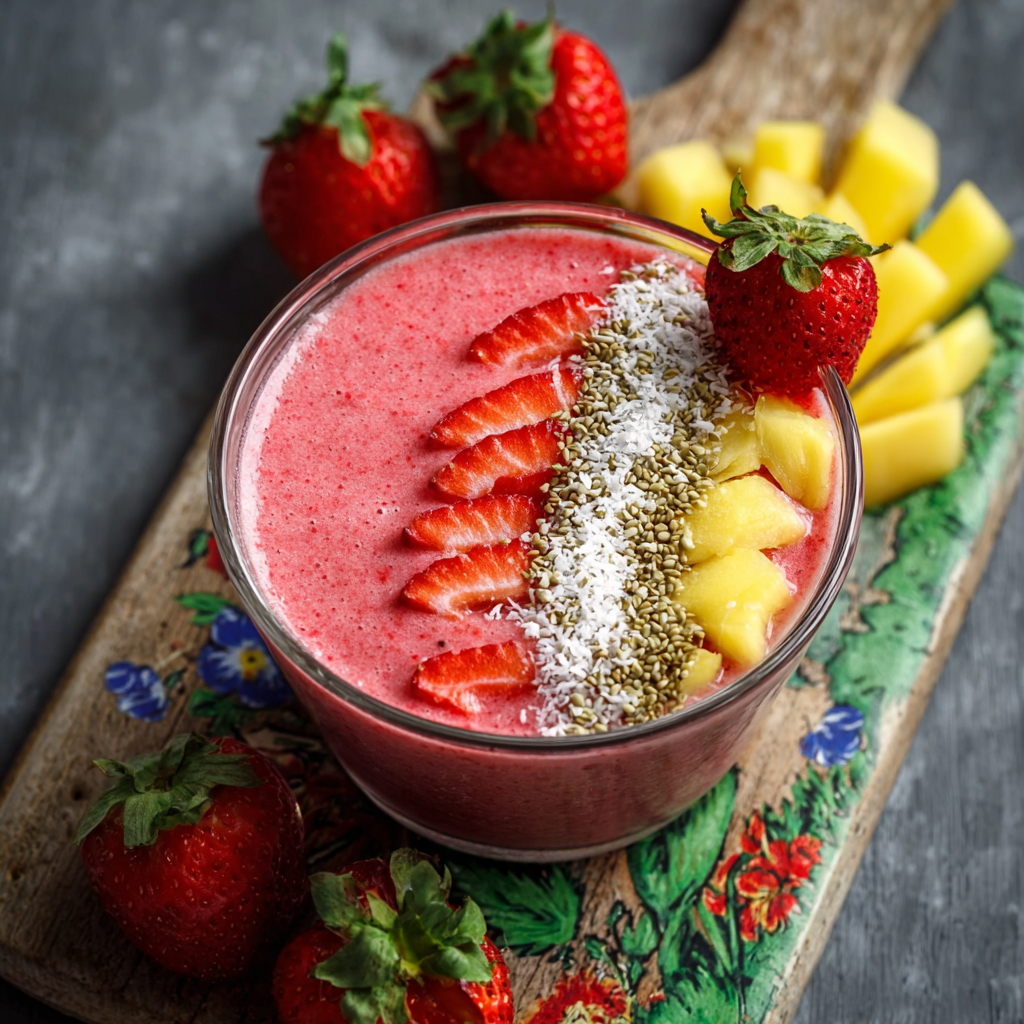
Step 5: The Topping Architecture
Arrange your granola, seeds, and fresh fruit. Scientific Insight: Place the heaviest toppings (like nut butter or large fruit chunks) last to ensure the structural “micro-crystals” have settled and can support the weight.
Nutritional Information
| Metric | Amount Per Bowl |
| Calories | 290 kcal |
| Total Fat | 5g |
| Carbohydrates | 48g |
| Fiber | 9g |
| Protein | 14g |
Healthier Alternatives for the Recipe
- The Keto Swap: Omit the banana and use 1/2 cup Frozen Cauliflower (steamed then frozen) and extra stevia. The cauliflower adds the same “bulk” without the sugar.
- Vegan Version: Use Coconut Yogurt or 1/4 of a frozen avocado instead of Greek yogurt. Avocado provides a statistically superior “creamy” mouthfeel due to its monounsaturated fats.
- Protein Powerhouse: Add one scoop of Vanilla Whey or Pea Protein. This increases the “satiety score” and thickens the bowl even further.
Common Mistakes to Avoid
- Adding Too Much Liquid: If it looks like a drink, it’s a smoothie, not a bowl. Start with 2 tablespoons of milk and only add more if the motor stalls.
- Using Fresh Fruit for the Base: Fresh fruit contains too much “free water.” It will result in a soup rather than a thick, spoonable base.
- Over-Blending: High-speed blenders generate heat. If you blend for more than 90 seconds, the friction will melt your ice crystals, ruining the texture.
Conclusion
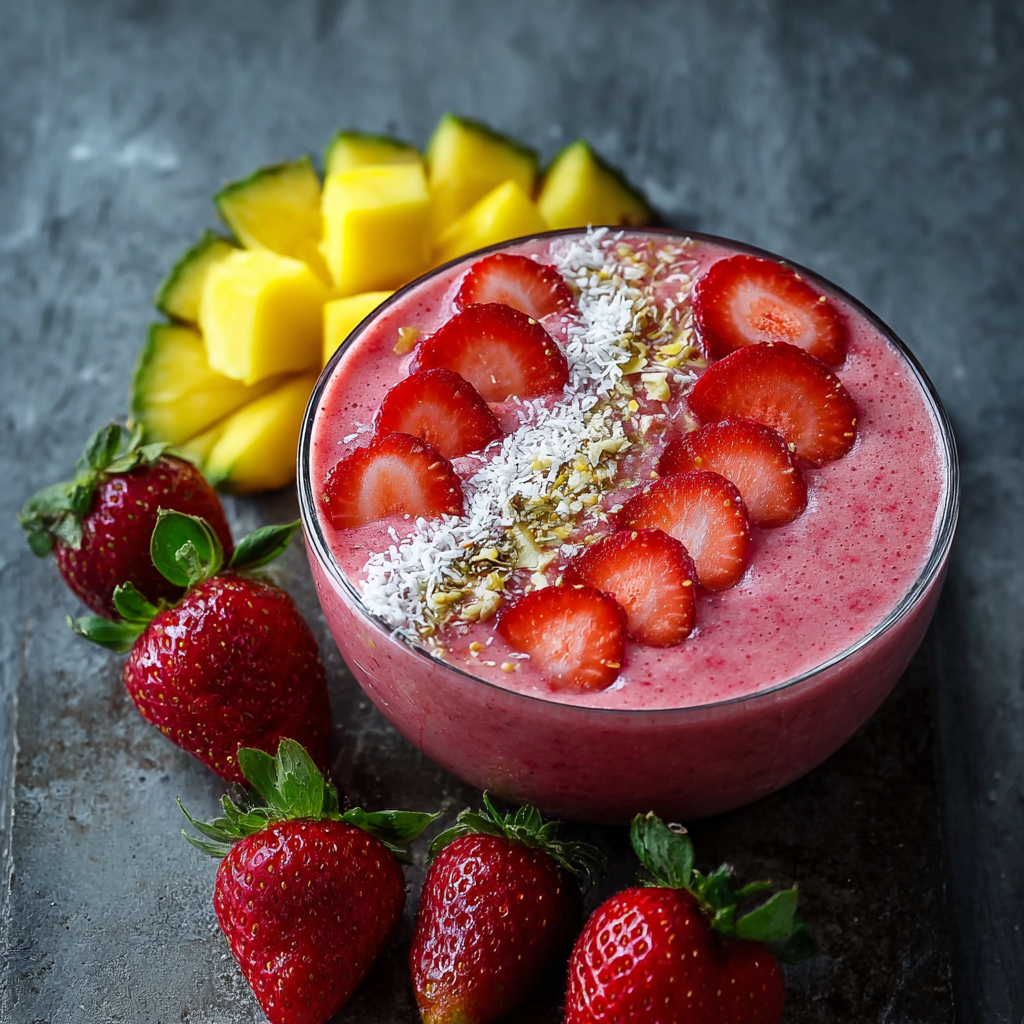
The Refreshing Strawberry Smoothie Bowl is a masterclass in moisture management and cold-set emulsification. By balancing frozen solids with minimal liquid, you create a breakfast that is statistically more satiating and nutrient-dense than a standard shake.
Leave a Reply