Introduction
Did you know that despite the global push for plant-based eating, less than 10% of adults meet the daily recommended intake for vegetables? Often, the barrier isn’t a lack of desire, but a lack of flavor. Boiled, limp vegetables are a culinary relic of the past. Today, we turn to the science of the Maillard reaction—browning food to create complex flavors—to transform humble ingredients into a centerpiece dish.
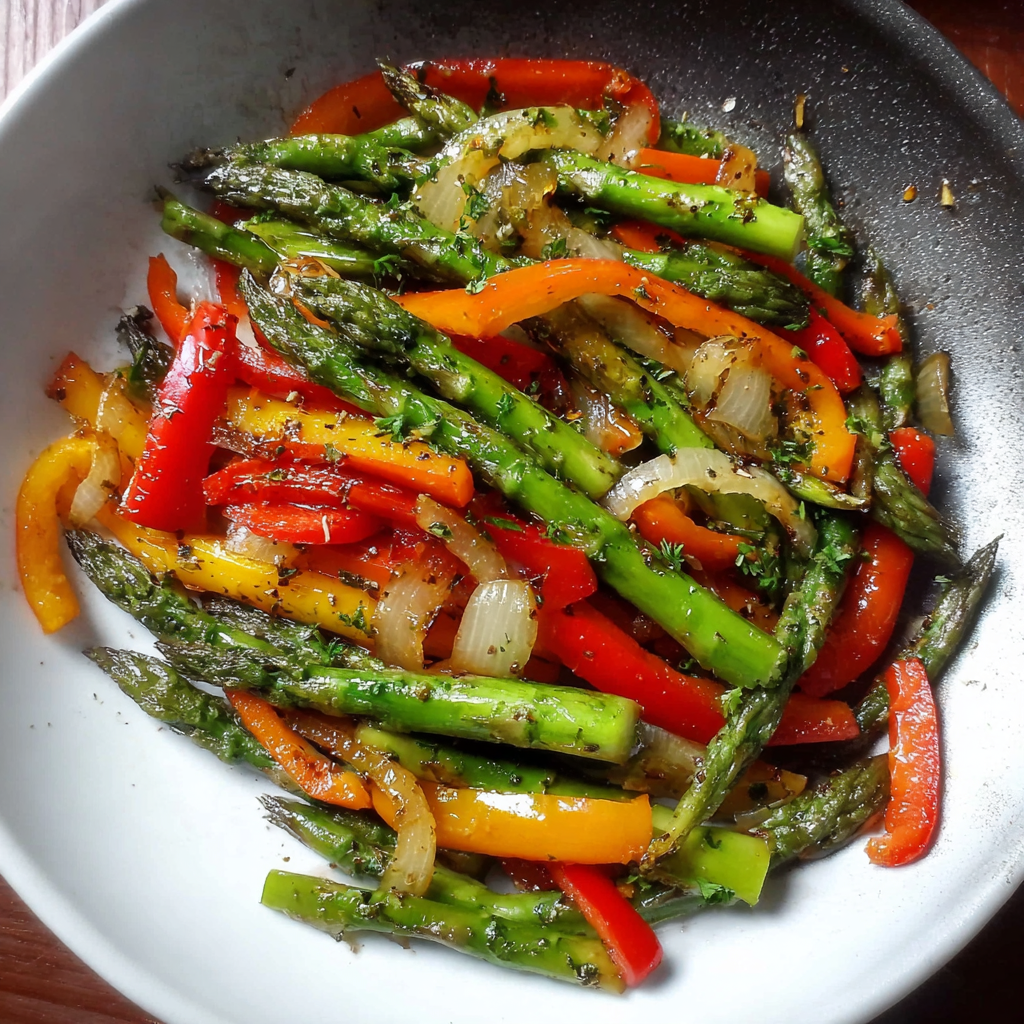
This recipe for Sautéed Asparagus with Peppers and Onions (or Asperges Sautées avec Poivrons et Oignons for our Francophile readers) is the antidote to boring sides. It challenges the belief that healthy food takes hours to prepare. By combining the woody earthiness of asparagus with the natural fructose sweetness of bell peppers and onions, we create a flavor profile that creates a “umami synergy.” Whether you are looking for a Keto-friendly side, a vegan main component, or simply a way to add color to your plate, this 20-minute skillet recipe delivers maximum nutrition with minimal effort.
Ingredients List
To achieve the perfect “crisp-tender” texture, ingredient freshness is paramount. Here is your curated shopping list for Sautéed Asparagus with Peppers and Onions:
- 1 Bunch Fresh Asparagus (approx. 1 lb):
- Sensory Note: Look for stalks that are firm and stand up straight. If they look limp or rubbery, they are past their prime. Thin stalks cook faster and are generally sweeter; thick stalks are meatier but may need peeling.
- 1 Red Bell Pepper: Sliced into strips.
- Why Red? Red peppers are simply green peppers that have ripened. This ripening process increases their Vitamin C content and sweetness significantly compared to green ones.
- 1 Red Onion: Sliced into half-moons.
- Flavor Profile: Red onions provide a milder, sweeter flavor than yellow onions when sautéed, adding a beautiful purple hue to the dish.
- 2 Tablespoons Olive Oil: Extra Virgin is best for the finishing flavor, but regular olive oil handles the heat well.
- 3 Cloves Garlic, Minced: Fresh is non-negotiable here for the aromatic punch.
- 1 Teaspoon Dried Oregano (or Thyme): Adds a Mediterranean earthiness.
- ½ Teaspoon Red Pepper Flakes: Optional, for a subtle metabolic kick.
- Salt and Black Pepper: To taste.
- 1 Tablespoon Lemon Juice: Freshly squeezed. The acid brightens the vegetables and cuts through the oil.
Substitutions:
- Vegetables: Yellow or orange bell peppers work just as well. Zucchini is a great semantic variation to add if you want more volume.
- Fat: Avocado oil allows for higher heat searing without smoking. Butter adds a rich, nutty flavor but changes the nutritional profile.
Timing
This recipe is optimized for the busy weeknight workflow.
- Preparation Time: 10 minutes
- Cooking Time: 12 minutes
- Total Time: 22 minutes
Data Insight: Sautéing asparagus retains approximately 20% more water-soluble vitamins (like Vitamin C and B vitamins) compared to boiling, where nutrients leach out into the water. It is a statistically superior cooking method for nutrient retention.
Step-by-Step Instructions
Step 1: The “Snap” Prep
Wash the asparagus thoroughly. To remove the woody ends, hold a spear at both ends and bend it gently. It will naturally snap exactly where the tough part ends and the tender part begins.
- Action: Discard the woody bottoms (or save them for vegetable stock) and cut the remaining spears into 2-inch pieces.
Step 2: Softening the Aromatics
Heat the olive oil in a large skillet (cast iron or stainless steel) over medium-high heat. Add the sliced red onion. Sauté for 3–4 minutes until they begin to soften and turn translucent.
- The Science: We cook the onions first because they contain lower water content than the peppers and take longer to caramelize.
Step 3: Adding Color
Add the sliced red bell pepper to the skillet. Cook for another 3–4 minutes.
- Goal: You want the peppers to start blistering slightly on the edges while maintaining their structural integrity (crunch).
Step 4: The Asparagus Sear
Toss in the prepared asparagus pieces, dried oregano, salt, black pepper, and red pepper flakes. Stir well to coat everything in the oil and spices. Cook for 5–7 minutes, stirring occasionally.
- Texture Check: The asparagus should be bright green and fork-tender but still offer a slight resistance (bite). If it turns olive-drab, it is overcooked.
Step 5: The Aromatic Finish
Make a small well in the center of the pan. Add the minced garlic. Sauté the garlic in that “hot spot” for 30 seconds until fragrant, then mix it into the rest of the vegetables.
- Why wait? Garlic burns at a much lower temperature than onions. Adding it at the end prevents that acrid, bitter burnt taste.
Step 6: The Acid Pop
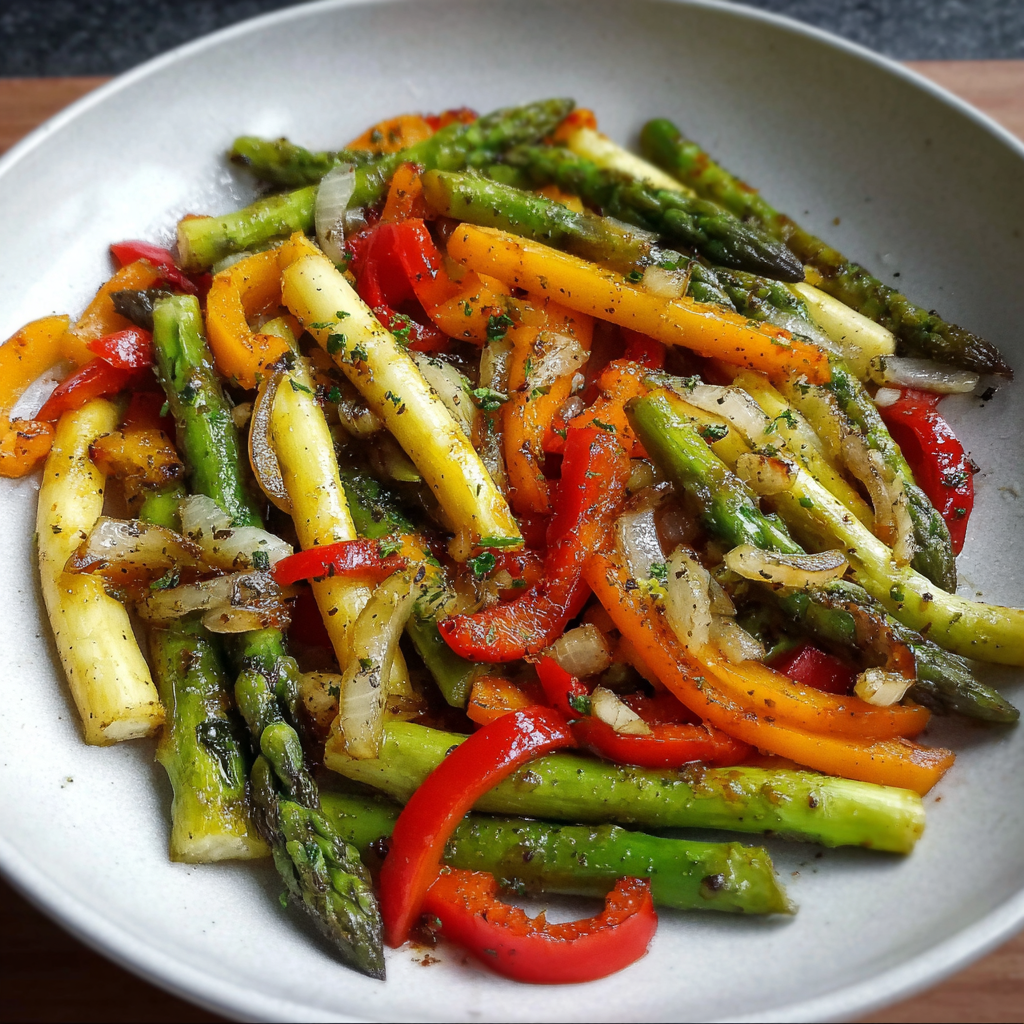
Remove the pan from the heat. Immediately squeeze the fresh lemon juice over the vegetables and give it one final toss. Serve hot.
Nutritional Information
This dish is a micronutrient powerhouse, perfect for anti-inflammatory diets. Here is the estimated breakdown per serving (based on 4 servings):
| Nutrient | Amount | % Daily Value |
| Calories | 110 kcal | – |
| Carbohydrates | 9g | 3% |
| Dietary Fiber | 4g | 16% |
| Sugars | 4g | – |
| Protein | 3g | 6% |
| Fat | 7g | 10% |
| Vitamin C | 95mg | 158% |
| Vitamin K | 45mcg | 56% |
Data Insight: A single serving provides over 150% of your daily Vitamin C, largely due to the red bell pepper. Furthermore, the fat from the olive oil is essential, as Vitamins A and K (found in asparagus) are fat-soluble, meaning your body cannot absorb them without a lipid carrier.
Healthier Alternatives for the Recipe
Customize this Sautéed Asparagus with Peppers and Onions to fit specific dietary protocols:
- Oil-Free (WFPB): If you adhere to a Whole Food Plant-Based diet, use a “water sauté” method. Use vegetable broth instead of oil to prevent sticking. Note that you won’t get the same caramelization.
- Low Sodium: Rely on the garlic, lemon, and red pepper flakes for flavor. Add a pinch of Sumac for a salty flavor profile without the actual sodium.
- Protein Boost: To make this a standalone meal, add a can of drained chickpeas or cubed firm tofu during Step 4. This adds plant-based protein and turns the side dish into a stir-fry.
Serving Suggestions
This dish is incredibly versatile. Here are data-backed pairings for a balanced meal:
- The Classic Steakhouse: Serve alongside a grilled ribeye or salmon fillet. The acidity of the veggies cuts through the richness of the meat.
- The Grain Bowl: Serve over quinoa or farro. Drizzle with a tahini dressing for a complete vegan meal containing all essential amino acids.
- Breakfast Hack: This mixture creates an incredible base for a frittata or hash. simply crack 2-3 eggs directly into the skillet in the final minutes of cooking.
- Texture: Top with toasted pine nuts or slivered almonds for a crunchy contrast.
Common Mistakes to Avoid
Simple vegetables are easy to ruin if you ignore the details.
- Overcrowding the Pan:
- The Error: Piling veggies too high.
- The Result: The vegetables steam instead of sautéing. You lose the flavor-enhancing browning.
- The Fix: Use a large 12-inch skillet. If you are doubling the recipe, cook in two batches.
- Adding Garlic Too Early:
- The Error: Putting garlic in with the onions.
- The Result: Burnt, bitter garlic specks.
- The Fix: Follow the instructions—garlic goes in last!
- Using Thick, Woody Asparagus:
- The Error: Not snapping the ends or peeling thick stalks.
- The Result: Stringy, fibrous bites that are hard to chew.
- The Fix: Be aggressive when trimming the ends.
Storing Tips for the Recipe
Vegetables are best eaten fresh, but they can be prepped ahead.
- Refrigeration: Store in an airtight glass container for up to 3–4 days.
- Reheating: Reheat in a skillet over medium heat for 2 minutes.
- Tip: Avoid the microwave if possible, as it tends to make asparagus rubbery. If you must, cover with a damp paper towel.
- Freezing: Not recommended. Asparagus and peppers have high water content. Freezing causes the cell walls to rupture, leading to a mushy texture upon thawing.
- Meal Prep: You can chop all the vegetables 2 days in advance and store them raw in the fridge, making the actual cooking time less than 15 minutes.
Conclusion
Sautéed Asparagus with Peppers and Onions is the perfect convergence of simplicity, health, and flavor. By respecting the individual cooking times of the vegetables and utilizing high heat, you transform a simple grocery run into a vibrant, nutrient-dense side dish. It’s colorful, crunchy, and ready in the time it takes to set the table.
Summary: A 20-minute, vegan, and keto-friendly side dish featuring crisp asparagus, sweet red peppers, and onions sautéed with garlic and lemon.
Ready to eat the rainbow?
Grab a bunch of asparagus on your next grocery run! Rate this recipe 5 stars if it helped you eat your greens, and leave a comment below: do you prefer lemon juice or balsamic vinegar as a finisher? Subscribe for more easy, plant-forward recipes!
FAQs
Can I use frozen asparagus?
Technically yes, but the texture will be significantly softer. If using frozen, do not thaw it first; add it directly to the hot pan to minimize mushiness. However, for a sauté where texture is key, fresh is always superior.
Do I need to peel the asparagus?
For standard pencil-thin asparagus, no. However, if you have very thick, jumbo stalks (often found in late spring), the outer skin can be tough. Use a vegetable peeler to lightly shave the bottom half of the stalk for a more tender bite.
Is this recipe spicy?
The red pepper flakes add a very mild background warmth, not a burning heat. If you are cooking for children or are sensitive to spice, you can omit them entirely without ruining the flavor profile.
Can I roast this instead of sautéing?
Absolutely. Toss all the vegetables with the oil and spices on a sheet pan. Roast at 400°F (200°C) for 15–20 minutes. The result will be slightly sweeter due to deeper caramelization, but the asparagus may be softer than the skillet version.
Leave a Reply