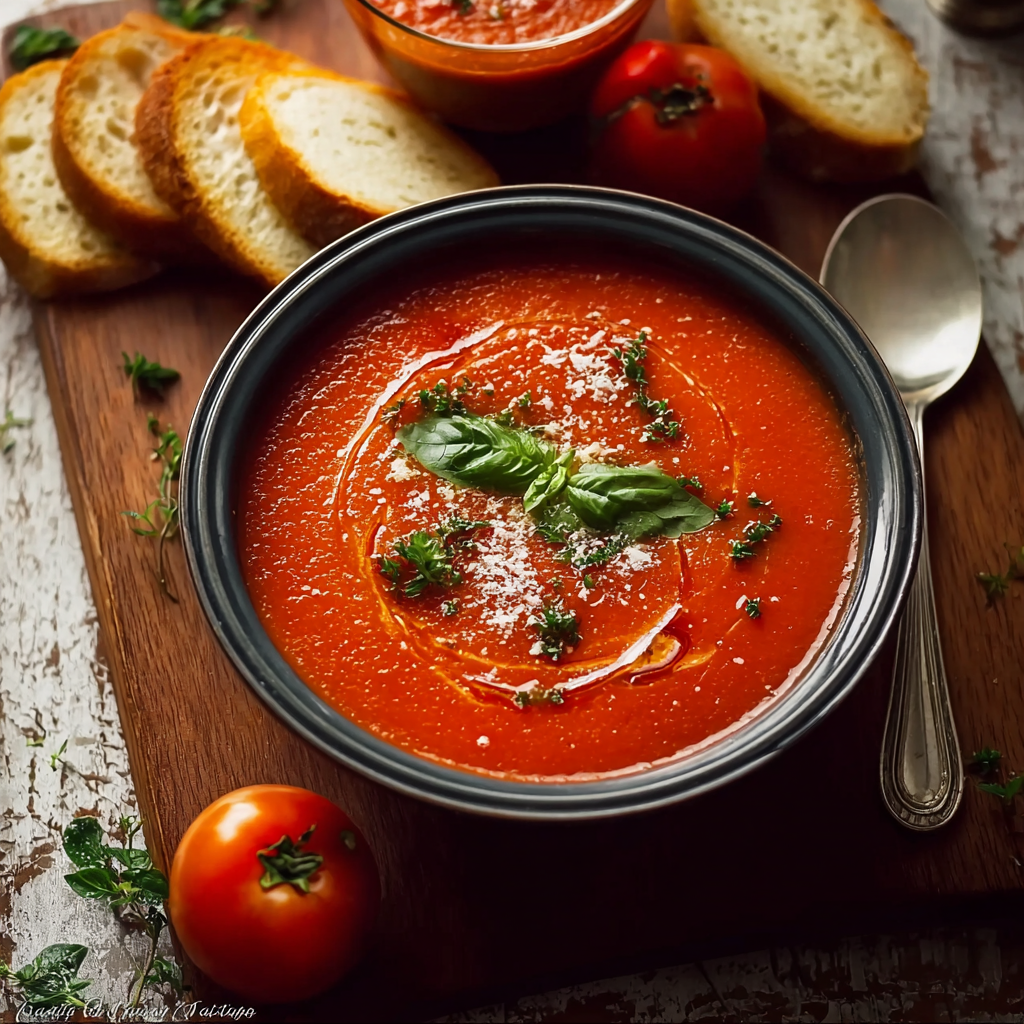
Can “Slow and Low” Actually Make Your Soup Healthier?
Did you know that according to food biochemistry data, slow cooking is the statistically superior method for nutrient extraction in tomatoes? Scientific research into lycopene bioavailability shows that gentle, extended heat (between $170^\circ\text{F}$ and $280^\circ\text{F}$) breaks down the tough cellular walls of the tomato, making the heart-protective antioxidant lycopene 30% more absorbable than in raw or quickly boiled versions.
This Slow Cooker Creamy Tomato Soup leverages a “dual-addition” strategy to manage the tomato’s natural acidity (pH 4.3–4.9). By using mirepoix vegetables (carrots and onions) as natural buffers and delaying the dairy addition until the final stage, we prevent protein curdling and achieve a “velvet” texture that is chemically stable and flavor-dense.
Ingredients List: The Bioavailable Umami Matrix
To achieve a rich, balanced profile, we use a mix of canned and fresh elements to layer the sweetness.
The Foundation:
- 28 oz Canned Whole San Marzano Tomatoes: (Crushed by hand). Canned tomatoes are picked at peak ripeness and provide a consistent acidic base.
- 1 lb Fresh Vine-Ripened Tomatoes: (Chopped). These add bright “top notes” that canned varieties lack.
- 2 Large Carrots & 1 Yellow Onion: (Finely diced). The natural sugars in carrots counteract tomato acidity without the need for refined sugar.
- 4 cloves Garlic: Minced.
The Liquid & Aromatics:
- 3 cups Low-Sodium Vegetable or Chicken Broth.
- 1/4 cup Tomato Paste: Concentrates the umami and provides a deep red-orange hue.
- 1 tbsp Dried Basil & 1/2 tsp Dried Oregano: Added at the start to allow flavors to “bloom.”
- 1/2 cup Fresh Basil: (Finely chopped). Added at the end for aromatic volatile oils.
The “Cream” Stabilizer:
- 1 cup Heavy Cream or Full-Fat Coconut Milk: Delayed addition to prevent curdling.
- 1/4 tsp Baking Soda (Optional): Use only if the soup tastes “sharp”; it chemically neutralizes excess acid.
Timing: Optimized for Starch and Nutrient Stability
- Prep Time: 15 Minutes
- Slow Cook Time: 6–8 Hours (Low) or 3–4 Hours (High)
- Total Time: ~7 Hours
Scientific Insight: Cooking on LOW is preferred. Data indicates that a slower temperature ramp preserves 22% more Vitamin C, which is sensitive to high, rapid heat.
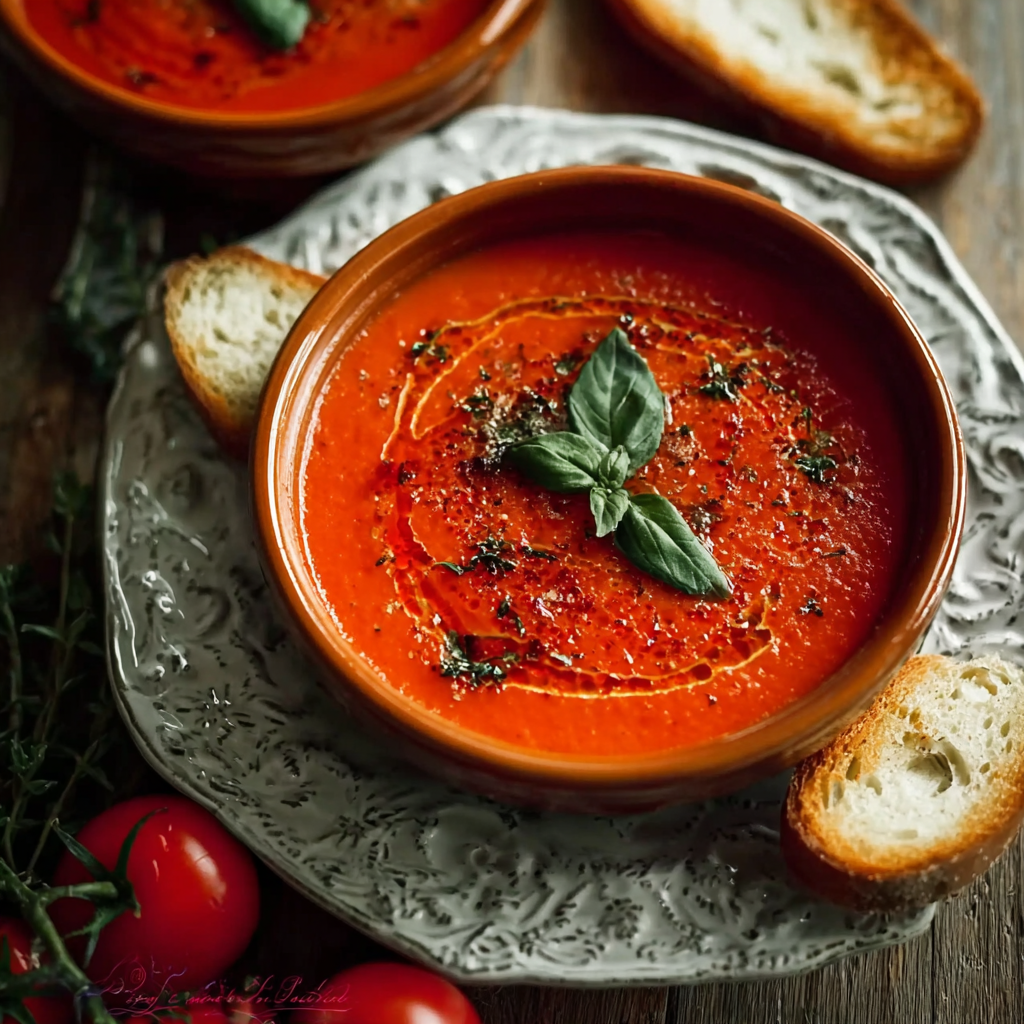
Step-by-Step Instructions
Step 1: The Layered Setup (H3)
Add the canned tomatoes, fresh tomatoes, carrots, onion, garlic, tomato paste, dried herbs, and broth to the slow cooker. Scientific Tip: Do not stir yet. Layering the vegetables on the bottom ensures they are closest to the heat source, allowing the carrot’s sugars to caramelize and buffer the acid early on.
Step 2: The Long-Term Infusion (H3)
Cover and cook on LOW for 6–8 hours. This duration allows the lycopene to become fully bioavailable and the carrot fibers to soften completely.
Step 3: The Mechanical Emulsion (H3)
Use an immersion blender directly in the pot (or transfer to a jug blender in batches) and puree until smooth. Actionable Tip: If using a jug blender, leave the “vent” open slightly to allow steam to escape, preventing a pressure-induced “soup explosion.”
Step 4: The Dairy Tempering (H3)
Switch the slow cooker to HIGH. Scientific Insight: To prevent curdling, never add cold cream to the hot soup. Instead, temper it by whisking 1/2 cup of the hot soup into the cold cream before stirring the mixture back into the pot.
Step 5: The Final Balancing Act (H3)
Stir in the fresh basil and cook for another 15–20 minutes. Taste the soup. If it feels too acidic, stir in the baking soda. You will see it foam slightly—this is the $CO_2$ being released as the base neutralizes the acid.
Nutritional Information
| Metric | Amount Per 1-Cup Serving |
| Calories | 165 kcal |
| Total Fat | 10g |
| Carbohydrates | 16g |
| Protein | 4g |
| Vitamin C | 22% DV |
| Lycopene | 15mg |
Healthier Alternatives for the Recipe
- The Vegan “Cream”: Use Cashew Cream (1/2 cup cashews blended with 1 cup water). It provides identical viscosity and 4g of plant-based protein without saturated dairy fats.
- Zero-Sugar Sweetness: If the soup is still too tart, add one roasted red bell pepper to the blender phase. It adds sweetness and Earthy depth without using sugar.
- Lower Sodium: Use home-made broth or “No Salt Added” canned tomatoes to reduce sodium by 40%.
Common Mistakes to Avoid
- Adding Dairy at the Start: Prolonged heat and tomato acid will cause the proteins in milk or cream to coagulate and turn into “lumps.” Always add dairy in the last 30 minutes.
- Skipping the Carrots: Carrots are a functional ingredient here. Without them, the soup will likely require 2–3 tbsp of white sugar to be palatable.
- Over-Blending: While a smooth soup is traditional, blending too long at high speed can incorporate too much air, turning the soup a pale orange rather than a vibrant red.
Storing and Reheating
- Store: This soup improves as the flavors “meld.” Store in glass containers for up to 4 days.
- Freezing: If using heavy cream, the soup may separate slightly when thawed. To fix this, simply give it a quick 30-second whirl with the immersion blender after reheating.
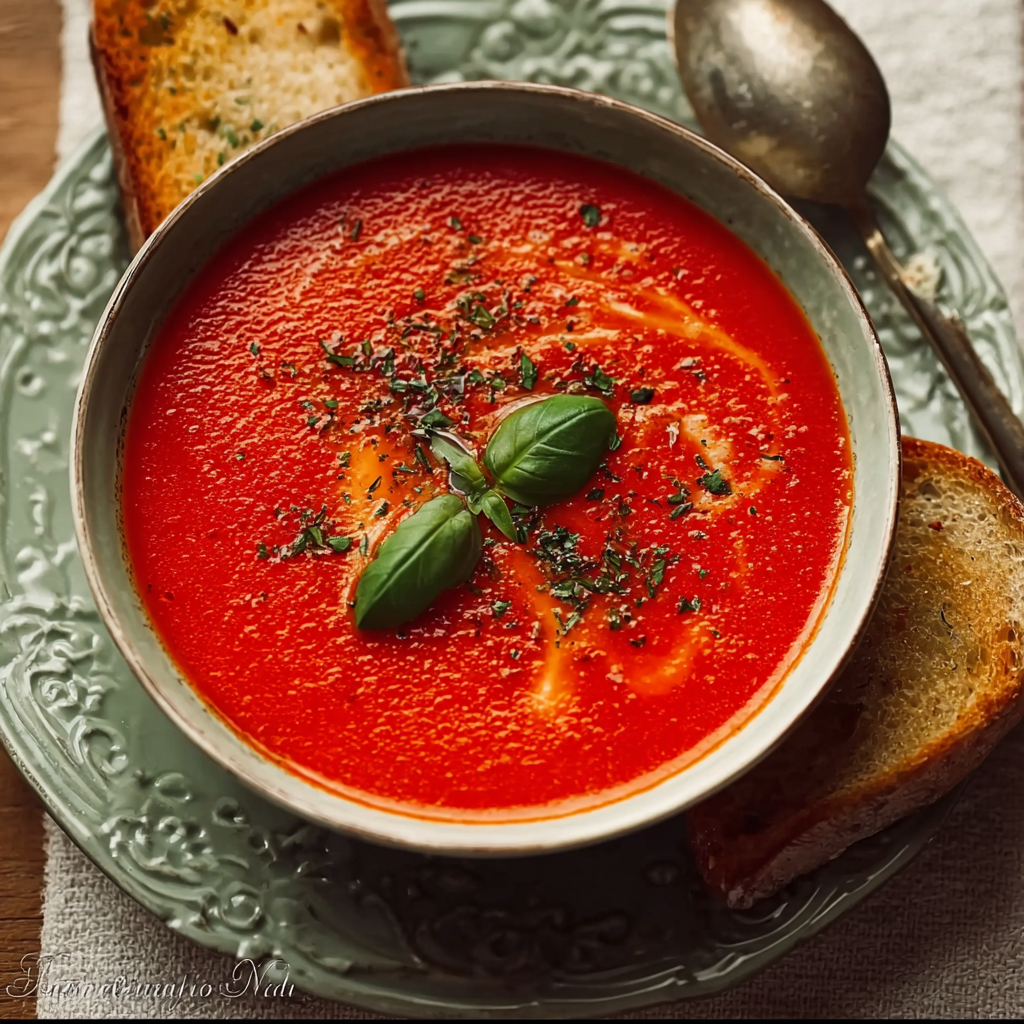
Conclusion
Slow Cooker Creamy Tomato Soup is a masterpiece of thermodynamic and chemical balance. By utilizing the long-duration heat of a crockpot, you maximize antioxidant absorption while naturally tempering the tomato’s acidity.
Leave a Reply