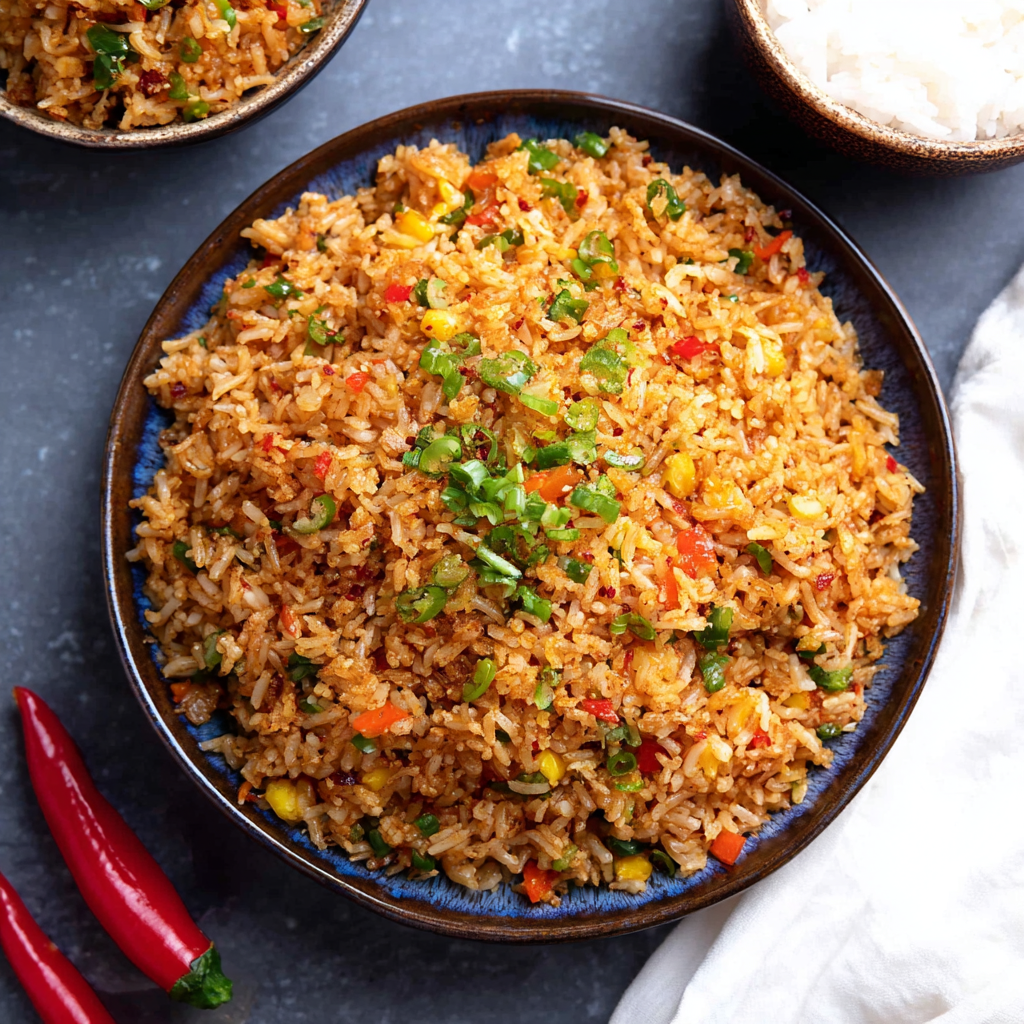
Why Does “Day-Old” Rice Actually Fry Better?
Did you know that according to culinary thermodynamic research, the secret to non-mushy Spicy Chilli Garlic Fried Rice is a process called starch retrogradation? When rice is cooked and then cooled (especially for 24 hours at $4^\circ\text{C}$), the amylose molecules realign into a more rigid structure.
This transformation increases the amount of resistant starch, which not only lowers the glycemic index of the meal but also creates a “dry shell” around each grain. This shell acts as a heat shield, allowing the rice to sear in the oil without absorbing too much moisture or clumping. Scientific tests show that freshly cooked rice contains too much surface moisture, which turns into steam in the pan, essentially re-steaming your rice into a gummy texture rather than frying it.
Ingredients List: The “Indo-Chinese” Essentials
This recipe uses a “layered” approach to heat, utilizing both fresh aromatics and a concentrated chili-garlic paste for depth.
The Rice & Protein:
- 3 cups Day-Old Long Grain Rice: (Basmati or Jasmine). Ensure it is thoroughly chilled and clumps are broken up.
- 2 Large Eggs: Whisked (for a protein-rich binder).
- 1/2 cup Protein of Choice: (Optional: Diced chicken, firm tofu, or edamame).
The Chilli Garlic “Flash” Paste:
- 8–10 Garlic Cloves: Minced (half for the paste, half for the stir-fry).
- 4–5 Dried Red Chillies: Soaked in hot water and ground into a coarse paste with garlic.
- 1 tsp Red Chilli Flakes: For visible texture and immediate heat.
The Aromatic Base & Sauces:
- 2 tbsp Neutral Oil: (Peanut or Vegetable oil for high smoke point).
- 1/2 cup Mixed Vegetables: Finely chopped carrots, beans, and bell peppers.
- 1 tbsp Soy Sauce & 1 tsp Rice Vinegar: For fermented umami and acidity.
- 1/2 tsp MSG: (Optional, but statistically significant for the “restaurant” taste).
- Spring Onion Greens: For garnish.
Timing: High-Velocity Stir-Frying
- Prep Time: 15 Minutes
- Cook Time: 8 Minutes
- Total Time: 23 Minutes
Efficiency Insight: Fried rice is a “velocity dish.” Once the wok is hot, you have less than 10 minutes of active cooking time. Ensure all ingredients are chopped and within arm’s reach before you turn on the heat.
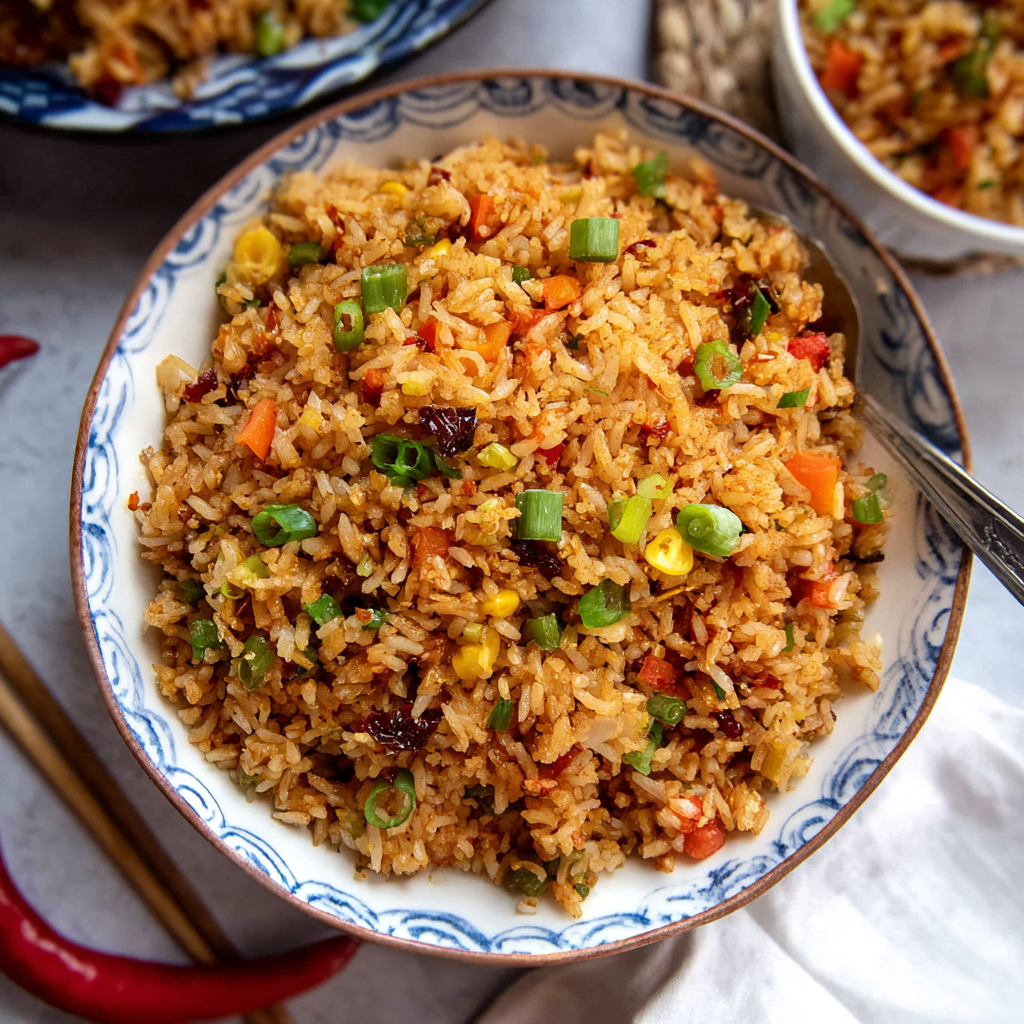
Step-by-Step Instructions
Step 1: The Chilli Garlic Emulsion (H3)
Blend your soaked chillies and half the garlic into a coarse paste. Scientific Tip: Use a little of the soaking water to help the blades catch; this paste provides the “background” heat that permeates the rice grains.
Step 2: The “Aromatic Bloom” (H3)
Heat your wok until it just starts to smoke. Add the oil and the remaining minced garlic. Sauté for 30 seconds until golden. Actionable Tip: If you like “burnt garlic” flavor, let it go to a deep tan, but be careful—garlic turns bitter instantly once it crosses the threshold into dark brown.
Step 3: The Vegetable Sear (H3)
Toss in your carrots, beans, and peppers. Stir-fry on high heat for 2 minutes. Data Insight: High heat allows the vegetables to brown on the outside while remaining “crisp-tender” inside, maintaining their structural integrity.
Step 4: The Egg Scramble (H3)
Push the vegetables to the side. Pour in the whisked eggs. Scramble them until they are 80% set, then incorporate them back into the vegetables.
Step 5: The Rice Tossing (H3)
Add the cold rice and the chilli garlic paste. Pro Tip: Use a flat spatula or a ladle to press the rice against the sides of the hot wok. This maximizes contact with the hot surface, creating the “Wok Hei” (smoky breath) effect.
Step 6: The Final Seasoning (H3)
Drizzle the soy sauce and vinegar around the edges of the wok, not directly on the rice. The sauce will caramelize on the hot metal before sliding down, adding a deeper flavor profile. Add the chilli flakes, salt, and MSG. Toss for one final minute on maximum heat.
Nutritional Information
| Metric | Amount Per Serving (1.5 cups) |
| Calories | 385 kcal |
| Total Fat | 12g |
| Carbohydrates | 56g |
| Protein | 12g |
| Sodium | 680mg |
Common Mistakes to Avoid
- Using Fresh Rice: As discussed, the moisture will lead to “mush.” If you must use fresh rice, spread it thin on a baking sheet and put it in the freezer for 15 minutes to surface-dry.
- Crowding the Pan: If you are making a large batch, cook in two stages. Too much rice lowers the pan temperature, turning your “fry” into a “stew.”
- Low Heat: Without high heat, the sauces won’t caramelize, and the rice will taste oily and heavy rather than light and toasted.
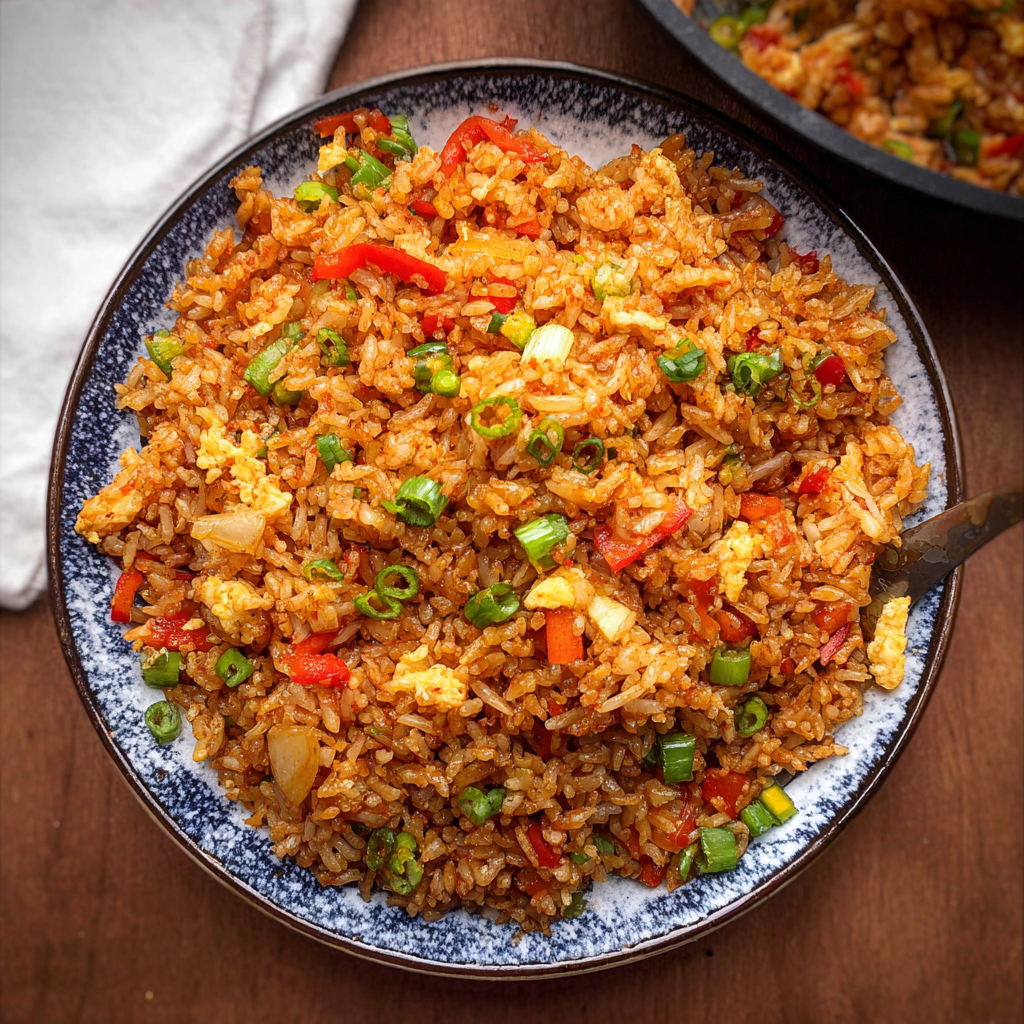
Conclusion
Spicy Chilli Garlic Fried Rice is a masterclass in aromatic layering. By utilizing the science of starch retrogradation and the high-heat Maillard reaction, you transform simple leftovers into a high-energy, restaurant-quality meal.
Leave a Reply