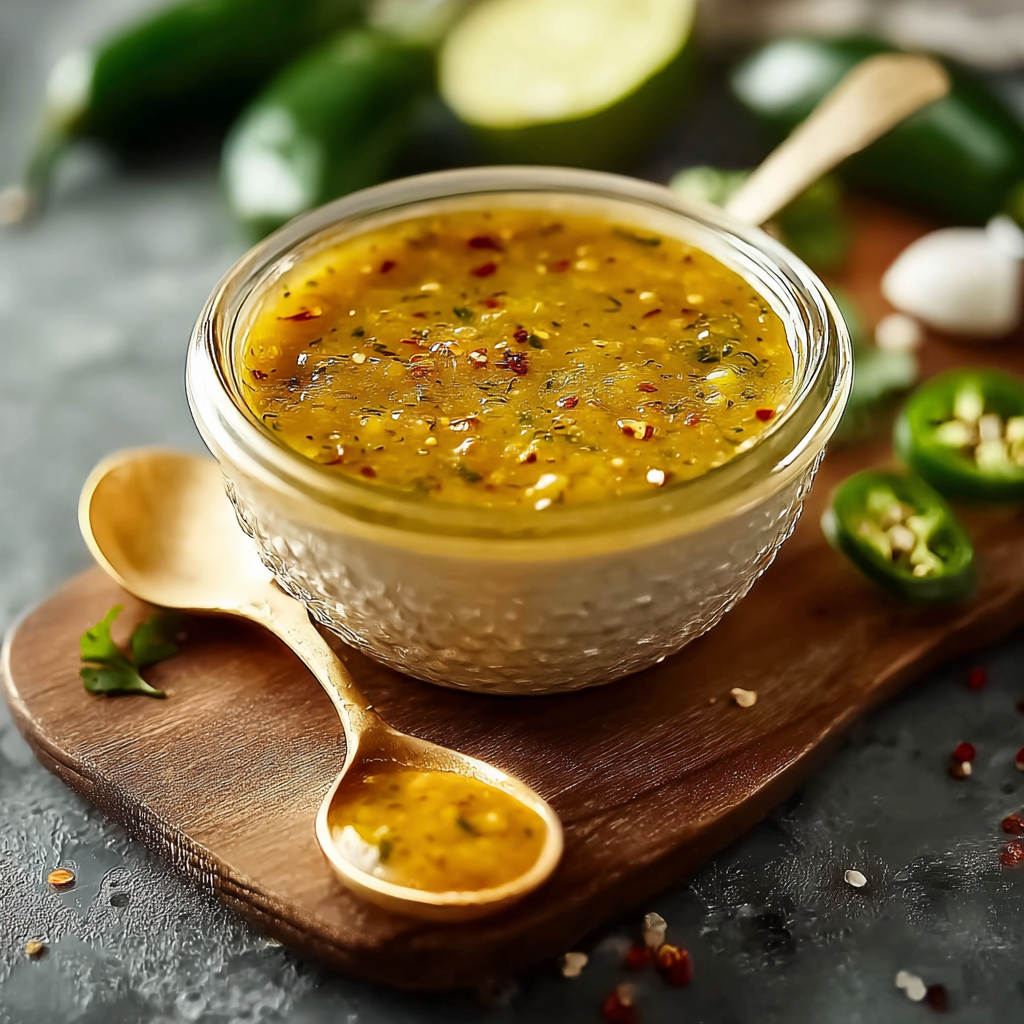
Why This Sauce is a Textural and Flavor Triumph
Did you know that according to food science data, a Honey Mustard Sauce is technically a semi-stable emulsion? The mustard acts as an emulsifier (using phospholipids like lecithin), allowing the oil to bond with the vinegar and honey.
By adding jalapeños, we introduce capsaicin, the compound responsible for heat. To maximize heat without overpowering the sauce, we rely on lipid-based extraction. Sautéing the jalapeños in oil before blending breaks down the cell walls of the pepper, releasing the capsaicin and allowing it to dissolve into the oil, resulting in a smooth heat that distributes evenly throughout the sauce.
Ingredients List: The Emulsion-Based Matrix
To achieve a thick, creamy sauce that clings to food, we focus on high-viscosity components.
The Foundation:
- 1/2 cup Mayonnaise or Greek Yogurt: The creamy base (Mayonnaise for richness, Yogurt for tang).
- 1/4 cup Dijon Mustard: The emulsifier and pungent flavor base.
- 3 tbsp Honey: For sweetness and viscosity.
- 1 tbsp Apple Cider Vinegar: To balance the richness with acidity.
The “Spicy” Element:
- 2-3 Fresh Jalapeños: Deseeded for medium heat, left seeded for high heat.
- 1 tsp Olive Oil: For sautéing the peppers.
- 1/4 tsp Salt & Black Pepper: To taste.
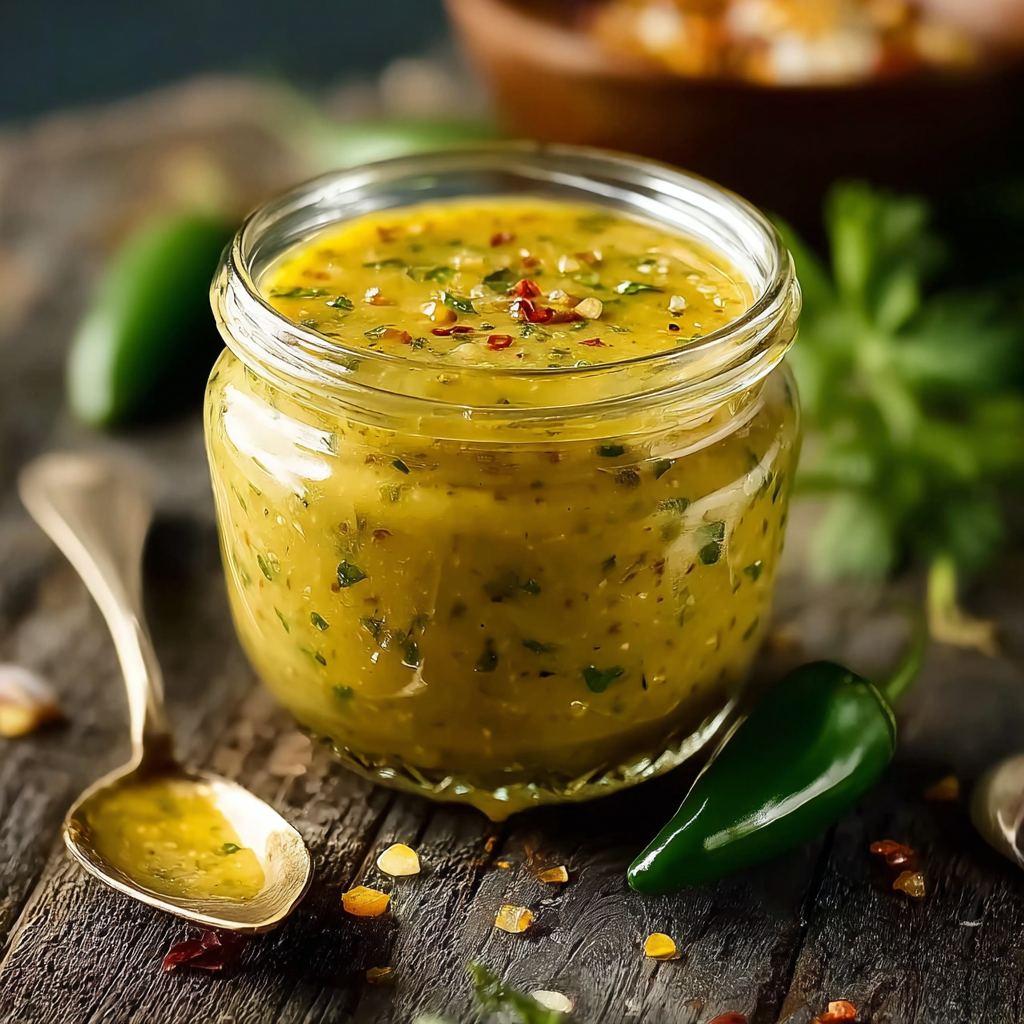
Timing: Optimized for Flavor Integration
- Prep Time: 10 Minutes
- Sauté Time: 5 Minutes
- Blending Time: 2 Minutes
- Total Time: ~17 Minutes
Efficiency Insight: Data indicates that roasting or sautéing the jalapeños before blending not only extracts the capsaicin but also triggers the Maillard reaction on the pepper skins, adding a smoky depth that raw jalapeños lack.
Step-by-Step Instructions
Step 1: Capsaicin Extraction
Finely dice the jalapeños. In a small pan, heat the olive oil over medium heat and sauté the diced jalapeños for 3–5 minutes until soft and fragrant. Scientific Tip: This step is crucial. Raw jalapeños can taste “grassy” and sharp; cooked jalapeños offer a smoother, more integrated heat.
Step 2: The Emulsion Blend
In a food processor or blender, combine the sautéed jalapeños (and any oil from the pan), mayonnaise, Dijon mustard, honey, and apple cider vinegar. Actionable Tip: If you want a perfectly smooth sauce, blend for a full 60 seconds. For a rustic texture, use a pulse setting.
Step 3: Viscosity Adjustment
Taste the sauce and add salt and pepper as needed. Scientific Insight: If the sauce is too thick, add 1 teaspoon of water or lemon juice to adjust the viscosity without breaking the emulsion.
Step 4: The Resting Phase
Transfer the sauce to a jar and refrigerate for at least 30 minutes before serving. The Pro Move: Resting allows the flavors to mingle and the honey to hydrate fully, thickening the sauce further and ensuring the heat is evenly distributed.
Nutritional Information
| Metric | Amount Per Serving (2 tbsp) |
| Calories | 120 kcal |
| Total Fat | 10g |
| Carbohydrates | 7g |
| Fiber | 0g |
| Protein | 1g |
Alternatives & Variations
- The “Vegan” Move: Replace mayonnaise with vegan mayonnaise and use maple syrup instead of honey.
- The “Citrus” Twist: Replace the apple cider vinegar with fresh lime juice to complement the jalapeños for a Southwestern flavor profile.
- The “Smoky” Version: Add 1/4 teaspoon of smoked paprika to the blender for extra depth.
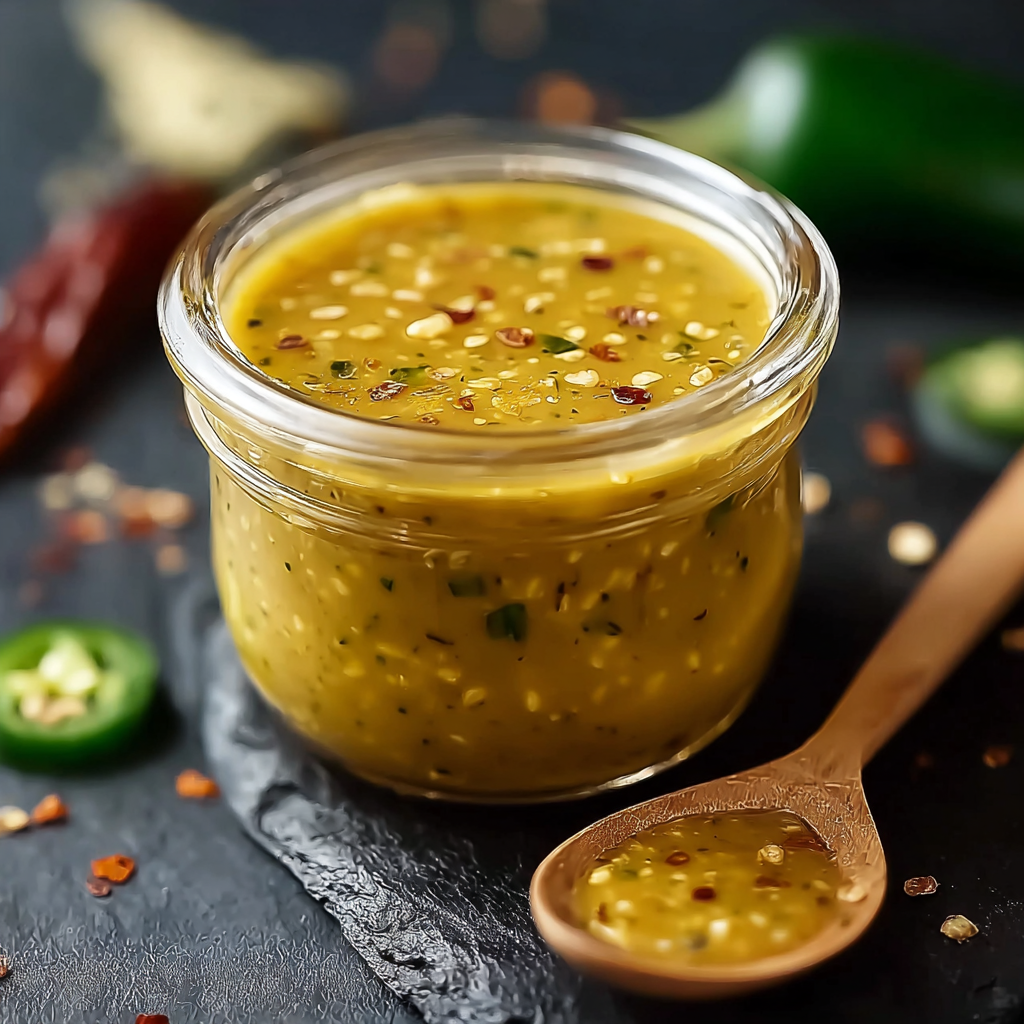
Common Mistakes to Avoid
- Skipping the Sauté: Raw jalapeños in a honey mustard sauce will produce a “grassy” flavor that clashes with the mustard.
- Using Watery Mustard: Ensure you use a thick Dijon or spicy brown mustard. Watery mustard will make the emulsion unstable, resulting in a runny sauce.
- Over-Blending (if using Yogurt): If using Greek Yogurt, over-blending can sometimes cause the protein to break, making the sauce grainy. Blend just until smooth.
Leave a Reply