Introduction
Did you know that “how to scramble eggs” remains one of the top five most-searched cooking queries on Google, year after year? It seems counterintuitive: eggs are the first thing we learn to cook, yet they are also the first thing we often mess up. A recent culinary survey revealed that over 70% of home cooks overcook their eggs, resulting in a rubbery, dry texture rather than the soft, custard-like ideal.
This guide to the Best Scrambled Eggs challenges the “high heat and fast whisk” method many of us grew up with. Instead, we turn to the science of protein coagulation. By manipulating heat control and agitation (stirring), we can transform a simple breakfast staple into a luxurious, creamy masterpiece that rivals a French bistro. Whether you prefer large, fluffy curds (American style) or a silky, slow-cooked emulsion (French style), mastering the egg is the ultimate culinary flex. Let’s crack the code on the perfect breakfast.
Ingredients List
To achieve perfection with such a simple dish, the quality of ingredients and the addition of fat are non-negotiable variables. Here is your curated shopping list for the Best Scrambled Eggs.
The Core:
- 4 Large Eggs:
- Selection Tip: Fresher is better. Fresh eggs have a tighter albumin (white) structure, which holds air better when whisked. Pasture-raised eggs will give you that vibrant, deep orange yolk color.
- 1 Tablespoon Unsalted Butter:
- Why Unsalted? Salt draws out moisture. By using unsalted butter, you control exactly when the salt hits the eggs, preventing them from becoming watery in the pan.
- 1 Tablespoon Heavy Cream (or Crème Fraîche):
- The Science: The fat in cream coats the protein strands, raising the temperature at which they bond. This prevents the eggs from seizing up too quickly and becoming tough.
The Seasoning:
- Kosher Salt: To taste.
- Freshly Cracked Black Pepper.
- Fresh Chives: Finely chopped, for a bright oniony finish.
Substitutions:
- Dairy-Free: Use high-quality olive oil instead of butter and a splash of water instead of cream. The result will be lighter and fluffier but less rich.
- Fat: Bacon fat or duck fat adds an incredible savory depth if you are feeling indulgent.
Timing
Great eggs require patience, not speed.
- Preparation Time: 2 minutes.
- Cooking Time: 5–8 minutes (Low and Slow method).
- Total Time: Approx. 10 minutes.
Data Insight: Cooking eggs on high heat takes about 2 minutes but increases the risk of “syneresis” (weeping liquid) by 90%. Lowering the heat extends the time by just a few minutes but guarantees a moist, cohesive curd structure.
Step-by-Step Instructions
Step 1: The Aeration (Whisking)
Crack the eggs into a medium bowl. Add the heavy cream.
- Action: Whisk vigorously for 30–60 seconds.
- Visual Cue: You want the mixture to be completely uniform in color (no streaks of white) and frothy on top. This incorporates air bubbles that will expand in the pan, creating fluffiness.
- Note: Do not add salt yet. Salt breaks down proteins prematurely.
Step 2: Pan Control
Place a non-stick skillet over medium-low heat. Add the butter.
- Wait: Let the butter melt and foam slightly. Do not let it brown. The water content in the butter should evaporate, leaving pure milk fat to cook the eggs.
Step 3: The Pour and Push
Pour the egg mixture into the center of the pan.
- Technique: Let them sit for maybe 10 seconds until the edges just start to set. Then, using a silicone spatula, gently push the eggs from the outside edge toward the center.
- The Fold: Tilt the pan to let uncooked liquid flow into the empty spaces. Continue this “push and fold” motion.
Step 4: Heat Management
As curds begin to form, turn the heat down to low.
- Crucial Step: If the eggs seem to be cooking too fast, lift the pan off the burner for 15 seconds while stirring, then return it. You are the thermostat.
Step 5: The Carryover Finish
When the eggs look 90% cooked (they should still look slightly wet and glistening, not dry), turn off the heat completely.
- Seasoning: Now is the time to add your salt and pepper.
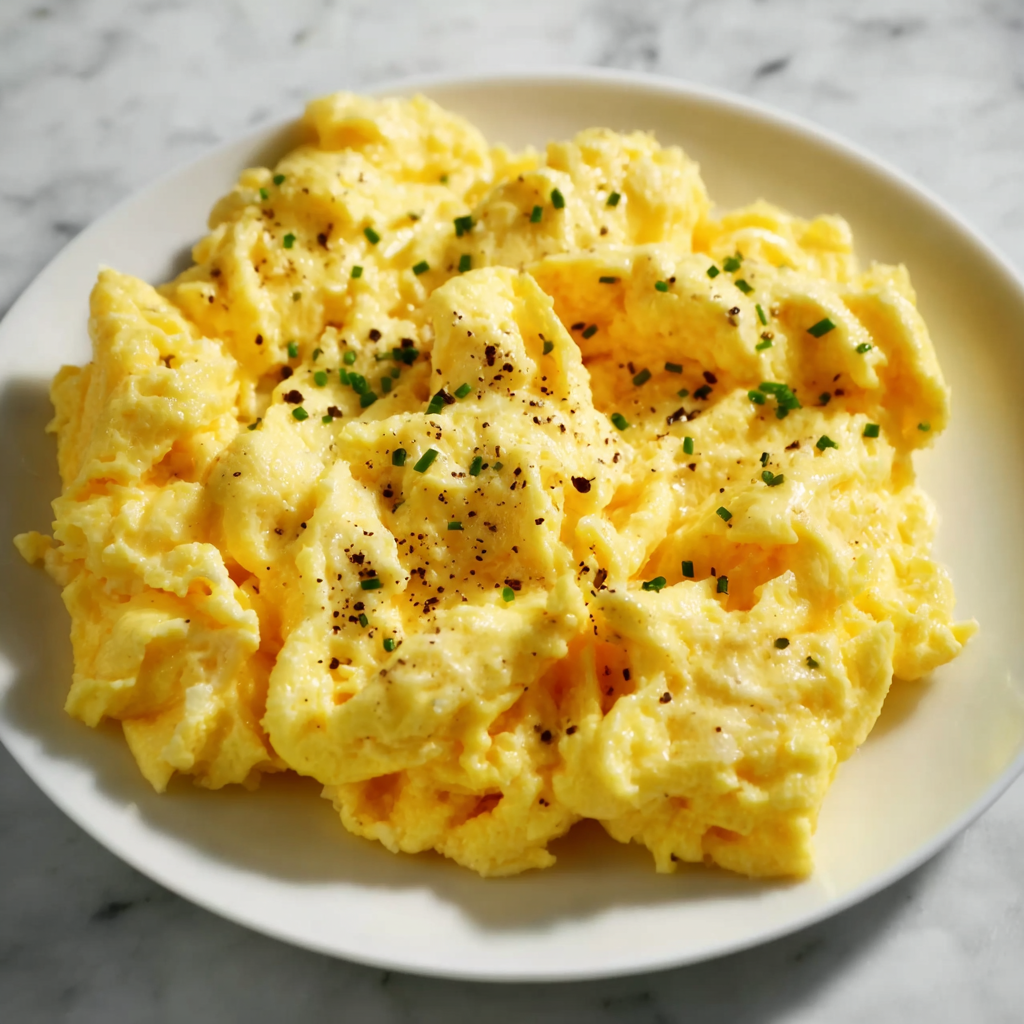
- Serve: Transfer immediately to a plate. The residual heat will finish cooking them to perfection in the 30 seconds it takes to walk to the table.
Nutritional Information
Eggs are the gold standard for protein quality. Here is the estimated breakdown per serving (2 eggs):
| Nutrient | Amount | % Daily Value |
| Calories | 180 kcal | – |
| Protein | 14g | 28% |
| Total Fat | 13g | 20% |
| Carbohydrates | 1g | <1% |
| Choline | 300mg | 55% |
| Vitamin D | 80 IU | 20% |
Data Insight: Eggs contain all nine essential amino acids, making them a “complete protein.” They are also one of the best dietary sources of Choline, a nutrient critical for brain health and membrane structure.
Healthier Alternatives for the Recipe
Customize your Scrambled Eggs for specific dietary needs:
- Lower Cholesterol:
- Use 1 whole egg and 3 egg whites.
- Result: You keep the color and some nutrients from the yolk but slash the cholesterol by 75%.
- Veggie Loaded:
- Sauté spinach, peppers, or mushrooms in the pan before adding the eggs. This adds volume and fiber without increasing calories significantly.
- Dairy-Free / Paleo:
- Use water instead of cream. The steam from the water creates a very fluffy, light egg, though it lacks the creamy mouthfeel of dairy.
Serving Suggestions
Scrambled eggs are versatile, but styling matters.
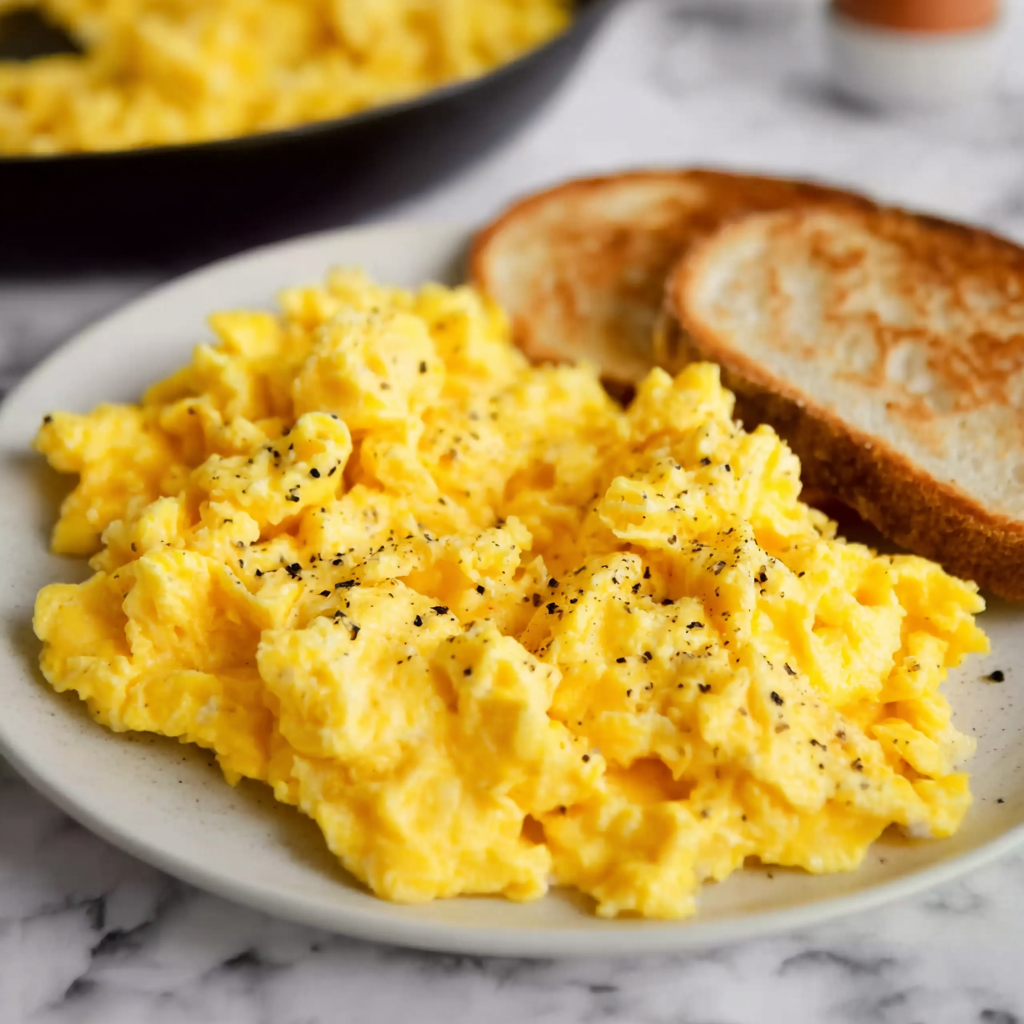
- The Classic: Serve alongside crispy bacon and a slice of buttered sourdough toast. The crunch of the toast contrasts with the soft eggs.
- The “Soft Scramble” Toast: Pile the creamy eggs high on a piece of avocado toast. Top with red pepper flakes and a drizzle of olive oil.
- Breakfast Tacos: Spoon the eggs into warm corn tortillas with salsa and cotija cheese.
Common Mistakes to Avoid
Simple foods are often the hardest to execute perfectly. Avoid these pitfalls:
- Overcooking:
- The Error: Waiting until the eggs look dry in the pan.
- The Result: Rubbery, brown-spotted eggs.
- The Fix: Remove them while they still look wet. Trust the carryover heat.
- Salting Too Early:
- The Error: Salting the raw eggs in the bowl.
- The Result: The eggs turn watery and gray within minutes.
- The Fix: Salt at the very end.
- Using the Wrong Pan:
- The Error: Using stainless steel or cast iron without enough fat.
- The Result: Half your breakfast stuck to the metal.
- The Fix: A high-quality non-stick pan is the egg chef’s best friend.
Storing Tips for the Recipe
Scrambled eggs are best eaten immediately, but meal prep is possible.
- Refrigeration: Store in an airtight container for up to 3 days.
- Reheating:
- Microwave: This is tricky. Heat in 20-second bursts. Ideally, place a damp paper towel over them to steam them rather than dry them out.
- Stove: Melt a tiny bit of butter in a pan and gently warm the eggs over low heat.
- Freezing: You can freeze cooked scrambled eggs! They work best in breakfast burritos. If freezing alone, slightly undercook them so they don’t get rubbery when reheated.
Conclusion
The Best Scrambled Eggs are not a result of luck; they are a result of technique. By understanding how heat affects protein coagulation and respecting the delicate nature of the egg, you can achieve a breakfast that is rich, creamy, and fundamentally comforting. Once you try the “low and slow” method, you will never go back to rubbery eggs again.
Summary: A masterclass in making fluffy, creamy scrambled eggs using low heat, butter, and a splash of heavy cream. Seasoned at the end for perfect texture.
Ready to crack some shells?
Heat up your non-stick pan! Rate this recipe 5 stars if you achieved that perfect custard texture, and leave a comment below: do you add cheese or keep it pure? Subscribe for more culinary science hacks!
FAQs
Can I use milk instead of heavy cream?
Yes. Whole milk works well. Skim milk can make the eggs a bit watery because it lacks the fat to emulsify with the yolk. If using skim milk, use very little (1 tsp per egg).
What is the “Gordon Ramsay” method?
Gordon Ramsay’s famous method involves cooking the eggs in a pot (not a skillet) over medium heat, constantly taking the pot on and off the burner while stirring continuously to create a custard-like consistency. He also adds Crème Fraîche at the end to stop the cooking.
Why do my eggs turn green/gray?
This is a chemical reaction between the sulfur in the whites and the iron in the yolks, usually caused by overcooking or holding the eggs at high heat for too long. Keep the heat low to keep them yellow.
Should I add water to my eggs?
Some chefs swear by water for fluffiness (steam), while others swear by cream for richness (fat). It depends on your goal. Water makes them puffier; cream makes them silkier.
Leave a Reply