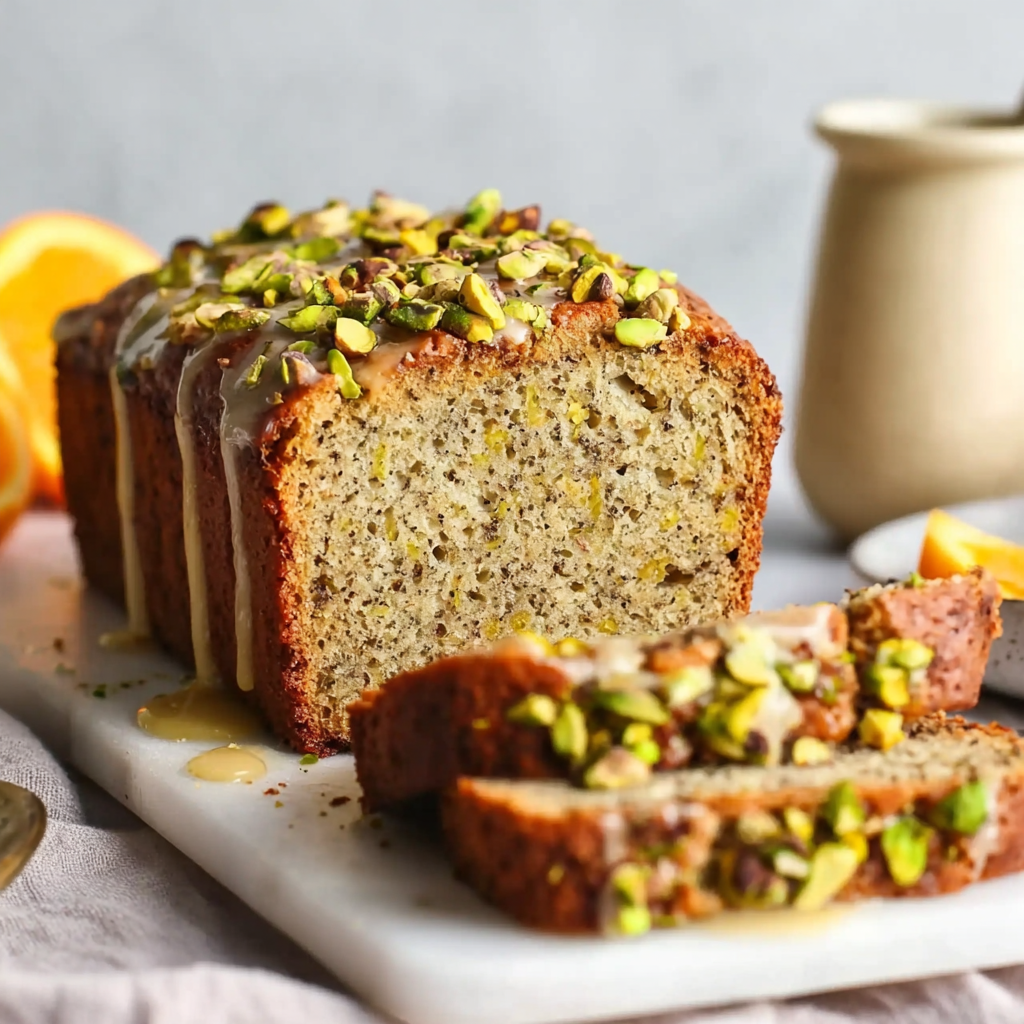
The Architecture of the “Tender Loaf”: Lactic Acid and Lipid Suspension
In the hierarchy of professional “quick breads,” the Pistachio Poppy Seed Orange Yogurt Bread represents a sophisticated study in crumb-structure and aromatic diffusion. Unlike standard pound cakes which rely purely on butter-fat, the integration of Greek yogurt introduces lactic acid into the batter. Data from culinary chemistry indicates that this acidity breaks down the gluten “mesh” in the flour, resulting in a texture that is exceptionally moist and “tight-grained” without being heavy.
The technical challenge of this loaf is aromatic stability. Citrus oils are highly volatile; by rubbing the orange zest directly into the sugar before creaming, you “capture” the essential oils in the sugar crystals, ensuring the citrus profile survives the high-heat baking process.
The Essential Mise en Place: Ingredients and Technical Specs
To achieve a restaurant-grade finish, the temperature of the dairy and the “snap” of the poppy seeds are the most critical technical components.
The Foundation (The Batter)
- High-Protein Greek Yogurt (150g / 2/3 cup): Full-fat is essential for a professional mouthfeel. The thickness of the yogurt provides the structural “loft.”
- Extra-Fine Cake Flour (220g / 1.75 cups): Lower protein content (8–9%) ensures the bread remains a “cake” and not a “muffins.”
- Neutral Oil (120ml / 1/2 cup): Oil stays liquid at room temperature, keeping the bread moister for longer than butter.
- Large Eggs (2): Must be at room temperature to ensure a stable emulsion with the yogurt.
The Aromatic Profile
- Fresh Orange Zest (2 large oranges): Provide the primary aromatic “top note.”
- Blue Poppy Seeds (2 tbsp): For the classic “speckled” aesthetic and a subtle, nutty crunch.
- Roasted Shelled Pistachios (60g / 1/2 cup): Coarsely chopped. Technical Requirement: Toast them for 3 minutes before adding to the batter to deepen their color and flavor.
The Masterclass: Step-by-Step Culinary Execution
Phase 1: The “Zest-Sugar” Extraction
Place the granulated sugar and orange zest in a bowl. Use your fingertips to rub them together for 2 minutes until the sugar is fragrant and damp. This is a professional “Citrus-Rub” technique; it releases the oils from the zest far more effectively than simple whisking.
Phase 2: The Wet Emulsion
Whisk together the eggs, yogurt, and oil. Gradually incorporate the orange-sugar. Pro Tip: Add a teaspoon of vanilla bean paste here. It bridges the gap between the floral orange and the nutty pistachio.
Phase 3: The “Gentle” Fold
Sift the dry ingredients (flour, baking powder, salt) over the wet mixture. Fold in with a spatula, adding the pistachios and poppy seeds at the very end. Crucial: Stop as soon as the last streak of flour disappears. Over-mixing activates the gluten, which creates “tunneling” (large air holes) in your loaf.
Phase 4: The Low-and-Slow Bake
Pour into a greased loaf pan and bake at 175°C (350°F) for 50–60 minutes. The lower temperature allows the dense yogurt-based batter to rise evenly without the edges burning before the center is set.
Common Technical Pitfalls to Avoid
- The “Sunken” Center: This happens if the oven door is opened too early or if there is too much leavening agent. Always wait until the 45-minute mark to check the internal temperature (98∘C or 208∘F is the gold standard).
- Grey Crumb: If using lower-quality poppy seeds, they can bleed into the batter. Fresh, high-quality seeds stay distinct and black.
- Dry Exterior: If the loaf pan is dark metal, it absorbs heat faster. Reduce the oven temperature by 10∘C if using dark pans.
Conclusion: A Vibrant Symphony of Texture
Pistachio Poppy Seed Orange Yogurt Bread is a testament to the power of balanced acidity and healthy fats. By utilizing yogurt and oil instead of heavy butter, you create a loaf that is vibrant, fragrant, and maintains its freshness for several days. It is a sophisticated, nutrient-dense treat that pairs perfectly with a floral Earl Grey tea or a sharp espresso.
Frequently Asked Questions (Q&A)
Q: Can I use sour cream instead of yogurt?
A: Yes. Professionally, sour cream is a direct 1:1 substitute. It has a slightly higher fat content (18–20%), which will make the bread even richer and more decadent.
Q: Why did my pistachios sink to the bottom?
A: This usually means the batter was too thin. Ensure you are using thick Greek-style yogurt. Alternatively, toss the chopped nuts in a tablespoon of flour before adding them to the batter; the flour provides “grip.”
Q: How do I get that professional “cracked” top?
A: Dip a butter knife in melted butter and run it down the center of the batter just before putting it in the oven. This creates a “weak point” that guides the rise into a perfect, central crack.
Q: Can I add a glaze?
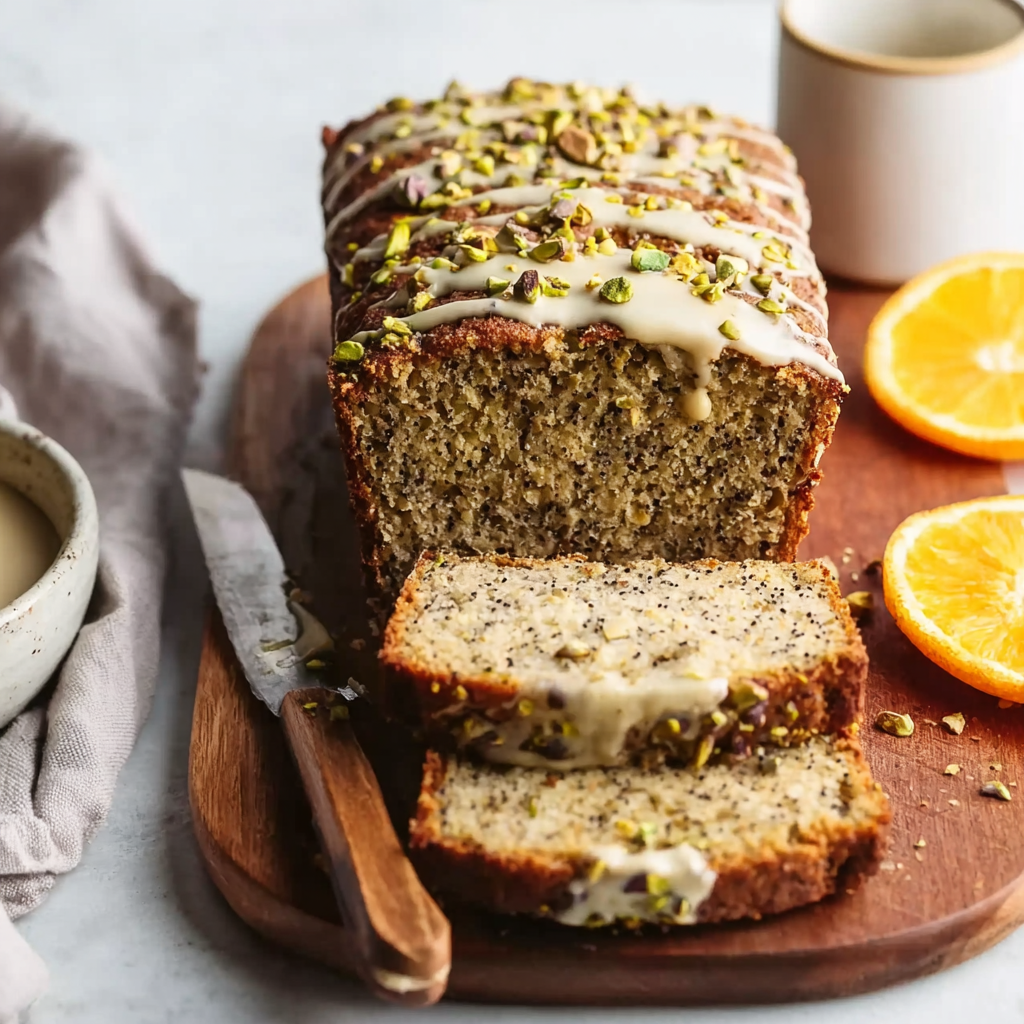
A: Absolutely. A simple glaze made of orange juice and powdered sugar drizzled over the cooled loaf adds a beautiful sheen and an extra punch of acidity.
Leave a Reply