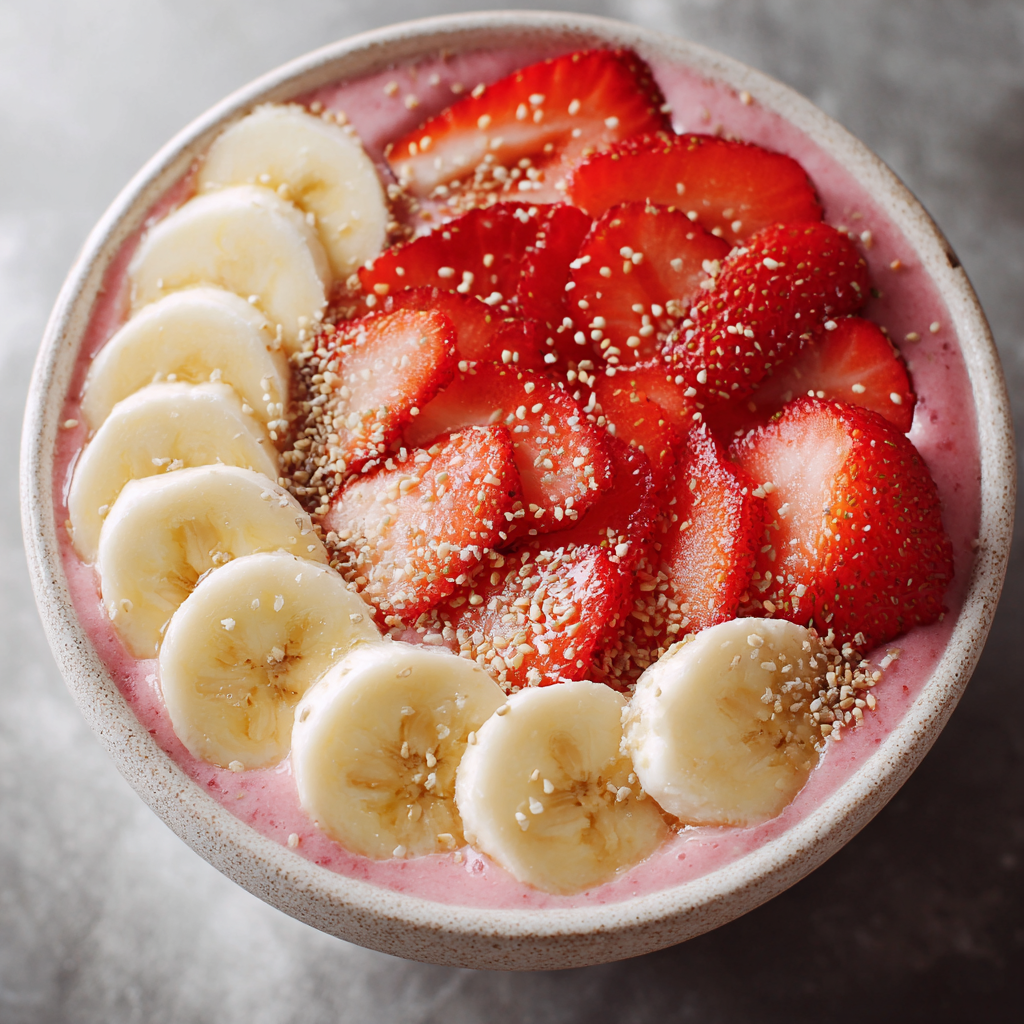
The Gastronomic Architecture of the Frozen Bowl
In the landscape of modern functional breakfasts, the Strawberry & Banana Smoothie Bowl represents a masterclass in temperature management and emulsification. Unlike a traditional beverage-style smoothie, a professional “bowl” is engineered for a high-viscosity, spoonable texture—similar to a soft-serve gelato. Data from culinary rheology suggests that achieving this specific density requires a precise 3:1 ratio of frozen solids to liquid tempering agents.
This preparation is a study in “Flash-Freezing.” By utilizing pre-frozen fruit, you bypass the need for ice—which dilutes flavor—resulting in a vibrant, nutrient-dense base that acts as a structural canvas for artisanal toppings.
The Essential Mise en Place: Ingredients and Technical Specs
To achieve a restaurant-grade “swirl” and prevent the bowl from melting prematurely, the state of your fruit is the most critical technical component.
The Foundation (The Base)
- Flash-Frozen Bananas (2 medium): Peel and slice before freezing. Bananas provide the pectin and natural sugars necessary for a creamy, non-icy emulsion.
- Frozen Strawberries (150g / 1 cup): Select deep-red, ripe berries for maximum anthocyanin content (antioxidants) and a vivid pink aesthetic.
- The Tempering Liquid (60–120ml / 1/4–1/2 cup): Unsweetened almond milk, coconut water, or Greek yogurt. Use the minimum amount required to get the blades moving.
The “Aromatic” Enhancers
- Natural Binder: 1 tbsp Almond butter or Chia seeds. These healthy fats stabilize the structure.
- Acidity: A squeeze of fresh lime juice to brighten the berry profile and prevent the banana from dulling.
- Protein Boost (Optional): 1 scoop of neutral or vanilla whey/plant protein.
The Masterclass: Step-by-Step Culinary Execution
Phase 1: The “Low-Liquid” Grind
Place the frozen fruit into a high-speed blender or food processor. Add only half of your liquid. Pulse on low. Pro Tip: Do not walk away. You want to hear the blades “laboring” slightly—this is the sound of high-density emulsification.
Phase 2: The High-Speed “Polish”
Slowly add the remaining liquid one tablespoon at a time. Increase to high speed for only 20–30 seconds. Over-blending generates kinetic heat, which will turn your artisanal bowl into a standard liquid smoothie. You are looking for a “four-petal” vortex to form in the center.
Phase 3: The Architectural Topping
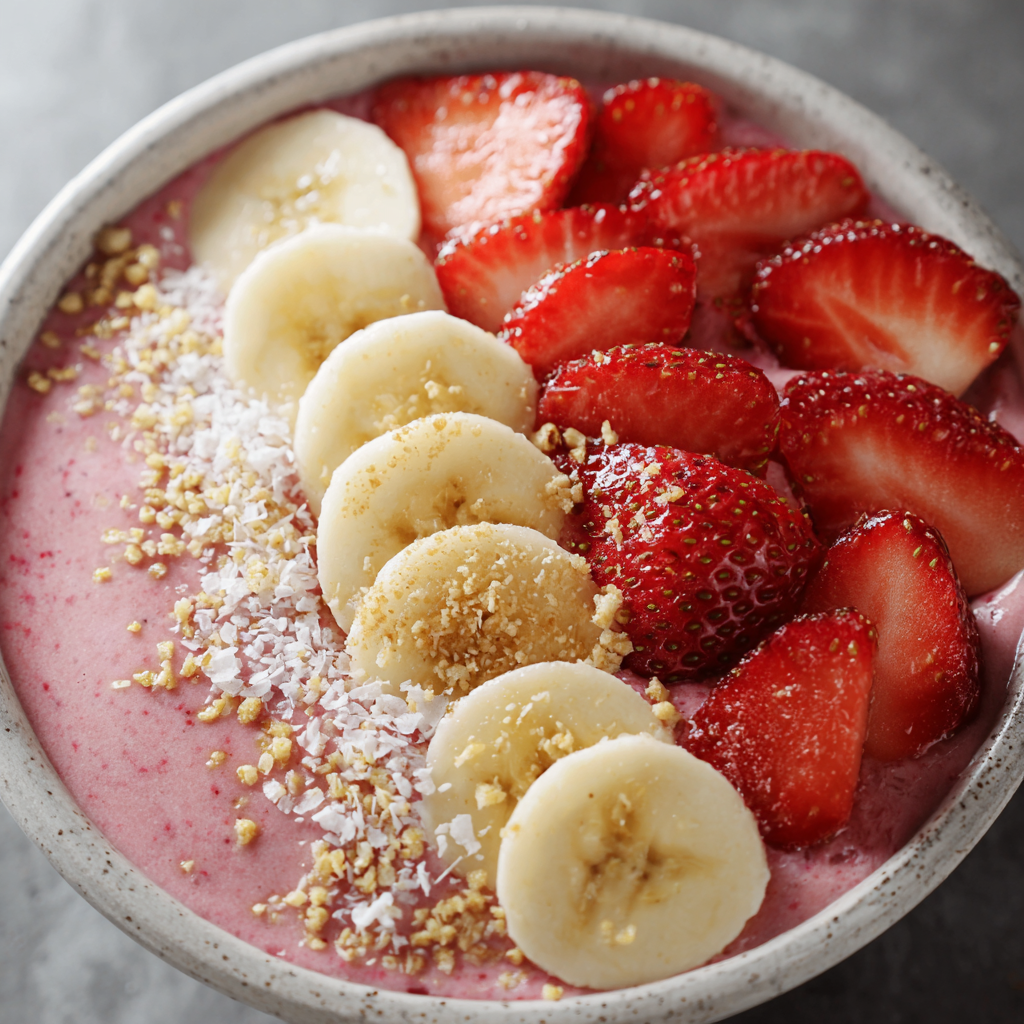
Transfer the base into a chilled bowl immediately. Toppings should be applied in “stripes” or “zones” to maintain professional visual clarity:
- Zone 1 (Crunch): Granola or toasted hemp seeds.
- Zone zone 2 (Freshness): Fresh strawberry slices and blueberries.
- Zone 3 (Lipids): A drizzle of nut butter or a sprinkle of shredded coconut.
Common Technical Pitfalls to Avoid
- The “Watery” Base: This is almost always caused by adding too much liquid at the start. Start with less than you think you need; you can always add more, but you cannot remove it.
- Icy Texture: This occurs if you use fresh fruit and add ice cubes. Ice creates large crystals that feel “crunchy” on the tongue. Only frozen fruit provides the silken, “soft-serve” finish.
- The Melting Vortex: If your blender is struggling, use a tamper (plunger) to push the fruit into the blades rather than adding more liquid.
Conclusion: The Ultimate Nutrient-Dense Canvas
The Strawberry & Banana Smoothie Bowl is a testament to the fact that high-performance nutrition can be aesthetically sophisticated. By mastering the frozen-to-liquid ratio and respecting the speed of the emulsion, you create a breakfast that offers sustained energy through complex carbohydrates and healthy fats. It is a vibrant, temperature-controlled masterpiece that turns a morning routine into a gourmet experience.
Frequently Asked Questions (Q&A)
Q: Can I make the base in advance?
A: Technically no. Once blended, the microscopic air bubbles collapse and the fruit begins to oxidize. For the professional “stand-up” texture, it must be eaten within 10 minutes of blending.
Q: How do I make it even thicker?
A: Add ¼ of a frozen avocado. It adds zero flavor but provides an incredible, professional-grade creaminess and healthy fats that slow down the melting process.
Q: Why is my smoothie bowl brown instead of pink?
A: This happens if your bananas were over-ripe or if you blended for too long, causing oxidation. Adding a touch of citrus (lemon or lime) and keeping the blending time under 60 seconds will preserve the vibrant pink hue.
Q: What is the best granola to use?
A: Look for a “cluster” style granola. Fine, sandy granolas will sink into the base, while larger clusters stay on top, providing the necessary textural contrast.
Would you like me to design a “Superfood Add-in” guide to help you customize this bowl for specific goals like energy, recovery, or skin health?
Leave a Reply