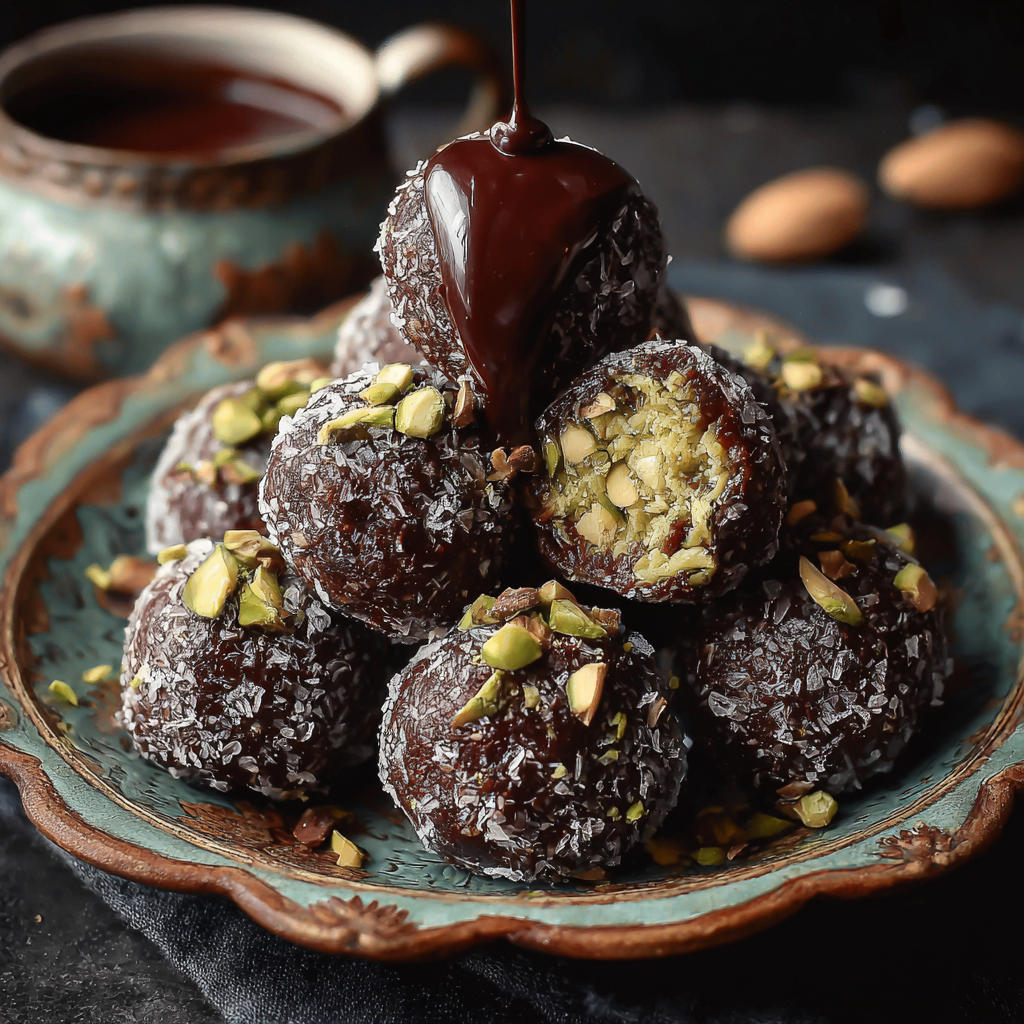
The Architecture of the “Crunch” Fill: Textural Engineering
In the landscape of modern viral confectionery, the Dubai Chocolate Ball represents a sophisticated structural pivot from the famous “Dubai Bar.” This preparation focuses on the Kadaifi-Pistachio Matrix—a specialized emulsion of toasted, shredded pastry and high-fat nut butter. Data from sensory food science suggests that the “global appeal” of this dessert lies in its extreme textural contrast: the high-frequency “snap” of tempered chocolate followed immediately by the shattered-glass crunch of butter-toasted phyllo.
The technical challenge of the “Ball” format is structural tension. Unlike a bar, which is supported by a mold, a sphere must maintain its spherical integrity while housing a high-ratio filling. By utilizing a “Flash-Freeze” method for the center, you ensure a professional-grade shell that doesn’t crack or leak.
The Essential Mise en Place: Ingredients and Technical Specs
To achieve a restaurant-grade result, the toasted state of the pastry and the fluidity of the pistachio cream are the most critical technical components.
The “Emerald” Core (The Filling)
- Kadaifi Pastry (150g / 5 oz): Shredded phyllo dough. Technical Requirement: These must be sautéed in clarified butter until deeply golden to ensure they remain “active” (crunchy) even when encased in chocolate.
- Premium Pistachio Cream (200g / 7 oz): Use a high-quality, smooth spread (ideally 100% pistachio or a sweetened Italian-style crema).
- Tahini (1 tbsp): The professional “secret” that adds a subtle savory earthiness to balance the intense sweetness.
The “Snap” Shell (The Coating)
- Couverture Milk Chocolate (300g): High cocoa butter content (min. 32%) is essential for a thin, professional shell.
- Coconut Oil (1 tsp): To provide a “gloss” and slightly lower the melting point for a cleaner bite.
The Masterclass: Step-by-Step Culinary Execution
Phase 1: The Maillard Toasting
Finely chop the raw kadaifi. In a wide skillet, melt 30g of butter over medium heat. Sauté the pastry, stirring constantly for 5–7 minutes. You are looking for a uniform, “antique gold” color. If it stays pale, it will turn soggy inside the ball; if it burns, the bitterness will ruin the pistachio.
Phase 2: The “Lava” Binding
In a chilled bowl, fold the toasted kadaifi into the pistachio cream and tahini. The mixture should be thick enough to hold its shape but soft enough to be malleable. Refrigerate for 20 minutes to set the fats.
Phase 3: The Spherical Mold
Scoop 20g portions and roll them into tight spheres. Place them on a tray and freeze for 15 minutes. This “Flash-Freeze” is a professional necessity; it ensures that when you dip them into the warm chocolate, the centers don’t melt into the coating.
Phase 4: The Double-Dip Finish
Melt the chocolate and oil using a double boiler. Use a fork or a dipping tool to submerge each frozen ball. Tap off the excess. Expert Tip: For the iconic “Dubai look,” drizzle a small amount of melted white chocolate dyed with green oil-based coloring over the top in a zig-zag pattern.
Common Technical Pitfalls to Avoid
- The “Soggy” Center: This happens if the kadaifi isn’t toasted enough or if the pistachio cream has too much water content. Always use oil-based nut creams.
- Cracked Shells: If your filling is too cold (frozen solid) and your chocolate is too hot, the thermal shock will cause the shell to crack as it settles. Aim for a “cool” center and “warm” chocolate.
- Bloom: If white streaks appear on your chocolate, it has gone out of temper. Keep the melting temperature below 32°C (90°F) for milk chocolate.
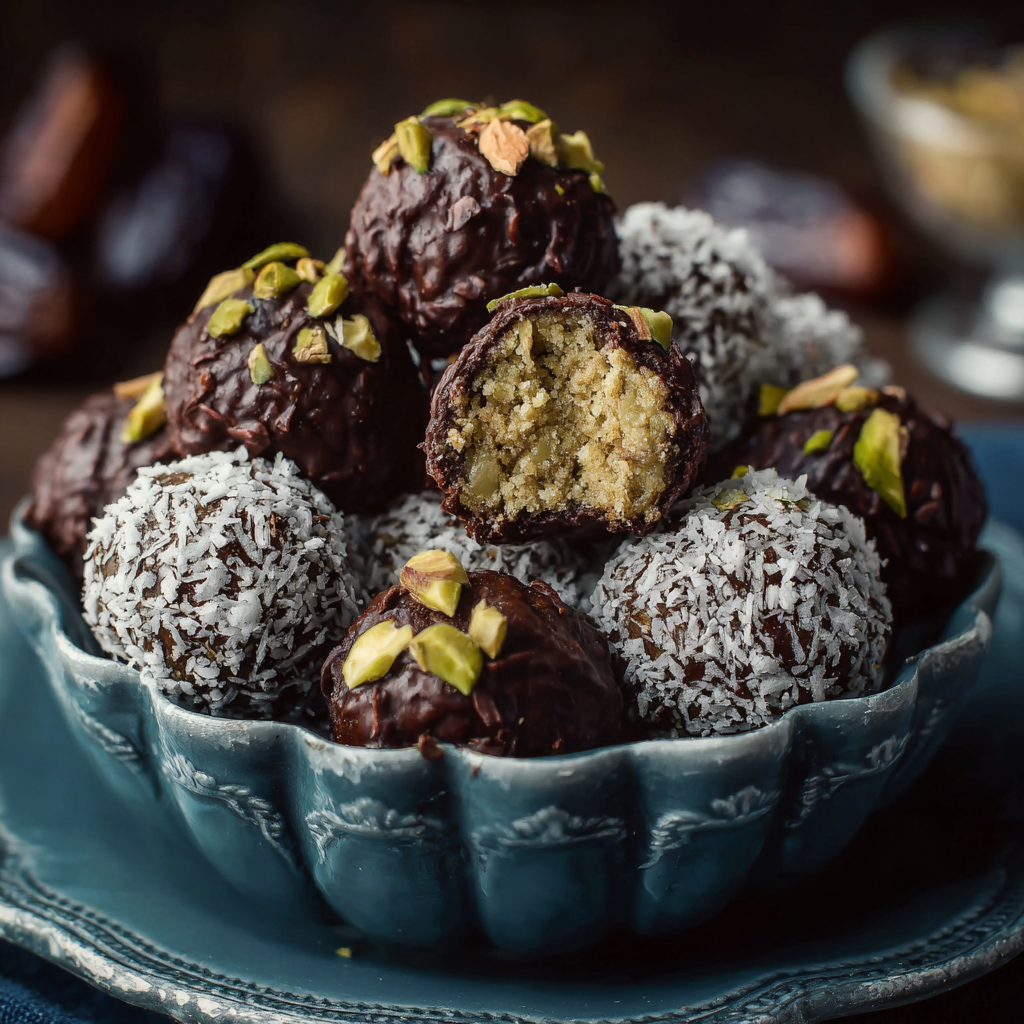
Conclusion: A Masterpiece of Global Fusion
No-Bake Dubai Chocolate Balls are a testament to the fact that modern confectionery is driven by texture as much as flavor. By mastering the butter-toasting of the kadaifi and the “Flash-Freeze” dipping technique, you produce a confection that is visually striking and intellectually satisfying. It represents the pinnacle of the “New Middle Eastern” dessert movement—a vibrant, high-crunch celebration of traditional ingredients in a contemporary format.
Frequently Asked Questions (Q&A)
Q: Can I use something other than Kadaifi?
A: While kadaifi provides the authentic “shattered” texture, you can substitute it with crushed Filo pastry or Crêpe Dentelle (Feuilletine) in an emergency. However, the unique “filament” crunch of kadaifi is what defines this specific trend.
Q: Why is my pistachio cream too runny?
A: If it’s too thin to roll into balls, stir in a tablespoon of almond flour or more toasted kadaifi. This acts as a structural “sponge” without altering the flavor profile.
Q: How long do these stay crunchy?
A: If stored in an airtight container in a cool, dry place, the crunch will remain peak for 3–5 days. Moisture is the enemy; do not store them in a humid environment.
Q: Is there a vegan version?
A: Absolutely. Use vegan butter for toasting the kadaifi, a dairy-free pistachio spread, and dark chocolate for the coating. The structural physics remain identical.
Leave a Reply