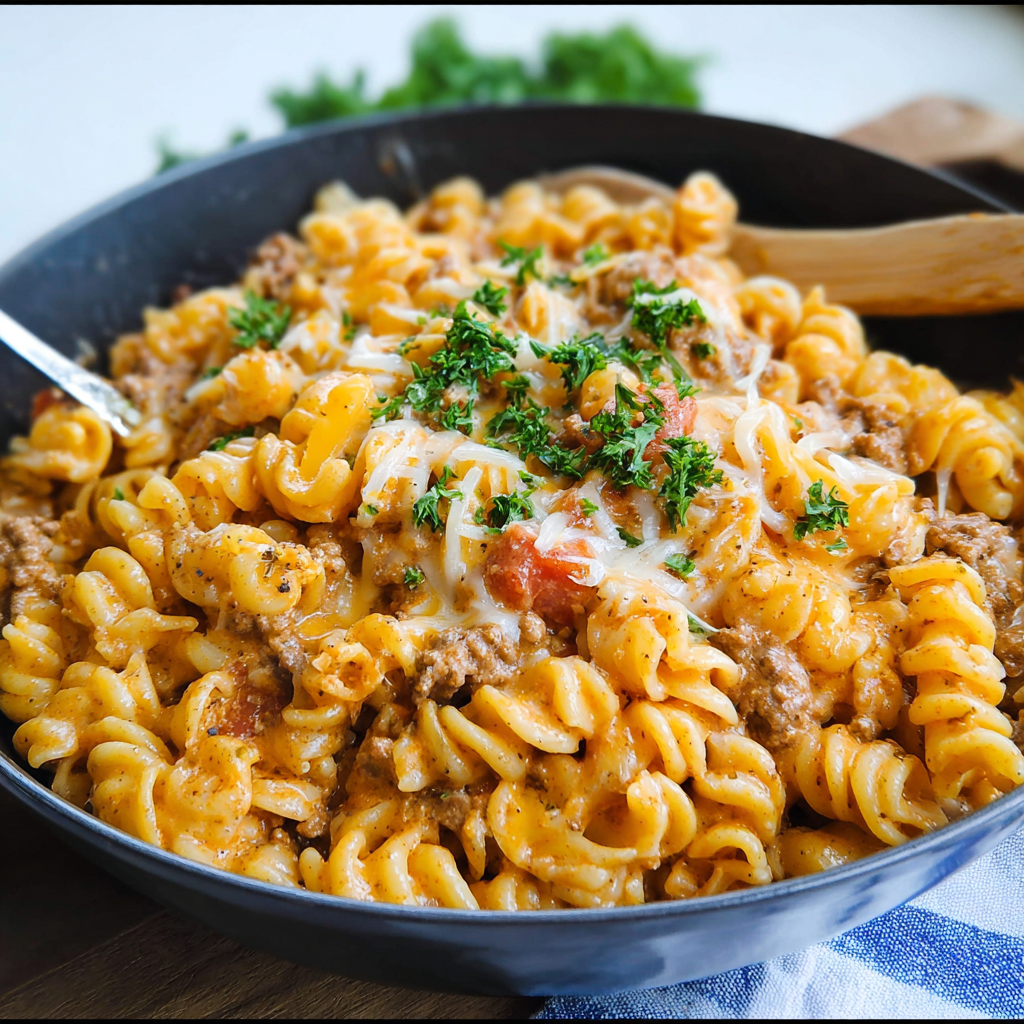
The Gastronomic Architecture: The “Maillard-Starch” Emulsion
In the hierarchy of efficient home-style meals, Cheeseburger Pasta represents a sophisticated study in Lipid-Starch Bonding and Savory Umami Concentration. The technical challenge of one-pot pasta is the “Starch-Sequestration” effect: by cooking the pasta directly in the sauce matrix, you utilize the released amylose to emulsify the beef fats and cheese into a glossy, cohesive coating.
The “irresistibility” factor is driven by the Acetate-Glutamate Loop: the acidity of mustard and pickles (acetates) cuts through the heavy density of the beef and cheddar (glutamates), preventing “palate fatigue” and heightening the savory profile.
Essential Mise en Place: Technical Specs
To achieve a restaurant-grade “velvet” finish and a deep savory base, the fat-to-lean ratio of the beef and the “Anti-Clumping” properties of the cheese are the most critical factors.
The Foundation (The Protein & Grain)
- Ground Beef (500g): Technical Requirement: Use 80/20 or 85/15 lean-to-fat ratio. The rendered fat is essential for browning the aromatics and creating the base of the emulsion.
- Short Pasta (350g): Cavatappi, Elbows, or Rotini. These shapes have a high “Surface-to-Volume” ratio, perfect for “sauce-drag.”
- Beef Stock (750ml): Provides the aqueous base and deepens the meaty profile.
The “Cheeseburger” Matrix
- Sharp Cheddar (200g): Expert Tip: Grate from a block. Pre-shredded cheese contains cellulose, which prevents a smooth melt and creates a “gritty” mouthfeel.
- The Condiment Trio: 2 tbsp Tomato Paste, 1 tbsp Yellow Mustard, and 1/4 cup diced pickles (added at the end).
- Heavy Cream (60ml): To provide a “Short” texture and stabilize the cheese melt.
The Masterclass: Step-by-Step Culinary Execution
Phase 1: The “Maillard” Foundation
In a large, deep skillet, brown the beef over medium-high heat. Technical Requirement: Do not stir constantly. Allow the meat to sit undisturbed for 2 minutes to develop a dark mahogany crust. Drain excess fat, leaving about 1 tablespoon for flavor.
Phase 2: The “Concentrated Umami” Deglaze
Add diced onions and garlic to the beef. Once translucent, stir in the tomato paste and cook for 2 minutes until it turns a deep brick-red. This “Parching” process removes the raw metallic taste of the paste and intensifies its natural sugars.
Phase 3: The “In-Situ” Starch Absorption
Pour in the beef stock and mustard, then add the dry pasta. Bring to a boil, then reduce to a simmer. Expert Tip: Stir frequently. This “Mechanical Agitation” physically rubs the starch off the pasta and into the liquid, creating the foundation of your creamy sauce.
Phase 4: The “Zero-Heat” Emulsion
Once the pasta is al dente and most of the liquid is absorbed, remove from the heat. Stir in the heavy cream and the shredded cheddar one handful at a time. Technical Requirement: Adding cheese off the heat prevents the proteins from “seizing,” ensuring a perfectly silk-finish sauce. Fold in the diced pickles at the very end.
Common Technical Pitfalls to Avoid
- The “Watery” Pan: If there is too much liquid left when the pasta is cooked, turn up the heat for 60 seconds to reduce the stock before adding the cheese.
- The “Gritty” Sauce: Caused by overheating the cheese or using pre-shredded bags. Always melt cheese into the residual heat of the pasta for the best texture.
- Bland Profile: Ground beef requires aggressive seasoning. Ensure you use enough salt and pepper during the initial browning phase to season the core of the meat.
Frequently Asked Questions (Q&A)
| Question | Expert Answer |
|---|---|
| Can I use Ground Turkey? | Yes, but add a tablespoon of Worcestershire sauce to compensate for the lower “Umami Density” of poultry compared to beef. |
| What’s the best pickle? | Dill Pickles provide the classic high-acid “snap.” If you prefer a sweeter profile, Bread and Butter pickles work as well. |
| How do I store it? | Pasta continues to absorb liquid as it sits. To reheat, add a splash of milk to “loosen” the emulsion back to its original creamy state. |
Export to Sheets
Leave a Reply