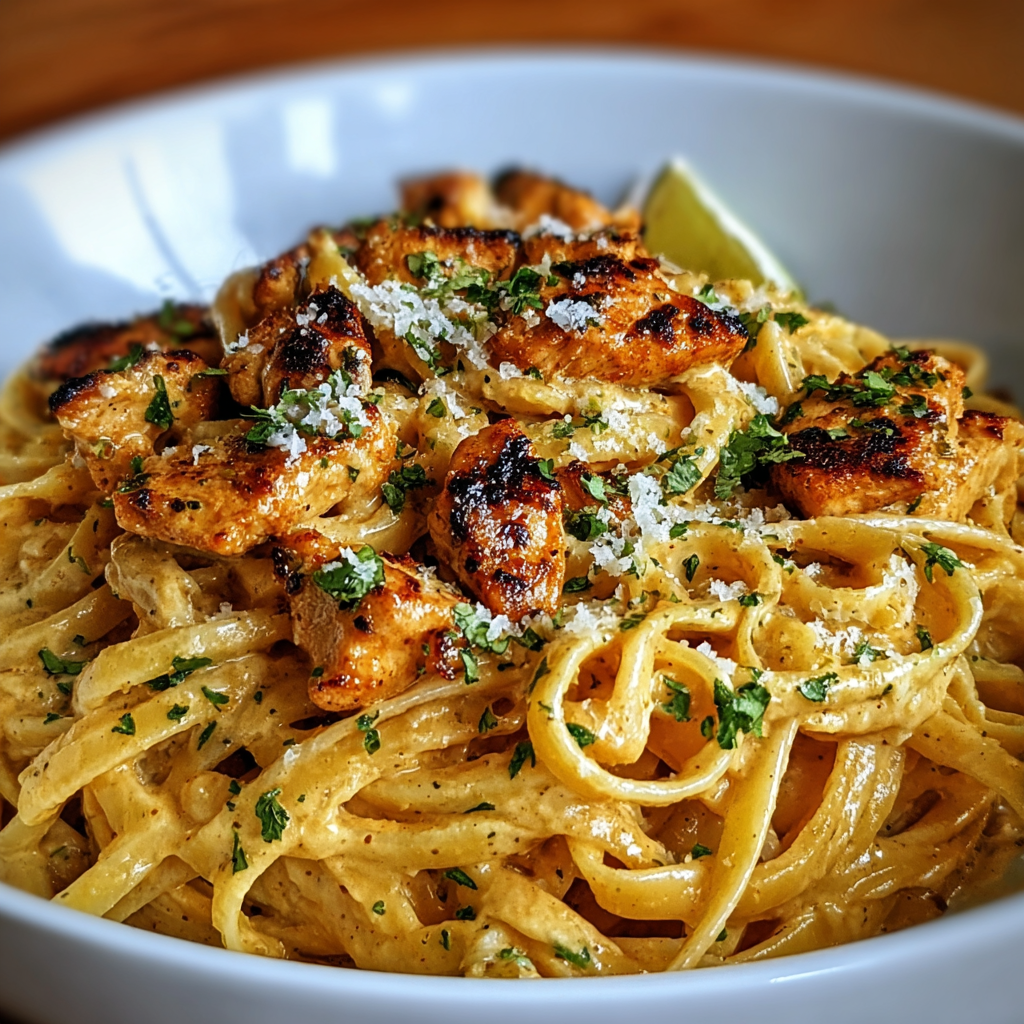
The Gastronomic Architecture: The “Lipid-Starch” Emulsion
In the hierarchy of high-intensity pasta dishes, Cowboy Butter Chicken Linguine represents a sophisticated study in Thermal Infusion and Acid-Fat Balancing. The technical challenge is the “Emulsion-Bridge”: butter is a delicate fat that can easily “break” or become a greasy pool. By utilizing starchy pasta water, you create a biological link between the heavy lipids of the “Cowboy” compound butter and the linguine’s surface, resulting in a glossy, “clinging” sauce that carries aromatics like horseradish and lemon directly to the palate.
Data from flavor science suggests the “irresistibility” factor is the Capsaicin-Citrus Loop: the heat from chili flakes and horseradish is rounded out by the lactic fats of the butter and the brightening effect of lemon zest.
Essential Mise en Place: Technical Specs
To achieve a restaurant-grade “silk” finish, the surface moisture of the chicken and the “bloom” of the spices are the most critical factors.
The Foundation (The Protein & Grain)
- Chicken Breast or Thighs (500g): Technical Requirement: Slice into uniform strips for even searing. Pat bone-dry to ensure a Maillard crust rather than a “steamed” exterior.
- Linguine (400g): The flat, wide surface area is engineered to maximize “sauce-drag.”
- Starchy Pasta Water (125ml / 1/2 cup): The “Liquid Gold” required to bind the butter sauce.
The “Cowboy” Matrix (The Compound Sauce)
- Unsalted Butter (115g / 1/2 cup): The primary fat carrier.
- The Piquant Trio: 1 tbsp Dijon mustard, 1 tsp prepared horseradish, and 3 cloves of garlic (minced).
- The Acid & Herb Finish: Juice and zest of 1/2 lemon, fresh parsley, and chives.
- The Heat: 1/2 tsp red chili flakes and 1/2 tsp smoked paprika.
The Masterclass: Step-by-Step Culinary Execution
Phase 1: The “Aromatic Bloom”
In a small bowl, mix the softened butter with the mustard, horseradish, garlic, lemon, and spices. Technical Requirement: Do not melt the butter yet. Mixing it “cold” encapsulates the aromatics, protecting them from scorching when they hit the pan.
Phase 2: The High-Conductivity Sear
Heat a heavy skillet with a splash of oil. Sear the chicken strips over medium-high heat until golden brown. Remove the chicken from the pan and set aside. Expert Tip: The brown bits left in the pan (the fond) are concentrated umami that will be re-absorbed by the pasta.
Phase 3: The “Hydration” & Deglaze
Boil the linguine until 1 minute before al dente. While the pasta finishes, add the “Cowboy Butter” to the chicken skillet over low heat. Once melted and foaming, add the hot linguine directly from the water into the butter, along with the reserved chicken.
Phase 4: The “Mantegatura” (The Finish)
Pour in the starchy pasta water. Toss vigorously over medium heat for 60 seconds. The friction and the starch will “marry” the butter to the pasta, creating a thick, ivory-colored sauce. Finish with fresh herbs and lemon zest.
Common Technical Pitfalls to Avoid
- The “Broken” Sauce: If the sauce looks oily, the temperature was too high. Add a splash more pasta water and whisk vigorously to re-emulsify.
- Soggy Chicken: If you add the chicken back too early during a boil, the crispy exterior will turn soft. Add it at the very end during the “Mantegatura” phase.
- Bland Pasta: Pasta should be cooked in “sea-salty” water. If the water isn’t seasoned, the center of the linguine will remain flavorless regardless of how good the butter is.
Frequently Asked Questions (Q&A)
| Question | Expert Answer |
|---|---|
| Can I use Steak instead? | Absolutely. Cowboy Butter originated as a steak sauce. Sear steak bites to medium-rare and follow the same assembly steps. |
| Is it very spicy? | It has a “nasal zing” from the horseradish and a “back-throat heat” from the chili. It is bold, but not “hot sauce” spicy. |
| Why horseradish? | It acts as a “palate cleanser,” ensuring the heavy butter doesn’t feel cloying or overly greasy. |
Leave a Reply