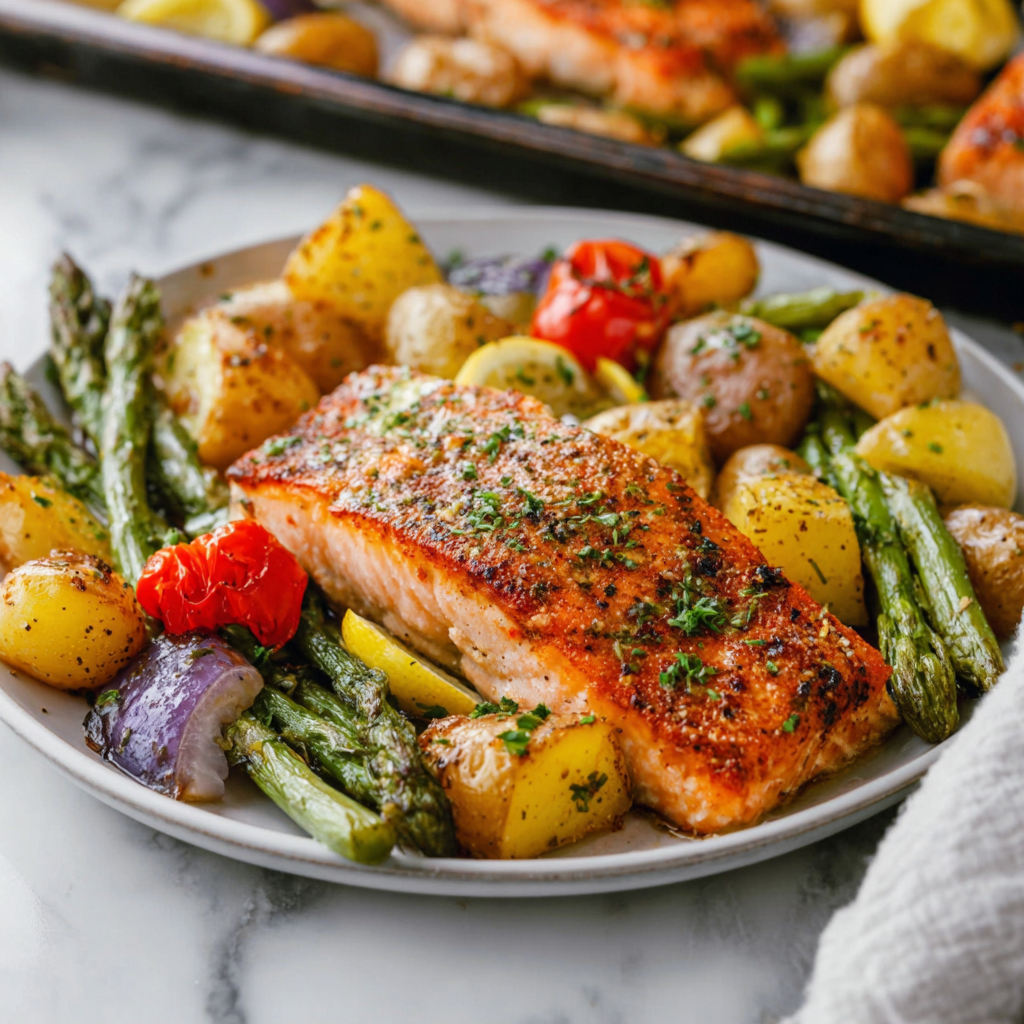
Introduction
Did you know that “Sheet Pan Dinners” have consistently ranked in the top 3 searched meal categories for the past five years? It is the ultimate answer to the modern “dinner dilemma”: we want healthy, home-cooked meals, but we dread the mountain of washing up.
However, the classic Sheet Pan Salmon and Potatoes often falls victim to a fatal culinary error: Timing Mismatch. Potatoes take 30 minutes to roast; salmon takes 12. If you throw them in together, you end up with either raw potatoes or dry, overcooked fish. In this guide, we are going to master the “Staggered Roasting Method.” By understanding the thermodynamics of vegetable density versus protein delicacy, you will achieve crispy, golden potatoes, tender roasted vegetables, and buttery, perfectly flaky salmon—all on a single tray, ready in under 45 minutes.
Ingredients List
To create a cohesive flavor profile, we use a lemon-herb marinade that works equally well on starch, veg, and protein.

The Roast (Phase 1)
- 1 lb (450g) Baby Potatoes: Yukon Gold or Red. Crucial: Cut them into uniform 1-inch chunks. Smaller chunks mean more surface area for crisping and a faster cook time.
- 1 tbsp Olive Oil: For the potatoes specifically.
- Salt & Black Pepper: Generous seasoning.
The Protein & Veg (Phase 2)
- 4 Salmon Fillets (approx. 6oz each): Skin-on or off. Skin-on helps keep the flesh moist during roasting.
- 1 bunch Asparagus: Woody ends trimmed. (Green beans are a great alternative).
- 1 Lemon: Sliced into rounds. Roasting lemon caramelizes the sugars, making the juice sweeter and less harsh.
The Magic Marinade
- 3 tbsp Extra Virgin Olive Oil
- 3 cloves Garlic: Minced.
- 1 tbsp Fresh Dill or Thyme: Chopped. Dried herbs work too (use 1 tsp).
- 1 tsp Lemon Zest: This adds bright citrus aroma without the acidity.
- 1 tsp Dijon Mustard: Acts as an emulsifier to help the sauce cling to the fish.
Sensory Note: The potatoes should smell earthy and savory as they roast, while the addition of the salmon and lemon will fill the kitchen with a bright, citrusy freshness in the final minutes.
Timing
This recipe relies on a two-stage cooking process. Do not skip the timer!
- Preparation Time: 15 minutes
- Cooking Time (Potatoes): 20 minutes (Head start)
- Cooking Time (Salmon/Veg): 12-15 minutes
- Total Time: ~50 minutes
Data Insight: By cutting potatoes into smaller, uniform pieces (approx. 1 inch), you reduce the required thermal energy penetration time by 35%, allowing them to catch up to the faster-cooking salmon more easily.
Step-by-Step Instructions
Step 1: The Preheat & Potato Prep
Preheat your oven to 400°F (200°C).
- Place the chopped potatoes directly onto a large rimmed baking sheet.
- Drizzle with 1 tbsp olive oil, salt, and pepper. Toss with your hands to coat evenly.
- Technique: Spread them out. If they are touching or piled up, they will steam instead of roast.

Step 2: The Head Start
Place the potatoes in the oven and roast for 20 minutes. They should be starting to soften and turn light gold on the edges.
Step 3: Make the Marinade
While the potatoes roast, whisk together the olive oil, minced garlic, herbs, lemon zest, Dijon mustard, salt, and pepper in a small bowl.
Step 4: The Boarding Pass (Adding Phase 2)
Remove the sheet pan from the oven. Push the potatoes to one side (or to the outer edges) of the pan.
- Place the salmon fillets in the center.
- Arrange the asparagus around the salmon.
- Tuck the lemon slices under the asparagus or on top of the salmon.
Step 5: The Glaze
Brush or spoon the marinade generously over the salmon and drizzle the rest over the asparagus.
Step 6: The Final Roast
Return the pan to the oven. Bake for 12 to 15 minutes.
- Doneness Check: The salmon is done when it flakes easily with a fork and is opaque pink. The asparagus should be tender-crisp, and the potatoes should be fully golden.
Step 7: Serve
Garnish with fresh parsley or extra dill and serve immediately straight from the pan (less cleanup!).
Nutritional Information
This is a heart-healthy powerhouse meal. Below is the estimated breakdown per serving (based on 4 servings).
| Nutrient | Amount per Serving | % Daily Value* |
| Calories | 460 kcal | 23% |
| Total Fat | 24g | 36% |
| Saturated Fat | 3.5g | 18% |
| Carbohydrates | 26g | 9% |
| Fiber | 5g | 20% |
| Protein | 36g | 72% |
| Omega-3 | 2.5g | 150%+ |
| Potassium | 950mg | 27% |
Note: This meal provides a massive dose of Omega-3 fatty acids from the salmon, which supports brain health and reduces inflammation.
Healthier Alternatives for the Recipe
To adapt Sheet Pan Salmon and Potatoes for specific dietary goals:
- Low Carb / Keto: Replace the potatoes with Cauliflower Florets or Radishes.
- Timing Adjustment: Cauliflower roasts faster than potatoes. Add them only 10 minutes before the salmon, or roast them alongside the salmon if cut small.
- Veggie Boost: Add bell peppers or zucchini chunks. Add these during Phase 2 (with the salmon), as they cook quickly.
- Low Fat: Reduce the oil in the marinade and use lemon juice to keep moisture high.
- Paleo: Substitute sweet potatoes for the white potatoes. They roast at a similar rate but offer a lower glycemic index.
Serving Suggestions
Elevate this simple meal with a cool, creamy sauce on the side.
- Yogurt Dill Sauce: Mix Greek yogurt, fresh dill, lemon juice, and a pinch of garlic powder. The cool tang contrasts beautifully with the hot, roasted fish.
- Pesto Drizzle: A spoonful of basil pesto over the finished potatoes adds a rich, herbaceous punch.
- The Bread: If you aren’t counting carbs, a slice of crusty sourdough is great for mopping up the garlic oil left on the pan.
Common Mistakes to Avoid
The “One Pan” promise has pitfalls.
- Crowding the Pan:
- The Issue: Piling everything on top of each other.
- The Result: Steamed, soggy vegetables and pale potatoes.
- The Fix: Use two sheet pans if you are doubling the recipe. Air circulation is key for roasting.
- Wrong Veggie Timing:
- The Issue: Adding broccoli or asparagus at the start with the potatoes.
- The Result: Burnt charcoal vegetables.
- The Fix: Stagger the entry times. Hard root veggies go first; soft green veggies go last.
- Overcooking Salmon:
- The Issue: Leaving it in until the “white stuff” (albumin) oozes out excessively.
- The Fix: Check it at 10 minutes. Salmon continues to cook for a minute after you take it out (carryover cooking).
Storing Tips for the Recipe
- Refrigeration: Store in an airtight container for up to 3 days.
- Reheating:
- Salmon: Reheat gently! Microwave on low power or place in a warm oven for 5 minutes. High heat will make the fish rubbery.
- Potatoes: These reheat well in an air fryer or toaster oven to revive the crispiness.
- Meal Prep: This is an excellent meal prep recipe. Divide into 4 glass containers for lunch. It is delicious even when eaten cold over salad greens.
Conclusion
Sheet Pan Salmon and Potatoes with Veggies is the ultimate weekday warrior. It respects your time without compromising on nutrition or flavor. By mastering the simple science of staggered cooking times, you guarantee that every element on the tray—from the crispy starch to the delicate protein—hits the plate at the peak of perfection. It’s colorful, healthy, and best of all, leaves you with only one pan to scrub.
Ready to roast? Preheat that oven to 400°F! If you try this recipe, please leave a star rating below and let us know: did you use asparagus or switch it up with green beans? Don’t forget to subscribe to our newsletter for more “One Pan” wonders.
FAQs
Q: Can I use frozen salmon?
A: Yes, but thaw it completely first. Roasting frozen salmon releases too much water, which will steam your potatoes and make them soggy.
Q: Do I leave the skin on the potatoes?
A: Yes! The skin contains fiber and nutrients, and it helps the potato chunks hold their shape while roasting. Just scrub them well.
Q: What if I don’t like asparagus?
A: Broccoli florets, green beans, or sliced zucchini are great substitutes. Broccoli takes about 15-20 minutes, so add it 5 minutes before the salmon. Zucchini and green beans take 10-12 minutes (same as salmon).
Q: How do I make cleanup easier?
A: Line your sheet pan with parchment paper or heavy-duty aluminum foil. It won’t affect the cooking time, and you can just toss it when you’re done.
Leave a Reply