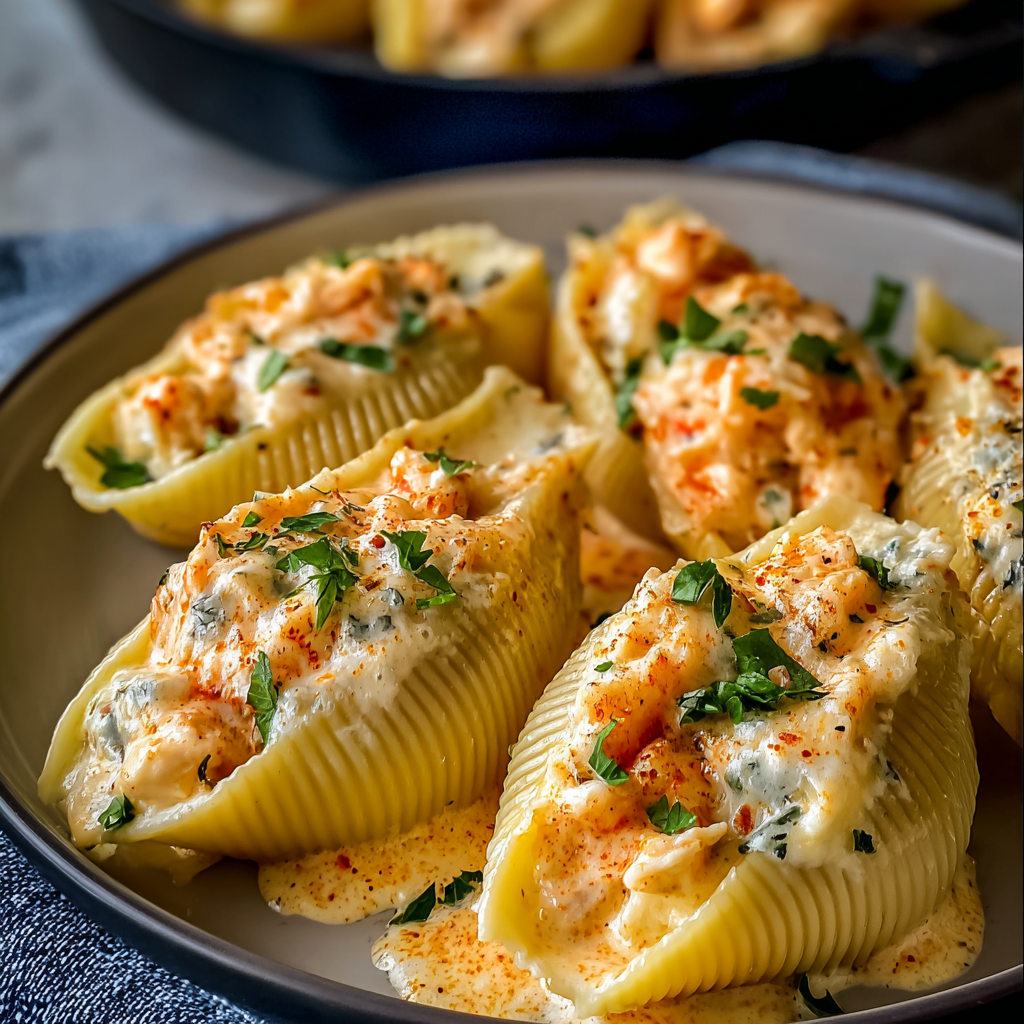
The Gastronomic Architecture: The “Pasta-Seafood” Integration
In the hierarchy of baked pastas, Seafood Stuffed Shells represent a sophisticated study in Protein-Moisture Balancing and Starch-Dairy Emulsification. The technical challenge of seafood stuffing is the “Syneresis Effect”: shrimp and crab release significant water as their proteins contract under heat. If not properly bound with a stabilizer (like ricotta and egg), the filling will “weep,” turning the pasta into a soggy vessel.
The objective is to create a Thermostable Filling that remains creamy and cohesive, while the jumbo shells act as a “Starch Shield,” protecting the delicate seafood from the direct, drying heat of the oven.
Essential Mise en Place: Technical Specs
To achieve a restaurant-grade “velvet” mouthfeel and a golden, bubbling crust, the moisture content of the cheese and the par-cooking of the shells are the most critical factors.
The Foundation (The Vessel)
- Jumbo Pasta Shells (350g / 12 oz): Technical Requirement: Par-boil the shells for 2 minutes less than the package’s “al dente” instructions. They will finish hydrating by absorbing the seafood juices during the bake.
- Ricotta Cheese (425g / 15 oz): Expert Tip: Drain the ricotta in a fine-mesh sieve for 30 minutes. Removing excess whey prevents the filling from becoming watery.
The Seafood Matrix
- Cooked Shrimp & Lump Crab Meat (450g total): Chopped into 1cm pieces. This ensures every bite has a “Uniform Distribution” of protein.
- Old Bay Seasoning & Lemon Zest: To “up-regulate” the saline notes of the shellfish.
- Large Egg (1): Acts as the primary protein binder for the ricotta.
The “Alfredo” Covering
- Heavy Cream (500ml / 2 cups) & Parmesan: To provide the high-lipid “blanket” that prevents the shells from drying out.
The Masterclass: Step-by-Step Culinary Execution
Phase 1: The “Binding” Matrix
In a large bowl, fold together the drained ricotta, egg, Parmesan, lemon zest, herbs, and chopped seafood. Technical Requirement: Do not over-mix. You want distinct “pockets” of crab and shrimp rather than a homogenous paste.
Phase 2: The “Precision” Loading
Use a small spoon or a piping bag with a wide tip to fill each par-boiled shell. Expert Tip: Place a small dollop of the cream sauce in the bottom of the baking dish before adding the shells; this prevents the pasta from sticking to the glass and provides a “bottom-up” hydration source.
Phase 3: The “Thermal Blanket” Application
Pour the heavy cream sauce (Alfredo) over the shells, ensuring the edges of the pasta are well-coated. Sprinkle with Mozzarella or Gruyère. The cheese acts as a Sacrificial Layer, browning into a Maillard crust while protecting the delicate seafood proteins underneath.
Phase 4: The “Steam-Set” Bake
Cover with foil and bake at 190°C (375°F) for 20 minutes. Remove the foil for the final 10–15 minutes to achieve a golden, bubbling surface. Technical Requirement: Let the dish rest for 5 minutes after removing it from the oven; this allows the ricotta to “set,” preventing the filling from sliding out when served.
Common Technical Pitfalls to Avoid
- The “Rubbery” Shrimp: Caused by using pre-cooked shrimp that are then baked too long. If using pre-cooked seafood, ensure the oven is hot enough to brown the cheese quickly before the interior overcooks.
- Watery Bottom: Usually caused by using frozen seafood that wasn’t fully thawed and patted dry. Technical Requirement: Obsessively dry your seafood with paper towels before mixing.
- Bland Profile: Seafood and pasta are neutral bases. Be aggressive with the lemon zest and fresh parsley to cut through the heavy lipids of the cream and cheese.
Frequently Asked Questions (Q&A)
| Question | Expert Answer |
|---|---|
| Can I use imitation crab? | Yes. It holds its shape well during baking, though it is sweeter than real lump crab. Balance the sweetness with extra lemon juice. |
| Can I make this ahead? | You can stuff the shells 24 hours in advance. Do not add the sauce until you are ready to bake to prevent the pasta from getting mushy. |
| What’s the best side? | A high-acid Garlic-Lemon Sautéed Spinach or a Crisp Caesar Salad to contrast the richness of the shells. |
Leave a Reply