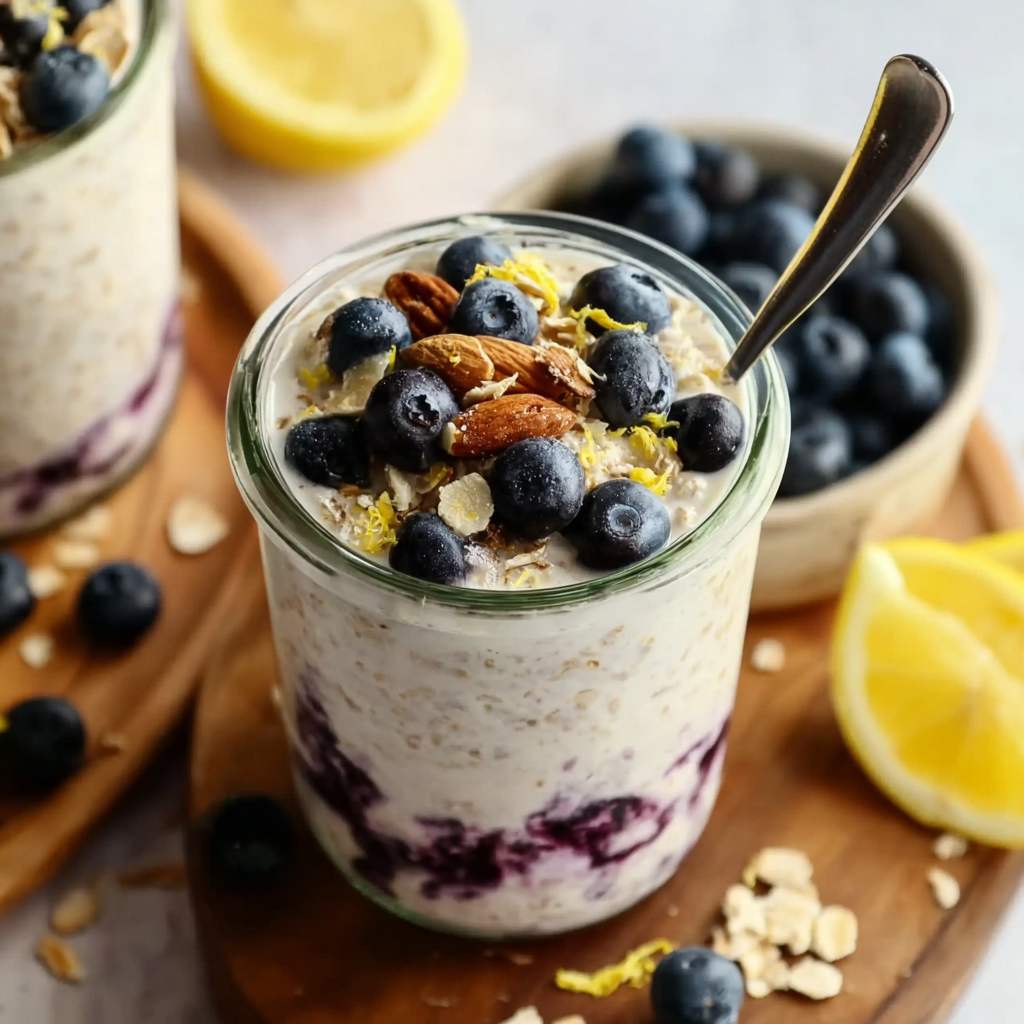
The Gastronomic Architecture of “Cold-Steeping”
In the landscape of modern performance nutrition, High-Protein Lemon Blueberry Overnight Oats represent a masterclass in enzymatic softening and moisture-saturation. Unlike cooked oatmeal, which relies on thermal energy to break down starches, overnight oats utilize a long-duration “cold-steep.” This process preserves the structural integrity of the oat fiber while allowing for a 25% higher protein density through the integration of undenatured Greek yogurt and whey.
The technical challenge of this specific profile is pH management. The high acidity of the fresh lemon juice can cause certain dairy bases to over-coagulate or “tighten” if not balanced with enough liquid. By utilizing a specific ratio of oats to moisture, you ensure a creamy, pudding-like consistency that carries the bright, floral notes of the blueberries with professional clarity.
The Essential Mise en Place: Ingredients and Technical Specs
To achieve a restaurant-grade “silkiness,” the type of oat and the quality of the protein binder are the most critical technical decisions.
The Foundation (The Starch & Protein)
- Old-Fashioned Rolled Oats (45g / 1/2 cup): Technical Requirement: Do not use “Quick” or “Instant” oats. They lack the structural “chew” required for a 12-hour steep and will turn into a homogenous paste.
- Greek Yogurt (120g / 1/2 cup): Provides the creamy base and a natural probiotic boost.
- Whey or Plant-Based Protein Powder (1 scoop): Vanilla flavor is preferred to complement the lemon and berry profile.
- Unsweetened Almond Milk (120ml / 1/2 cup): The primary hydrating agent.
The “Bright” Aromatics
- Fresh Lemon Zest & Juice (1/2 lemon): The zest provides the essential oils (limonene), while the juice provides the necessary acidity.
- Wild Blueberries (50g / 1/3 cup): Frozen “wild” berries are often superior to fresh for overnight oats as they are smaller and bleed their juice more effectively, naturally sweetening the base.
- Chia Seeds (1 tbsp): Acts as a secondary hydrocolloid, absorbing 10x its weight in liquid to create a thick, gel-like texture.
The Masterclass: Step-by-Step Culinary Execution
Phase 1: The “Dry-Wet” Integration
In a glass mason jar, combine the oats, protein powder, and chia seeds. Whisk briefly to ensure the protein powder is distributed; this prevents “clumping” once the liquid is added.
Phase 2: The Emulsification
Add the Greek yogurt, almond milk, lemon juice, and lemon zest. Stir vigorously for 30 seconds. You are looking for a uniform, slightly “soupy” mixture. The oats will absorb nearly all the liquid over the next few hours.
Phase 3: The “Berry Fold”
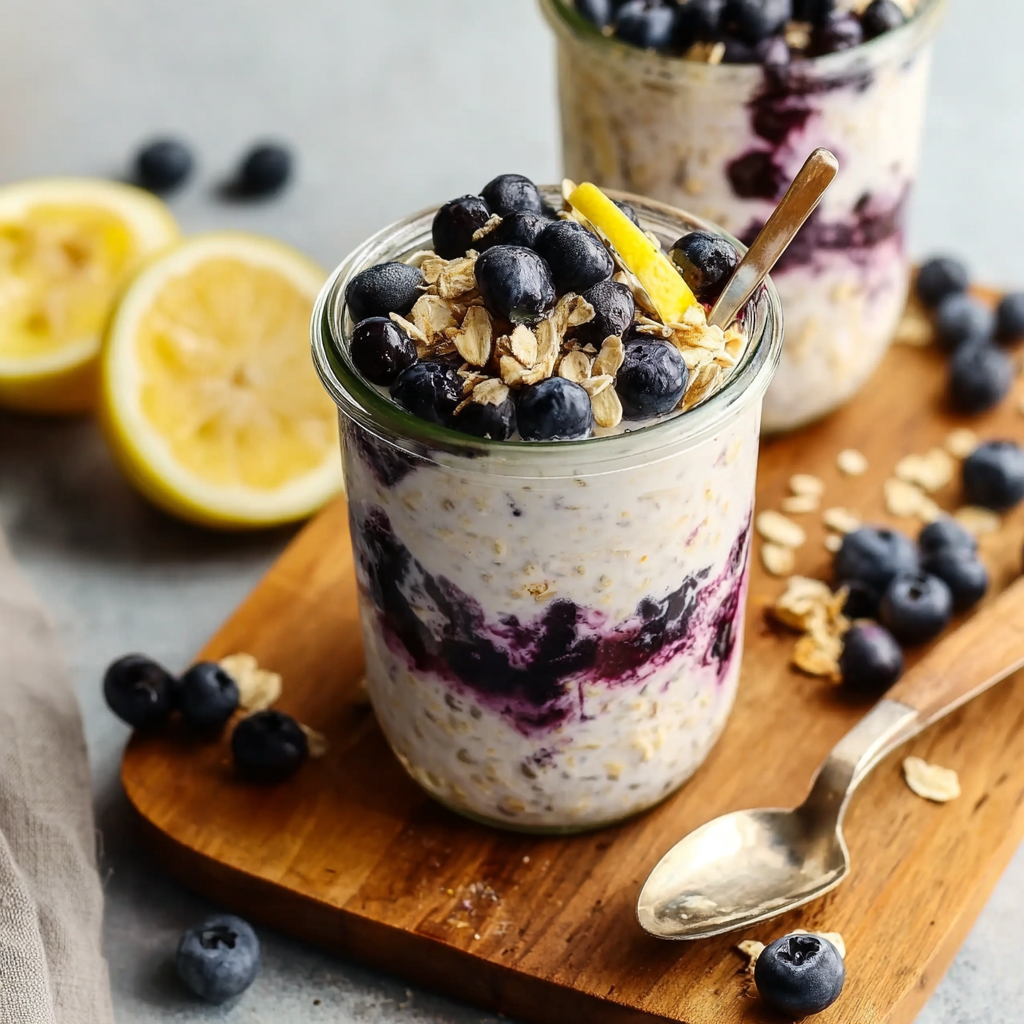
Gently fold in the blueberries. If using frozen berries, do not over-mix, or the entire jar will turn a dark purple. A gentle fold creates beautiful “marbling” as the berries thaw.
Phase 4: The 12-Hour Maturation
Seal the jar and refrigerate for at least 6 hours, though 12 hours is the professional standard for optimal texture. This “resting” period allows the phytates in the oats to break down, making the nutrients more bioavailable and the texture infinitely smoother.
Common Technical Pitfalls to Avoid
- The “Cement” Texture: This happens if you use too much protein powder or chia seeds without increasing the milk. If the oats are too thick in the morning, simply stir in an extra splash of almond milk.
- The “Bitter” Note: If you include the white “pith” of the lemon when zesting, the oats will turn bitter. Only use the yellow surface of the peel.
- Soggy Berries: If using very soft, fresh berries, add them in the morning rather than overnight to maintain their “pop.”
Conclusion: A High-Performance Aesthetic
High-Protein Lemon Blueberry Overnight Oats are a testament to the fact that meal preparation can be both scientifically optimized and gastronomically elegant. By mastering the oat-to-liquid ratio and respecting the cold-steeping process, you produce a breakfast that offers 30g+ of protein and sustained energy through slow-release carbohydrates. It is a vibrant, temperature-controlled masterpiece that turns a morning routine into a gourmet experience.
Frequently Asked Questions (Q&A)
Q: Can I use Steel-Cut oats?
A: Technically yes, but they will remain very “crunchy” even after 12 hours. For steel-cut, you must increase the soaking time to 24–48 hours or “par-boil” them for 5 minutes before the overnight steep.
Q: How long do these stay fresh?
A: They are best consumed within 2–3 days. Beyond that, the oats can become overly soft, and the lemon acidity may begin to change the texture of the yogurt.
Q: Is there a vegan version?
A: Absolutely. Substitute the Greek yogurt with a high-protein soy or coconut yogurt and use a plant-based protein powder (pea/brown rice blend). The structural physics remain identical.
Q: Why do I need the chia seeds?
A: Chia seeds provide the “loft” and thickness. Without them, the oats often settle at the bottom of the jar, leaving a layer of liquid on top. They act as the stabilizer that makes the dish “spoonable” rather than “drinkable.”
Leave a Reply