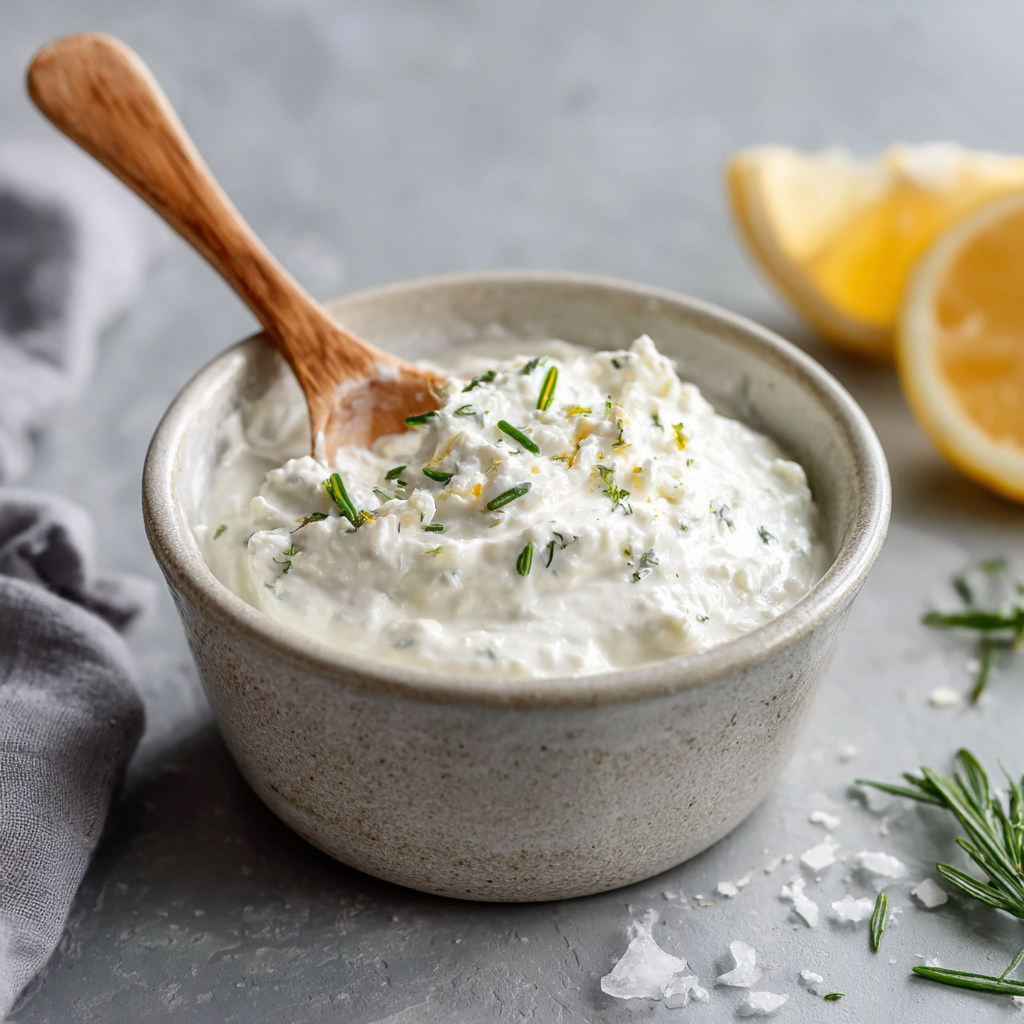
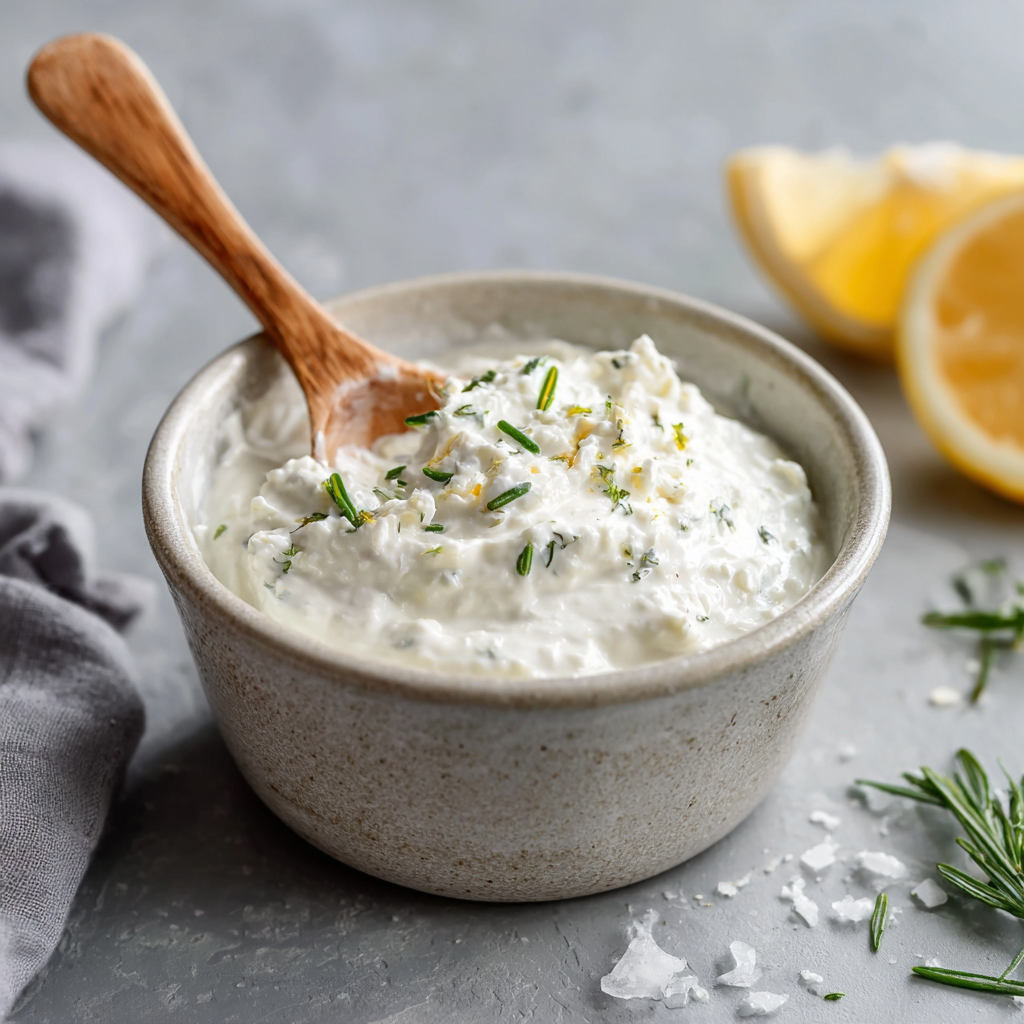
The Gastronomic Architecture of the “Lactic-Saline” Emulsion
In the hierarchy of Mediterranean condiments, the Whipped Feta and Yogurt Sauce (often a derivative of the Greek Tirokafteri) represents a sophisticated study in Protein Aeration and Fat Stabilization. The technical challenge lies in the “Brine-to-Fat Ratio”—Feta is a high-sodium, crumbly cheese that lacks the natural elasticity of cream cheese. By incorporating Greek yogurt, you introduce Lactic Acid and Whey Proteins, which act as a biological buffer, smoothing out the granular texture of the feta into a silk-like suspension.
Data from dairy science indicates that the “irresistibility” factor is the Acid-Salt Equilibrium: the sharpness of the yogurt cuts through the heavy sheep/goat milk fats of the feta, while high-speed blending introduces air micro-bubbles that create a light, mousse-like mouthfeel.
The Essential Mise en Place: Technical Specs
To achieve a restaurant-grade “velvet” finish, the temperature of the dairy and the “crumb-size” of the feta are the most critical factors.
The Foundation (The Dairy)
- High-Quality Feta (200g / 7 oz): Technical Requirement: Use feta sold in brine (preferably sheep or a sheep/goat blend). Avoid pre-crumbled varieties, which are often coated in anti-caking starches (cellulose) that prevent a smooth emulsion.
- Full-Fat Greek Yogurt (120g / 1/2 cup): The 5% or 10% fat content is essential for stability. Low-fat versions will “weep” liquid over time.
- Extra Virgin Olive Oil (30ml / 2 tbsp): Acts as the secondary lipid stabilizer.
The Aromatic Profile
- Fresh Lemon Juice (1 tbsp): To brighten the heavy dairy notes.
- Garlic (1 small clove): Grated into a paste to avoid “sulfurous chunks.”
- Dried Oregano or Fresh Dill: To provide a floral, herbal “lift.”
The Masterclass: Step-by-Step Culinary Execution
Phase 1: The “Softening” Pulse
Place the crumbled feta and the garlic paste in a food processor or high-speed blender. Pulse alone for 30 seconds. This mechanical breakdown of the curds before adding liquid is the secret to avoiding a “gritty” sauce.
Phase 2: The Emulsification Phase
Add the Greek yogurt and lemon juice. Blend on high speed for 1–2 minutes. While the motor is running, slowly drizzle in the olive oil. This “High-Shear” technique forces the oil into microscopic droplets, creating a permanent, fluffy bond between the cheese and yogurt.
Phase 3: The “Aeration” Finish
Continue blending until the mixture looks like whipped cream or thick frosting. Expert Tip: If the sauce is too thick, add 1 tsp of the feta brine at a time. The minerals in the brine help stabilize the emulsion better than plain water.
Phase 4: The Cold-Setting
Transfer the sauce to a bowl and refrigerate for 30 minutes. The fats will slightly solidify, giving the sauce a “set” structure that is perfect for dipping or spreading.
Common Technical Pitfalls to Avoid
- The “Grainy” Texture: Usually caused by using dry, vacuum-packed feta or not blending long enough. If it’s grainy, add a teaspoon of warm water and blend again at maximum speed.
- The “Garlic Bomb”: Raw garlic intensifies as the sauce sits. Use half a clove first, or “mellow” the garlic by soaking the minced bits in the lemon juice for 5 minutes before blending.
- Separation (Syneresis): If liquid pools on top after a day, simply whisk it back in. This is natural whey separation from the yogurt.
Frequently Asked Questions (Q&A)
| Question | Expert Answer |
| Can I make it spicy? | Yes. Blend in a roasted red pepper or a pinch of Aleppo pepper flakes for a “Tirokafteri” style. |
| What are the best pairings? | Exceptional with charred lamb chops, roasted carrots, or as a base for a “Mediterranean Grain Bowl.” |
| How long does it keep? | Store in an airtight container for up to 4 days. The flavor actually improves after 24 hours. |