Introduction
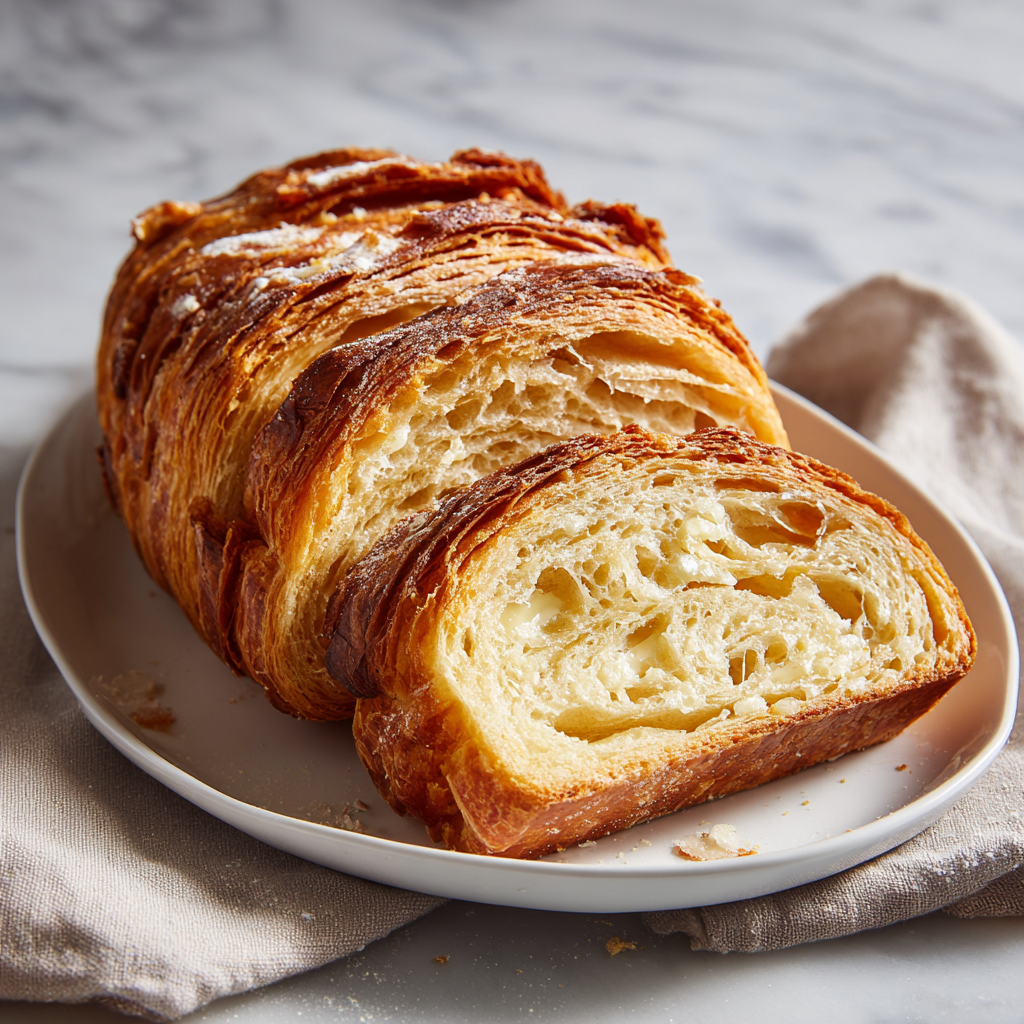
Did you know that the viral “Cube Croissant” trend has revitalized interest in laminated doughs by over 150% in home baking searches? It is easy to see why. The Flaky Croissant Bread Loaf takes the buttery, honeycomb structure of a traditional French croissant and reshapes it into a sliceable loaf.
Imagine a slice of toast that shatters when you bite into it, revealing thousands of paper-thin layers of butter and dough. This isn’t just bread; it is a pastry masquerading as a sandwich staple. Whether you bake it in a covered Pullman tin for perfectly square “Instagram-ready” slices or a standard loaf pan for a rustic domed top, the result is the same: the most luxurious vessel for jam, ham, or French toast you will ever encounter.
This guide will demystify the art of lamination (layering butter and dough) to help you achieve that coveted honeycomb interior without a commercial sheeter.
Ingredients List
Success in lamination relies entirely on the quality of ingredients, specifically the flour and the butter.
The Détrempe (The Dough)
- 4 cups (500g) Bread Flour: Crucial: You need a high protein content (12%+) to develop the strong gluten network required to hold the layers. All-purpose flour will tear.
- 1/3 cup Granulated Sugar: Adds sweetness and aids fermentation.
- 1 tbsp Instant Yeast: (or 10g).
- 1 ½ tsp Salt: Flavor and gluten control.
- 1 cup + 1 tbsp Whole Milk: Cold.
- 3 tbsp Unsalted Butter: Softened, mixed into the dough itself.
The Tourage (The Butter Block)
- 9 oz (250g) Unsalted Butter: High-fat European style butter (82% fat or higher) like Kerrygold or Plugrá is essential.
- Why? American butter has more water. Water creates steam, which is good, but too much water makes the layers stick together. European butter is more pliable.
The Egg Wash
- 1 Egg + 1 tbsp Milk: Whisked together.
Sensory Note: The dough should feel smooth and elastic, cool to the touch. The butter block must be pliable—able to bend without snapping—but not greasy or melting.
Timing
This is a two-day project. Do not rush lamination; the dough needs to rest to prevent shrinking.
- Day 1 (Prep): 45 minutes active + Overnight chill.
- Day 2 (Lamination & Bake): 1 hour active + 3 hours proofing + 45 minutes baking.
- Total Time: ~24 hours (mostly resting).
Data Insight: A classic croissant loaf typically has 27 layers (based on a 3-fold method repeated 3 times). This creates the optimal balance between dough thickness and butter lift.
Step-by-Step Instructions
Phase 1: The Dough (Day 1)
- Mix: In a stand mixer, combine flour, sugar, yeast, and salt. Add the cold milk and softened butter (3 tbsp). Knead on low speed for 10 minutes until the dough is smooth and passes the “windowpane test” (stretches thin without tearing).
- First Rise: Shape into a ball, cover, and let rise at room temperature for 30 minutes.
- Chill: Punch the dough down. Wrap it tightly in plastic wrap, shaping it into a rough square. Refrigerate overnight (or at least 4 hours). This relaxes the gluten.

Phase 2: The Butter Block (Day 2)
- Shape: Take your cold butter (9 oz) and place it between two sheets of parchment paper. Use a rolling pin to pound and roll it into a perfect 7×7 inch square.
- Temperature Match: Place the butter back in the fridge for 10 minutes. Critical: The dough and the butter must be the same consistency (pliable but cold).
Phase 3: Lock-In and Turns
- Lock-In: Roll the cold dough out to a 10×10 inch square (slightly larger than the butter). Place the butter block in the center diamond-style. Fold the corners of the dough over the butter to seal it completely.
- First Turn: Roll the dough into a long rectangle (about 8×20 inches). Fold it like a business letter (top third down, bottom third up). This is a “Single Turn.” Wrap and chill for 30 minutes.
- Second & Third Turns: Rotate the dough 90 degrees. Repeat the rolling and folding process two more times, chilling for 30 minutes between each turn.
Phase 4: Shaping
- Final Roll: Roll the laminated dough into a rectangle about 8×12 inches (or whatever fits the length of your loaf pan).
- The Braid: Cut the rectangle into 3 long strips. Braid them gently. (Braiding helps the structure rise evenly in the pan).
- Pan: Place the braided dough into a greased 9×5 loaf pan (or Pullman tin).
Phase 5: Proof and Bake
- Proof: Cover loosely. Let rise in a warm (but not hot!) spot (75°F/24°C) for 2.5 to 3 hours.
- The Wiggle Test: It should double in size and jiggle like gelatin when you shake the pan. If you see pools of butter, it is too hot!
- Bake: Preheat oven to 375°F (190°C). Brush the top with egg wash.
- Bake for 35-45 minutes.
- If the top browns too fast, tent with foil.
- Cool: Cool in the pan for 10 minutes, then remove to a wire rack. Do not cut while hot, or you will crush the layers.
Nutritional Information
This is a rich indulgence. Below is the estimated breakdown per slice (based on 10 slices).
| Nutrient | Amount per Serving | % Daily Value* |
| Calories | 320 kcal | 16% |
| Total Fat | 18g | 28% |
| Saturated Fat | 11g | 55% |
| Carbohydrates | 34g | 12% |
| Sugars | 5g | – |
| Protein | 6g | 12% |
Note: While high in saturated fat, homemade versions lack the preservatives and hydrogenated oils found in commercial pastries.
Variations for the Recipe
- Chocolate Croissant Loaf: Scatter chopped dark chocolate or chocolate batons between the strands of dough before braiding.
- Cinnamon Swirl: Brush the final rectangle with water and sprinkle generously with cinnamon sugar before rolling/braiding.
- The “Cube”: Use a Pullman Loaf Pan with the lid ON during baking. This forces the dough into a perfect square shape with flat sides.
- Savory: Add grated Gruyère cheese and thyme during the final fold.
Serving Suggestions
How to eat this masterpiece?
- Ultimate French Toast: Thick slices soaked in custard and fried. The layers soak up the liquid while staying crisp.
- Luxury Sandwich: A simple ham and cheese sandwich becomes gourmet when the bread is buttery and flaky.
- Toast & Jam: Toast lightly (watch it closely—it burns fast due to the butter) and top with apricot preserves.
Common Mistakes to Avoid
Lamination is technical. Watch out for these pitfalls.
- Butter Leakage (Pooling):
- The Issue: Proofing environment was too hot (>80°F).
- The Result: The butter melted out before the dough baked, frying the bread instead of lifting it.
- The Fix: Proof longer at a cooler temperature.
- Shattered Butter:
- The Issue: The butter was too cold when rolling.
- The Result: The butter breaks into shards inside the dough, creating uneven layers.
- The Fix: Let the butter block sit for 5 minutes before locking it in. It should bend, not snap.
- Gummy Center:
- The Issue: Underbaking.
- The Fix: Use a thermometer. The internal temperature should reach 190°F-200°F (88°C-93°C).
Storing Tips for the Recipe
- Room Temperature: Store in a paper bag (to keep the crust crisp) for up to 2 days. Plastic bags will soften the crust.
- Freezing (Recommended): Slice the loaf once cooled. Wrap slices individually and freeze for up to 1 month. To eat, pop a frozen slice directly into the toaster.
- Reviving: If the loaf goes stale, do not throw it away! It makes the world’s best Almond Croissant Toast (soak in syrup, top with almond cream, and bake).
Conclusion
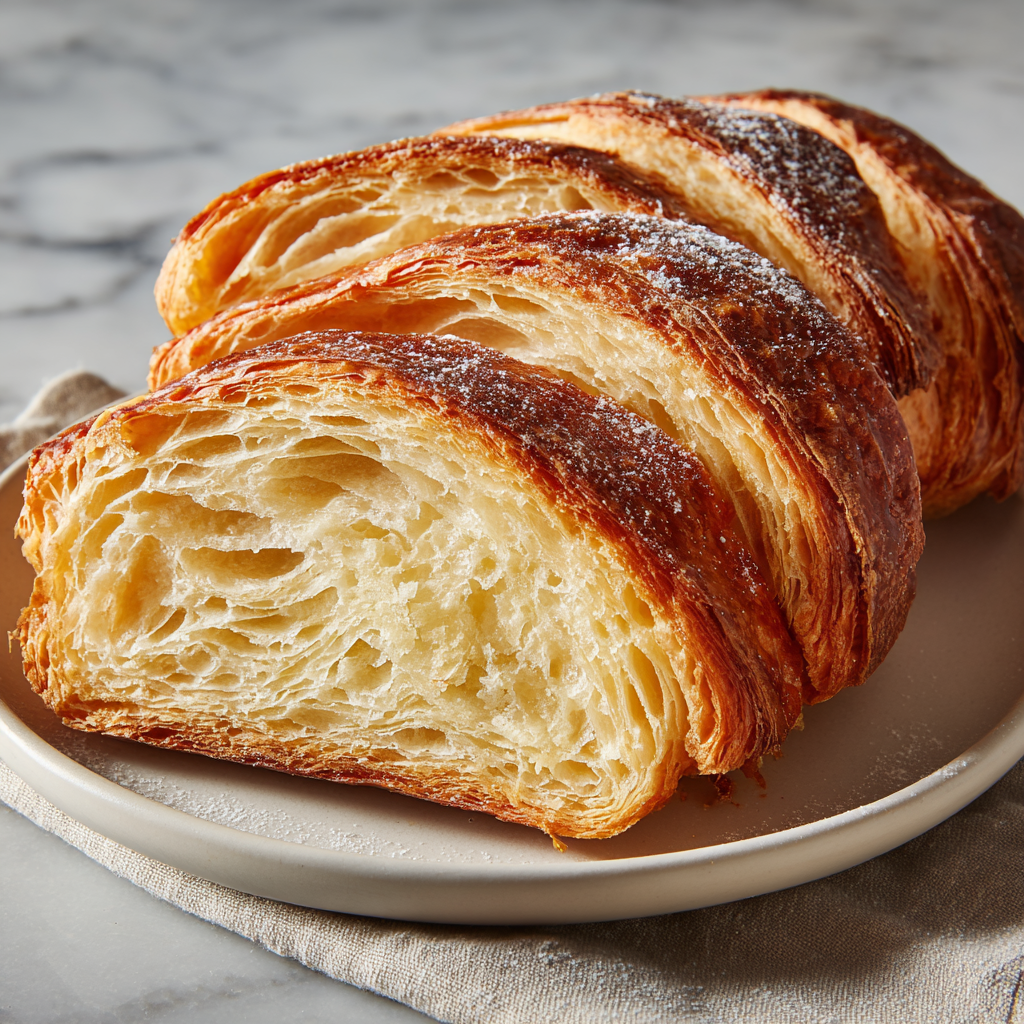
The Flaky Croissant Bread Loaf is the Mount Everest of home bread baking—challenging, but breathtakingly rewarding. There is a distinct magic in pulling that loaf out of the oven, hearing the crust crackle as it cools, and seeing the spiraled honeycomb structure in that first slice. It turns breakfast from a routine into an event.
Ready to laminate? Clear your fridge shelf! If you attempt this recipe, please leave a star rating below and tell us: did you go for the classic braid or the square cube? Don’t forget to subscribe to our newsletter for more advanced baking tutorials.
Leave a Reply