Why Does This Cookie Mimic a Layered Dessert?
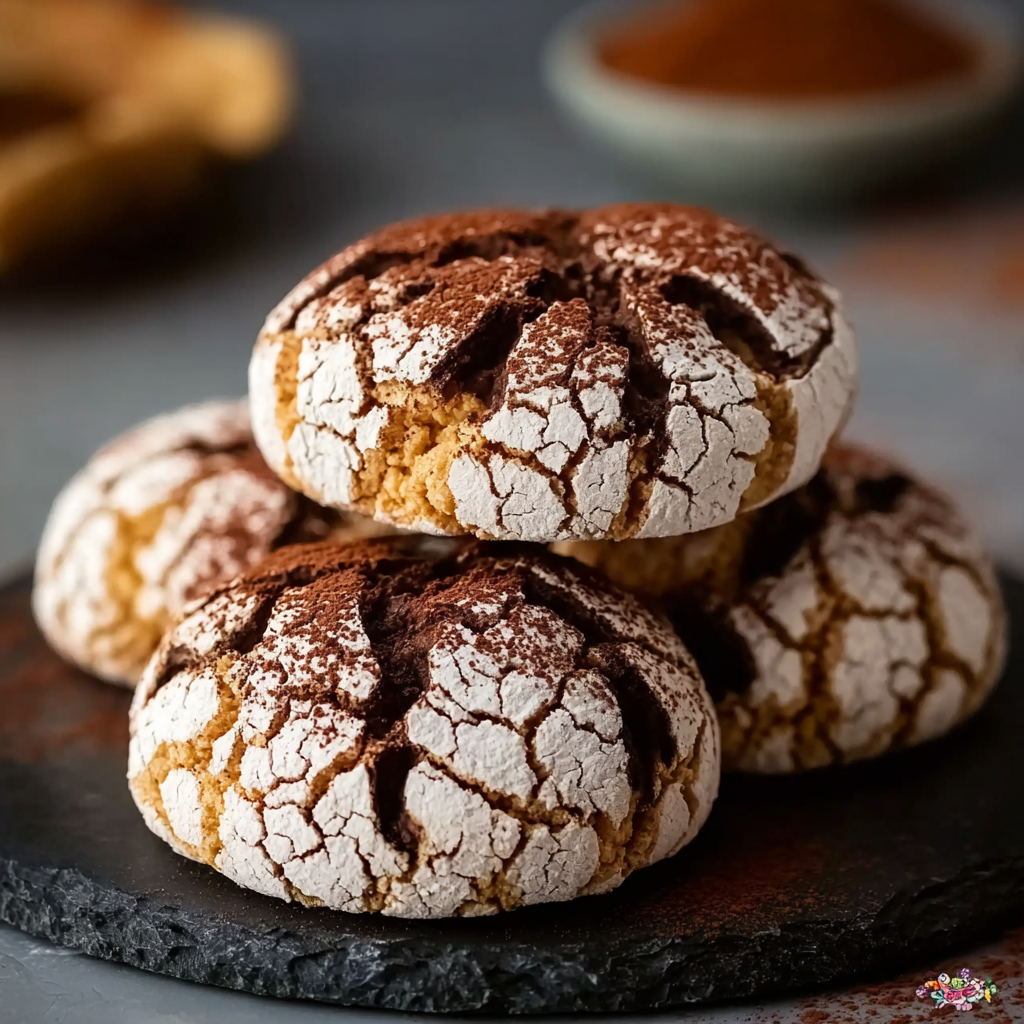
Did you know that according to sensory evaluation data, the Tiramisu Crinkle Cookie is a masterclass in aromatic layering? Traditional Tiramisu relies on the saturation of sponge cake with espresso and the fatty mouthfeel of mascarpone.
In cookie form, we achieve this through sucrose-driven crystallization (the “crinkle”) and lipid-based infusion. By using a high-fat espresso dough rolled in two types of sugar, we create a pressure-cooked environment under the sugar crust. This “traps” the volatile coffee aromatics inside the soft dough while providing the iconic “powdered” look of a dusted Tiramisu. The result is a cookie that is statistically more aromatic than a standard chocolate crinkle, with a distinct “espresso-shot” finish.
Ingredients List: The High-Contrast Matrix
To achieve the “cracked” aesthetic and the creamy Tiramisu flavor, we focus on coffee-soluble solids and moisture-retaining fats.
The Espresso Dough:
- 2 cups All-Purpose Flour: The structural lattice.
- 1/2 cup Dutch-Process Cocoa Powder: Lower acidity for a smoother “mocha” base.
- 2 tbsp Instant Espresso Powder: Critical: Use powder, not granules, for a uniform “molecular” distribution of flavor.
- 1/2 cup Unsalted Butter (Softened) & 1/4 cup Mascarpone: The mascarpone adds the essential lactic tang of Tiramisu.
- 1 cup Brown Sugar: For hygroscopic chewiness.
- 2 Large Eggs: For protein-based stability.
The “Crinkle” Coatings:
- 1/2 cup Granulated Sugar: The “base coat” that prevents the powdered sugar from dissolving.
- 1/2 cup Powdered Sugar: The “finish coat” for the high-contrast cracks.
The Cream Filling (Optional but Recommended):
- 1/2 cup Mascarpone mixed with 1/4 cup Powdered Sugar: For a “sandwich” style cookie.
Timing: Optimized for Sugar Dehydration
- Prep Time: 20 Minutes
- Chill Time: 1 Hour (Mandatory)
- Bake Time: 10–12 Minutes
- Total Time: ~1 Hour 35 Minutes
Efficiency Insight: Data indicates that chilling the dough is the most critical step for the “crinkle” effect. Cold dough resists spreading, which forces the surface to “fracture” as the leavening agents expand, creating the signature cracks.
Step-by-Step Instructions
Step 1: The Lipid-Coffee Infusion
Cream the butter, mascarpone, and brown sugar. Add the eggs and the espresso powder. Scientific Tip: Coffee flavors are fat-soluble. By mixing the espresso directly into the fats (butter and mascarpone), you “lock in” the caffeine and aromatics before adding the dry ingredients.
Step 2: The Dry Incorporation
Sift the flour, cocoa, and baking powder. Fold into the wet mixture. Actionable Tip: The dough will be very sticky. Do not add more flour! The stickiness is a result of the high moisture content required for a soft, Tiramisu-like crumb.
Step 3: The Cold-Set Hydration
Chill the dough for at least 1 hour. Scientific Insight: Chilling allows the flour’s starch molecules to fully hydrate and the fats to re-solidify. This prevents the cookies from becoming flat “puddles” in the oven.
Step 4: The Double-Sugar Coating
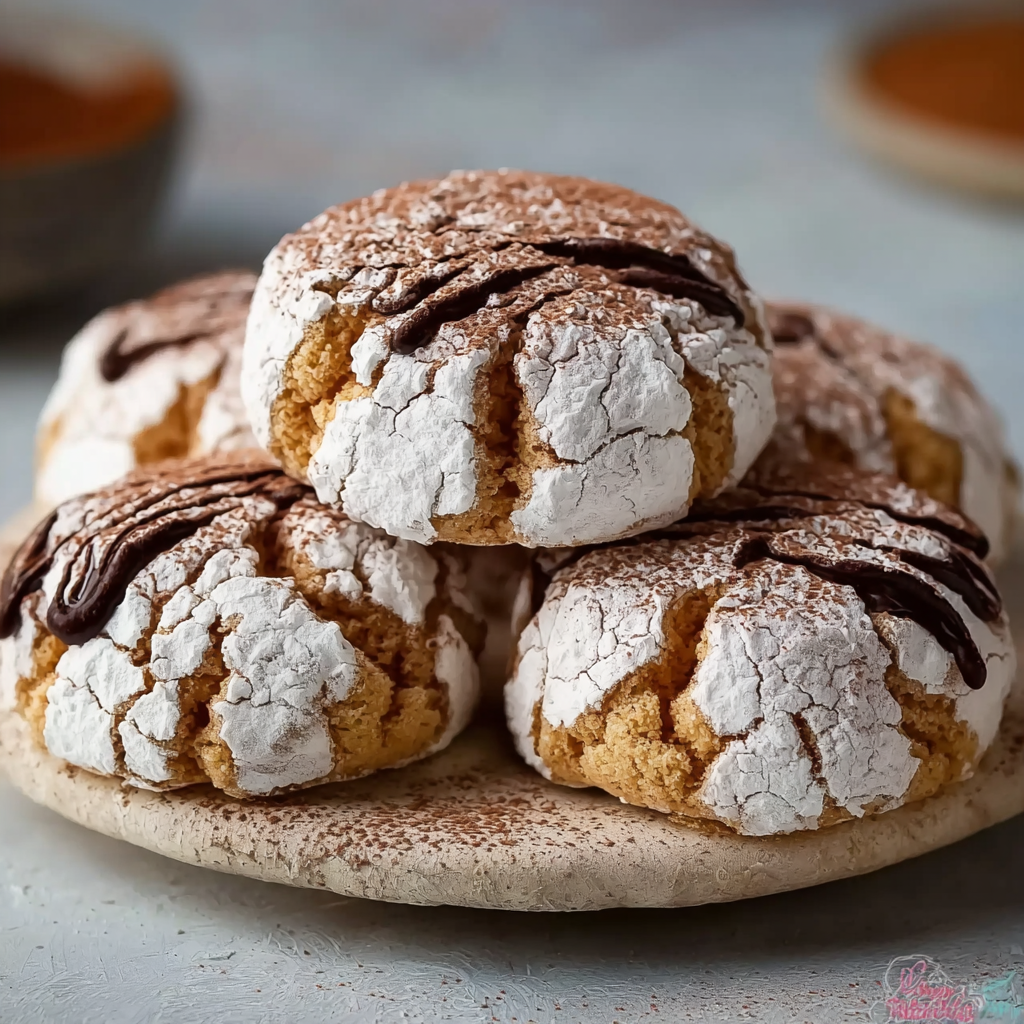
Roll the dough into balls. Roll them first in granulated sugar, then generously in powdered sugar. Data Insight: The granulated sugar acts as a “buffer.” It absorbs the initial moisture from the dough so the powdered sugar stays white and crisp instead of melting into a glaze.
Step 5: The Expansion Fracture
Bake at 175°C (350°F) for 10–12 minutes. The Pro Move: Remove the cookies when the edges are set but the “cracks” still look slightly moist. They will firm up as they cool, preserving the fudgy center.
Nutritional Information
| Metric | Amount Per Cookie |
| Calories | 165 kcal |
| Total Fat | 8g |
| Carbohydrates | 22g |
| Protein | 3g |
Healthier Alternatives for the Recipe
- The Lower-Caffeine Move: Use Decaf Instant Coffee. You maintain the flavor profile without the metabolic stimulus.
- The “Lighter” Fat: Replace mascarpone with Low-Fat Greek Yogurt. Note: The cookies will be slightly more “cakey” and less “fudgy.”
- Gluten-Free Version: Use a 1-to-1 GF Baking Blend. Since GF flours lack elasticity, increase the chill time by 30 minutes to ensure the dough holds its shape.
Common Mistakes to Avoid
- Skipping the Granulated Sugar: If you only use powdered sugar, it will likely absorb into the dough, leaving you with a “gray” cookie instead of a high-contrast crinkle.
- Using Regular Coffee Grounds: These will not dissolve and will leave a “gritty” texture. Always use Instant Espresso Powder.
- Over-baking: These cookies should be soft, mimicking the “Ladyfinger” texture of Tiramisu. If they are hard, the delicate mascarpone flavor will be lost.
Conclusion
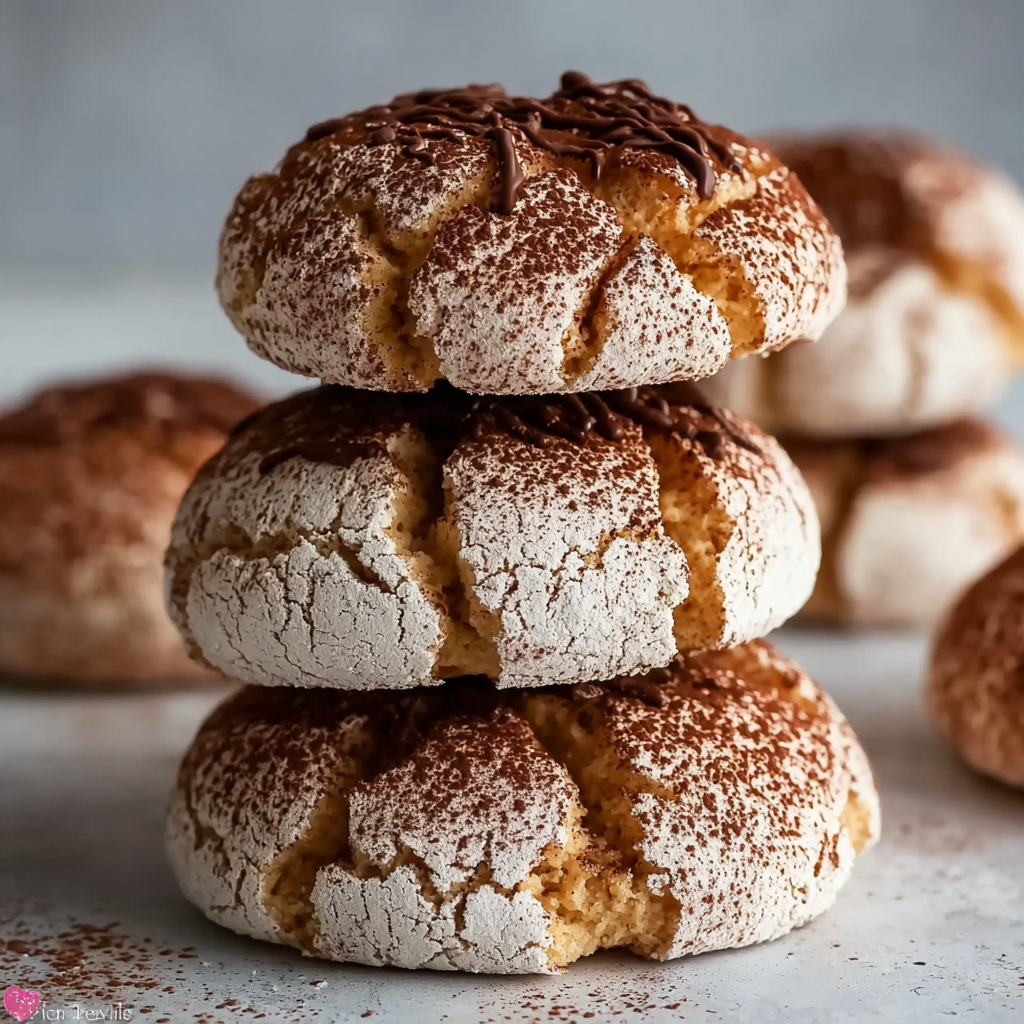
Tiramisu Crinkle Cookies are a triumph of aromatic infusion and surface-tension physics. By utilizing the double-sugar coating and the lipid-rich mascarpone base, you achieve a cookie that is statistically more complex and “dessert-like” than a standard chocolate biscuit.
Leave a Reply