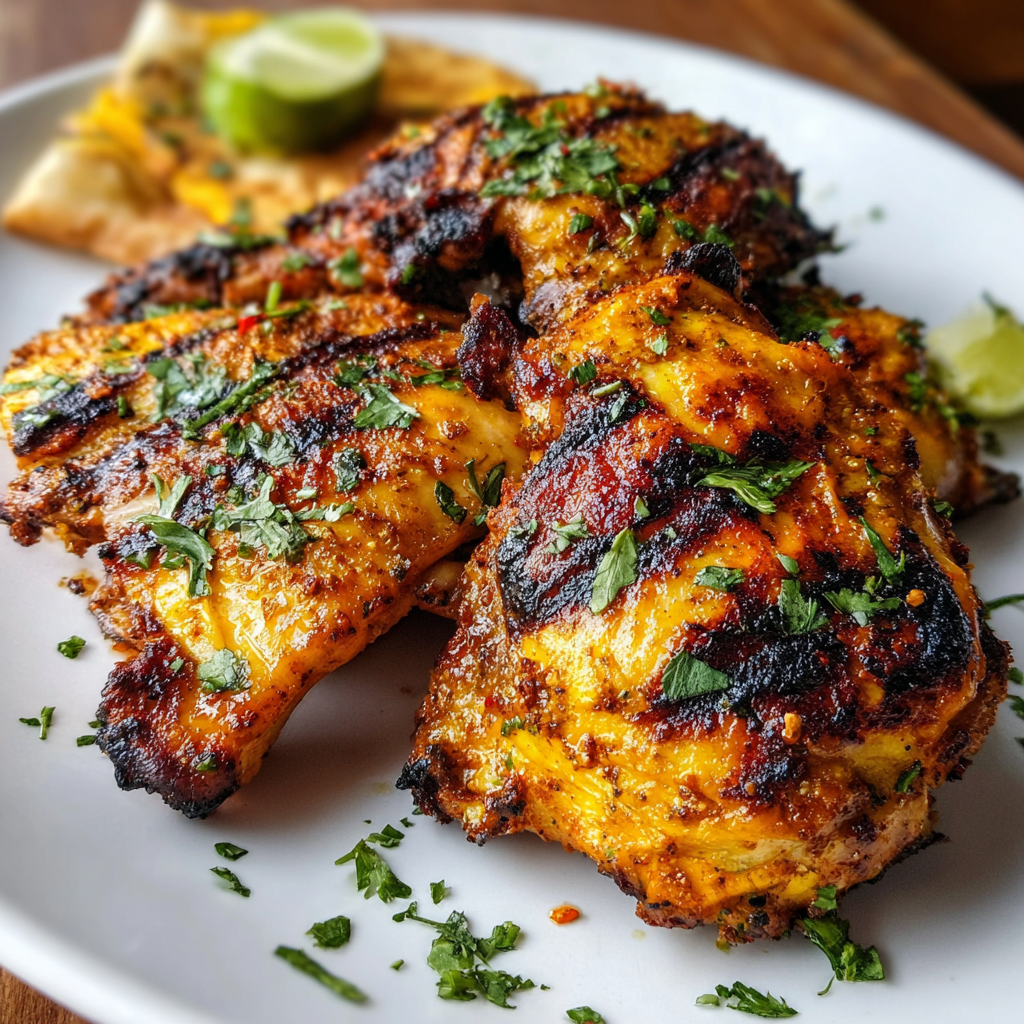
The Gastronomic Architecture of the “Achiote-Umami” Crust
In the hierarchy of Latin-Caribbean grilling, Sazón Grilled Chicken represents a sophisticated study in chromatic flavor enhancement and acid-driven tenderization. The technical challenge lies in the “Sazón” itself—a spice blend traditionally dominated by Coriander and Achiote (Annatto). The annatto provides a vibrant earthy-orange hue, while the MSG-rich component of commercial Sazón (or its natural yeast-extract counterparts) triggers a profound umami response on the palate.
Data from flavor science indicates that the “Irresistibility” factor is the Lipid-Pigment Bond: when the oils in the chicken skin are infused with the fat-soluble achiote, they create a protective, flavorful barrier that seals in moisture during high-heat grilling.
The Essential Mise en Place: Technical Specs
To achieve a restaurant-grade “snap” on the skin with a succulent interior, the marinade’s pH and the spice-to-fat ratio are the most critical factors.
The Foundation (The Protein)
- Chicken Thighs or Drumsticks (1 kg / 2.2 lbs): Technical Requirement: Bone-in and skin-on. The bone acts as a thermal conductor, ensuring even cooking, while the skin provides the canvas for the Sazón crust.
- The “Sazón” Blend: 1 tbsp Ground Coriander, 1 tbsp Achiote powder, 1 tsp Garlic powder, 1 tsp Onion powder, 1 tsp Cumin, and 1/2 tsp Salt.
The Acid-Lipid Matrix (The Marinade)
- Bitter Orange (Naranja Agria) or Lime Juice (60ml): The citric acid denatures the surface proteins, allowing the spices to penetrate deeper into the muscle fibers.
- Extra Virgin Olive Oil (30ml): To carry the fat-soluble annatto pigments.
- Fresh Cilantro & Oregano: Finely minced to provide floral “top notes.”
The Masterclass: Step-by-Step Culinary Execution
Phase 1: The “Rub and Infuse” (Dry to Wet)
Pat the chicken bone-dry. Rub the Sazón spice blend directly onto and under the skin. This “Direct Contact” technique ensures the color and flavor are locked into the meat, not just the surface. Pour the citrus juice and oil over the chicken and marinate for at least 2 to 4 hours.
Phase 2: The Thermal Tempering
Technical Requirement: Remove the chicken from the refrigerator 20 minutes before grilling. Bringing the meat closer to room temperature prevents “thermal shock,” ensuring the exterior doesn’t burn before the bone-in center reaches safe temperatures.
Phase 3: The Two-Zone Grilling
Set up your grill for “Two-Zone” cooking: one hot side (direct heat) and one cool side (indirect heat).
- Direct Heat: Sear the chicken skin-side down for 3–5 minutes until the Sazón creates a charred, orange-gold crust.
- Indirect Heat: Move the chicken to the cooler side, cover the grill, and finish cooking for 15–20 minutes until the internal temperature reaches 74°C (165°F).
Phase 4: The Resting Phase (Carry-over Cooking)
Transfer the chicken to a warm plate and tent loosely with foil. Let it rest for 5–8 minutes. This allows the muscle fibers to relax and reabsorb the juices, preventing them from spilling out when you take the first bite.
Common Technical Pitfalls to Avoid
- The “Grey” Chicken: Occurs if the chicken is too wet when hitting the grill. Always pat dry before applying the rub to ensure a sear rather than a steam.
- Bitter Crust: Sazón contains earthy spices that can turn bitter if scorched at too high a heat for too long. Use the Two-Zone method to prevent excessive carbonization.
- Under-seasoning: Sazón is bold; don’t be afraid of the color. If the chicken looks pale, you haven’t used enough achiote.
Frequently Asked Questions (Q&A)
| Question | Expert Answer |
| Can I make my own Sazón? | Yes. Mix salt, garlic powder, coriander, cumin, and annatto (achiote). It’s cleaner and lacks the preservatives of store-bought packets. |
| Best side dishes? | Arroz con Gandules (rice with pigeon peas) or fried Tostones (plantains) provide the perfect textural contrast. |
| Can I use chicken breast? | You can, but monitor the temperature closely—breast meat lacks the fat and connective tissue of thighs and dries out quickly under Sazón heat. |
Export to Sheets
Leave a Reply