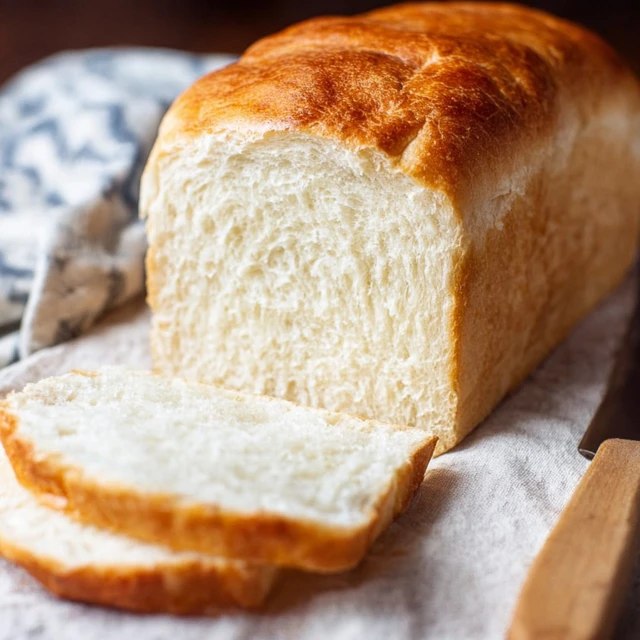
This is the bread I bake every Sunday morning when I want my house to smell like a bakery and want to ruin everyone in my family for store-bought bread forever. White sandwich bread is the soft, pillowy homemade loaf that puts every grocery-store bag of bread to shame: bread flour, milk, butter, sugar, salt, and yeast kneaded into a satiny dough, risen twice, shaped into a uniform loaf, and baked until golden with a tender feathery crumb.
Fun fact: the classic American “sandwich bread” shape (rectangular, uniform, perfect for slicing) was originally invented in 1928 by Otto Frederick Rohwedder, whose bread-slicing machine launched in Chillicothe, Missouri and revolutionized breakfast in America. Before that, every household sliced their own bread by hand, with thickness varying wildly by who held the knife. The phrase “the greatest thing since sliced bread” comes directly from that 1928 invention. The science behind a soft pillowy crumb is the addition of fat (butter) and sugar — they coat the gluten strands, preventing them from forming the chewy, dense crumb you find in artisan loaves.
Why this recipe works
Milk and butter create a tender crumb. The fats coat gluten strands, preventing toughness. Water-only bread would be too chewy for sandwiches.
Bread flour delivers structure. Higher protein content (12-14%) creates the gluten network that traps gas bubbles for that signature airy-yet-strong sandwich crumb.
Two rises develop flavor and texture. The first rise is for flavor (yeast fermentation produces complex flavors), the second for shape — skipping either gives you bread that’s dense or flat.
Ingredients
Makes 1 loaf (about 14 slices) in a 9×5-inch loaf pan.
For the dough
1 cup (240 ml) whole milk, warmed to 110°F (warm to the touch)
2 1/4 tsp (1 packet) active dry yeast
3 tbsp granulated sugar
3 1/2 cups (440 g) bread flour, plus more for dusting
1 1/2 tsp fine salt
4 tbsp (55 g) unsalted butter, softened
1 large egg, room temperature
For finishing
1 tbsp melted butter (for brushing the top)
Optional: sesame or poppy seeds for sprinkling
Smart substitutions
No bread flour: All-purpose flour works (slightly less chewy structure but still excellent)
Dairy-free: Sub unsweetened plant milk + vegan butter (no other changes needed)
Instant yeast: Use the same amount but skip the proofing step (mix directly with dry ingredients)
Honey version: Replace sugar with 2 tbsp honey for slight sweetness and beautiful color
In the bowl of a stand mixer (or a large bowl), combine warm milk, yeast, and 1 tbsp of the sugar. Let stand 5-10 minutes until foamy on top. If no foam forms, your yeast is dead — start over with fresh yeast.
Step 2: Mix the dough
Add remaining sugar, flour, salt, softened butter, and egg to the yeast mixture. Using the dough hook attachment, mix on low until a shaggy dough forms (2 minutes). Increase to medium-low and knead for 8-10 minutes until smooth, elastic, and slightly tacky but not sticky. (Hand-knead alternative: turn dough onto floured counter and knead 10-12 minutes.)
Step 3: First rise
Transfer dough to a lightly oiled bowl, turning to coat. Cover with plastic wrap or a damp towel; let rise in a warm spot 60-90 minutes until doubled in size. (Tip: turn oven on for 2 min, then off, and rise dough inside with the door cracked.)
Step 4: Shape the loaf
Grease a 9×5-inch loaf pan with butter. Punch down the risen dough; turn onto a lightly floured surface. Pat into a 9×12-inch rectangle. Starting from a short side, tightly roll into a log, pinching the seam to seal. Place seam-side down in the prepared pan.
Step 5: Second rise
Cover loosely with a damp towel; let rise 45-60 minutes in a warm spot until dough crowns about 1 inch above the rim of the pan. Meanwhile, preheat oven to 350°F (175°C) during the last 15 minutes of rising.
Step 6: Bake and cool
Brush the top with melted butter (sprinkle with seeds if using). Bake 30-35 minutes until deeply golden and the loaf sounds hollow when tapped on the bottom (internal temp 195°F). Brush hot top with another tbsp melted butter for shine and softness. Cool in pan 10 minutes, then turn out onto a wire rack. Cool COMPLETELY (1 hour) before slicing — slicing warm creates gummy crumb.
Nutrition information
Calories: 140 kcal per slice (1/14 loaf)
Protein: 4 g
Carbohydrates: 24 g
Fat: 3 g
Iron: 8% DV
B Vitamins: 10-12% DV
Pro tips for the best white bread
Check yeast is alive. Yeast past expiration won’t foam in warm milk. If no foam in 10 min, get fresh yeast — saves ruining the whole batch.
Don’t add too much flour during kneading. A tacky dough = tender bread; a dry dough = dense brick. Better to err slightly sticky than dry.
Cool completely before slicing. Slicing warm bread = gummy mushy crumb. The interior continues cooking and setting for 30+ min after coming out of the oven.
Use a serrated knife and saw gently. Pressing down crushes the airy crumb. Long sawing strokes give clean thin slices.
Frequently asked questions
How long does it keep?
Store cooled bread in an airtight bag at room temperature 3-4 days. Freezer 3 months — slice first then freeze so you can pull individual slices. Don’t refrigerate (stales bread faster).
Why is my bread dense?
Common causes: dead yeast (didn’t foam), too much flour (dough was dry), insufficient rises (didn’t double), or oven too hot (kills yeast before bread sets). Check each step next time.
Can I make this without a stand mixer?
Yes — hand-knead for 10-12 minutes until smooth and elastic. Use the “windowpane test” (stretch a piece of dough between fingers — if it stretches thin without tearing, gluten is developed).
Can I make two loaves at once?
Yes — double everything. Use two pans. Bake side by side on the middle rack with space between them so heat circulates evenly.
What can I make with this bread?
Sandwiches (PB&J, BLT, grilled cheese), toast with butter and jam, French toast, bread pudding, homemade breadcrumbs, croutons. Day-old bread is BETTER for French toast and croutons.
Why brush butter on top after baking?
This softens the crust as it cools, keeping the top tender (perfect for sandwich bread). Skip it if you prefer a crispier top crust.