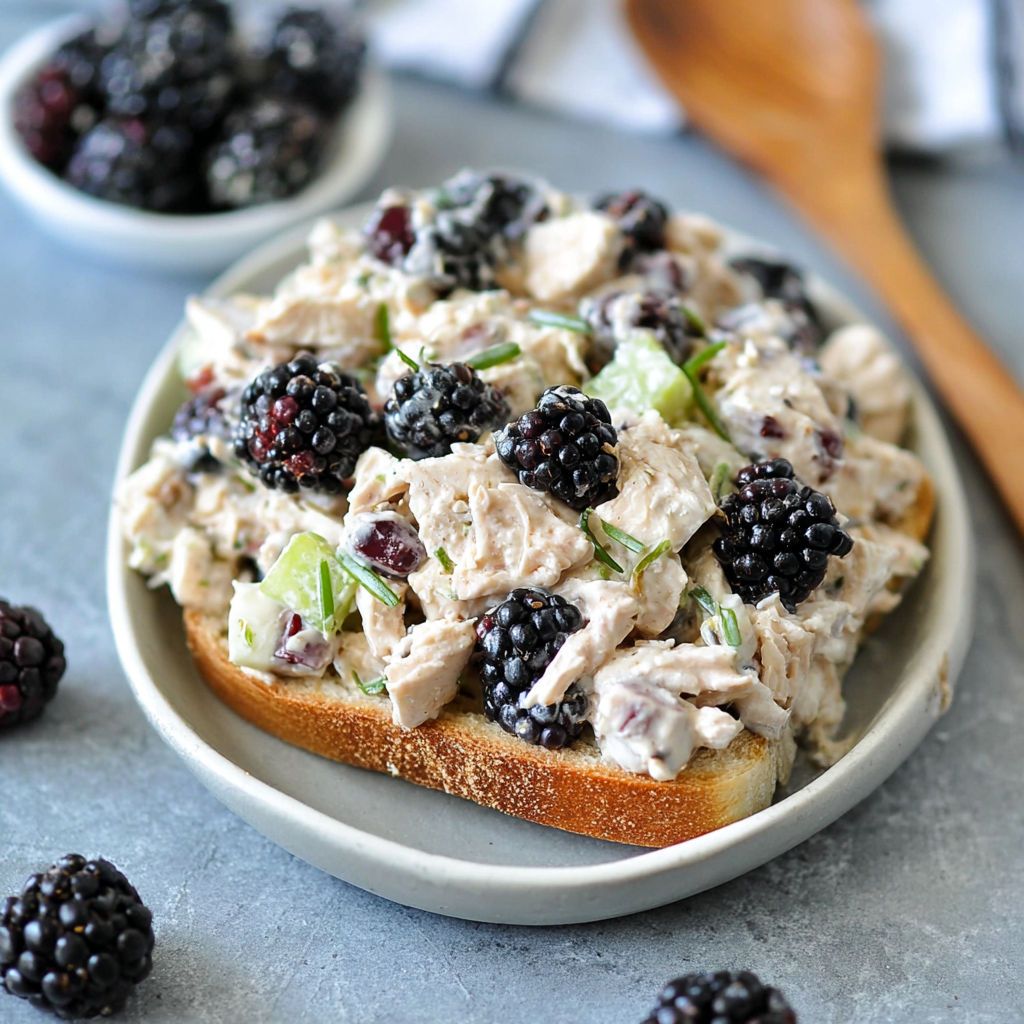
The Gastronomic Architecture of the “Protein-Emulsion” Matrix
In the landscape of high-performance nutrition, the Blackberry Cottage Cheese Chicken Salad represents a sophisticated study in structural moisture management and antioxidant integration. The technical challenge lies in the “Syneresis Control”—the tendency of cottage cheese to release liquid (whey) when mixed with acidic fruits or salt. By utilizing a “whipping” technique for the dairy base, you transform the curd-heavy cottage cheese into a stable, aerated mousse that coats the chicken without weeping.
Data from sensory science indicates that the “Irresistibility” factor here is the Acid-Fat Equilibrium: the tartness of the blackberries cuts through the rich, lactic fats of the cottage cheese, while the savory chicken provides the umami “anchor.”
The Essential Mise en Place: Technical Specs
To achieve a restaurant-grade “clinging” texture, the temperature of the chicken and the aeration of the cheese are the most critical factors.
The Foundation (The Protein & Fruit)
- Poached Chicken Breast (450g / 1 lb): Technical Requirement: Must be completely chilled. Warm chicken will cause the cottage cheese emulsion to break and turn liquid. Shred or cube into 1cm “uniformity.”
- Fresh Blackberries (125g / 1 cup): Halved vertically. This exposes the interior juices to the dressing without the fruit losing its structural integrity.
- Toasted Pecans or Walnuts (40g): For a high-frequency crunch and essential fatty acids.
The Emulsion (The “Power” Dressing)
- Small-Curd Cottage Cheese (240g / 1 cup): High protein, low carb.
- Lemon Zest & Fresh Thyme: To provide floral top notes that bridge the gap between the fruit and the poultry.
- Dijon Mustard (1 tsp): Acts as a secondary emulsifier and provides a sharp “cut.”
The Masterclass: Step-by-Step Culinary Execution
Phase 1: The “Velvet” Aeration
Place the cottage cheese in a high-speed blender or food processor. Pulse with the lemon juice and Dijon until perfectly smooth. This “Smoothing” technique eliminates the “lumpy” texture of traditional cottage cheese, resulting in a dressing that mimics a high-end Greek yogurt or mayonnaise but with superior macros.
Phase 2: The Aromatic Integration
Fold the fresh thyme, salt, and black pepper into the whipped cheese. Expert Tip: Add a pinch of stevia or erythritol if your blackberries are particularly tart; this balances the pH without adding glycemic load.
Phase 3: The “Low-Shear” Fold
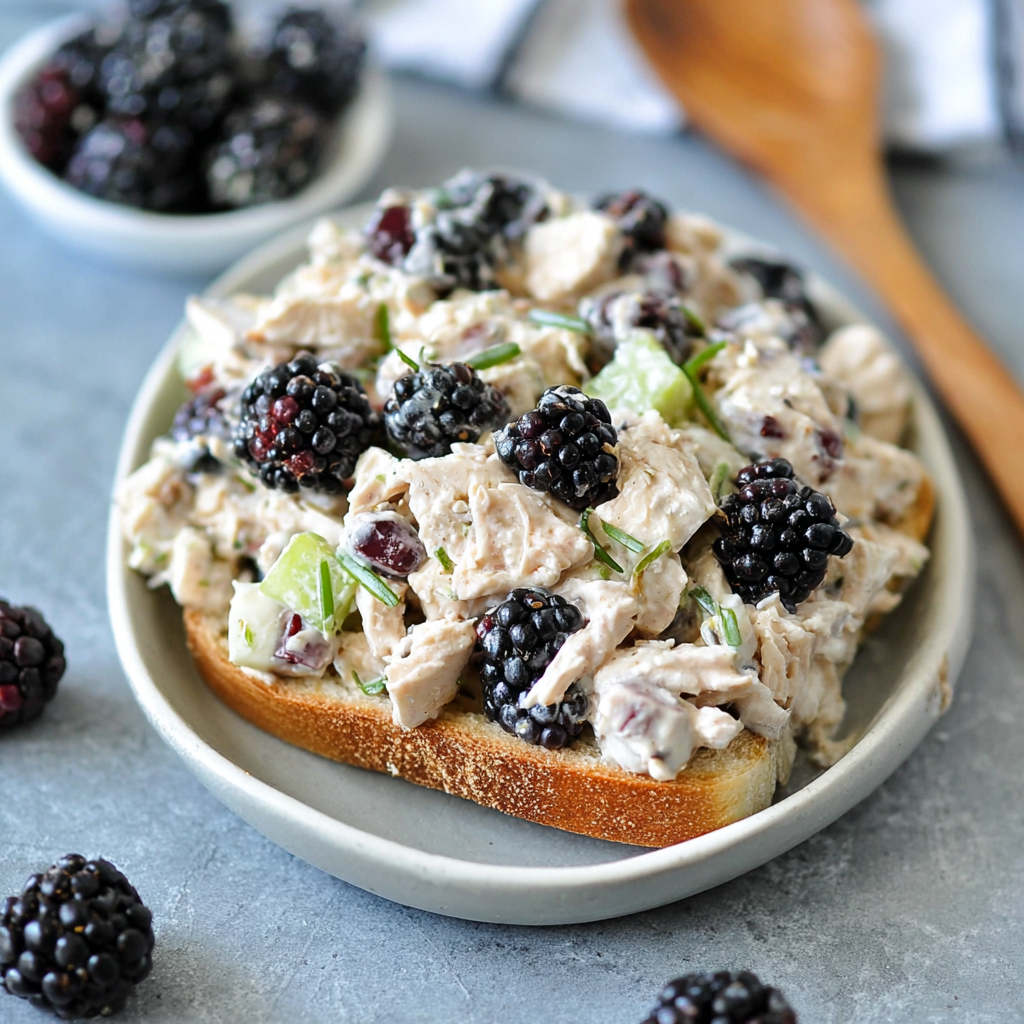
In a large chilled bowl, combine the cubed chicken and the aerated dressing. Use a silicone spatula to fold gently. Add the blackberries and nuts at the very end. Use “Low-Shear” movements to ensure the blackberries don’t bleed into the dressing, maintaining a clean, white-and-purple visual contrast.
Phase 4: The Cold-Setting
Refrigerate the salad for at least 30 minutes before serving. This allows the proteins in the chicken to “wick” some of the moisture from the dressing, tightening the bond between the ingredients.
Common Technical Pitfalls to Avoid
- The “Purple” Salad: Caused by over-mixing. If the blackberries break, the entire salad turns a muted grey-purple. Fold them in last with minimal strokes.
- Watery Base: Occurs if the chicken was still warm or if using “low-fat” cottage cheese, which has a higher water-to-protein ratio. Always opt for 4% (Full Fat) for the most stable emulsion.
- Lack of Texture: If the salad feels “mushy,” increase the volume of toasted nuts or add finely diced celery for a mechanical “snap.”
Frequently Asked Questions (Q&A)
| Question | Expert Answer |
| Can I use canned chicken? | Yes, but it must be drained and patted bone-dry to prevent the dressing from thinning. |
| How long does it keep? | Best consumed within 24 hours. Beyond that, the blackberries will begin to release juice, softening the texture. |
| What is the best way to serve? | Inside large butter lettuce leaves or hollowed-out bell peppers to maintain the low-carb profile. |
Leave a Reply