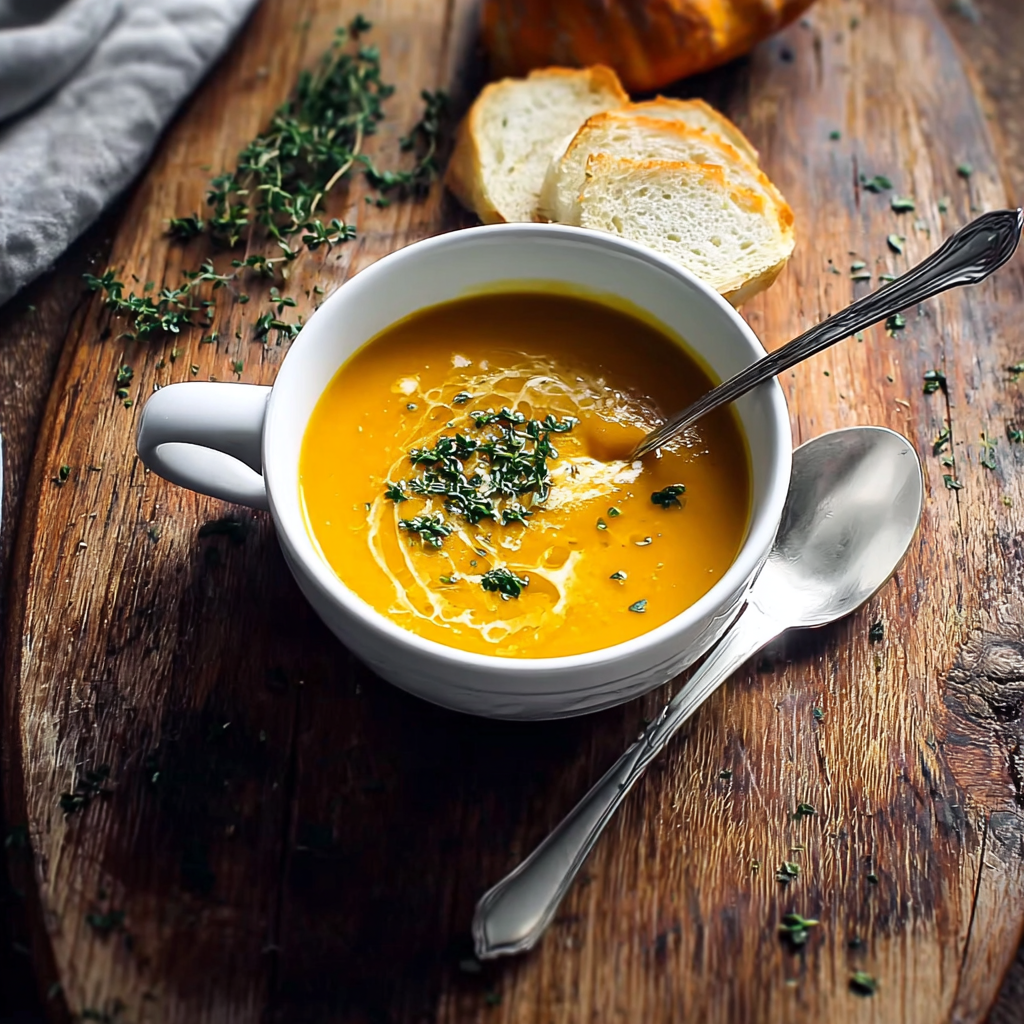
The Gastronomic Architecture: The “Pectin-Lipid” Emulsification
In the hierarchy of autumn cuisine, Warm Pumpkin Soup represents a sophisticated study in Polysaccharide Solubilization and Thermal Stability. The technical challenge lies in the “Fibrous-to-Creamy” transition. Pumpkin is high in insoluble fiber and starch; without a high-shear blending phase and a lipid stabilizer (like heavy cream or coconut milk), the soup can feel “gritty” or watery.
Data from food science indicates that the Maillard-Caramelization Loop is the most critical flavor driver. By roasting the pumpkin and aromatics before simmering, you transform complex starches into simple sugars and create melanoidins that provide the “toasty” depth characteristic of a professional-grade bisque.
Essential Mise en Place: Technical Specs
To achieve a restaurant-grade “silk” finish, the variety of squash and the temperature of the dairy are the most critical factors.
The Foundation (The Squash)
- Sugar Pumpkin or Red Kuri Squash (1.5 kg): Technical Requirement: Avoid “Jack-o’-lantern” pumpkins; they are bred for structural integrity, not flavor, and are stringy and watery. Sugar pumpkins have a denser, sweeter flesh.
- Vegetable or Chicken Stock (750ml – 1L): High-sodium stocks should be avoided to allow the natural earthiness of the pumpkin to dominate.
The Aromatic & Lipid Matrix
- Heavy Cream or Full-Fat Coconut Milk (120ml): Acts as the primary fat stabilizer.
- Shallots & Fresh Ginger: Ginger provides a “thermogenic” heat that complements the pumpkin’s sweetness.
- Sage & Nutmeg: The “Classic Autumn Duo” for olfactory depth.
The Masterclass: Step-by-Step Culinary Execution
Phase 1: The “Concentrated Roast”
Cut the pumpkin into wedges, rub with oil and salt, and roast at 200°C for 35–45 minutes. This “Dehydration Phase” removes excess water and concentrates the sugars. The charred edges provide a smoky umami that cannot be achieved by boiling alone.
Phase 2: The “Aromatic Sweat”
In a large pot, sweat the minced shallots, garlic, and ginger in butter or oil over medium heat. Technical Requirement: Do not brown the aromatics; you want them translucent to maintain the vibrant orange color of the final soup.
Phase 3: The Simmer & Infusion
Add the roasted pumpkin flesh (scooped from the skin) and the stock. Add a sprig of sage and a pinch of nutmeg. Simmer for 15 minutes to allow the aromatic oils to infuse into the pumpkin fibers.
Phase 4: The High-Shear Emulsion
Remove the sage sprig. Use a high-speed blender or immersion blender to puree until perfectly homogenous. While blending, slowly stream in the cream. This “Shear-Force” technique forces the fat globules into the pumpkin matrix, creating a permanent, velvety suspension.
Common Technical Pitfalls to Avoid
- The “Watery” Soup: Caused by adding too much stock at once. Always start with less liquid; you can thin the soup, but thickening it requires starches that can mute the flavor.
- The “Bitter” Aftertaste: Over-roasting the garlic can cause bitterness. Add garlic only in the last 15 minutes of roasting or sauté it separately.
- Broken Emulsion: If the soup is boiled after adding the cream, the dairy may “break” or curdle. Always add dairy at the very end over low heat.
Frequently Asked Questions (Q&A)
| Question | Expert Answer |
|---|---|
| Can I use canned puree? | Yes, but ensure it is “100% Pure Pumpkin” and not “Pumpkin Pie Filling” (which contains sugar and spices). You will lose the roasted depth, however. |
| How do I make it vegan? | Substitute butter with coconut oil and heavy cream with full-fat coconut milk or cashew cream. |
| What is the best topping? | Toasted pumpkin seeds (pepitas) and a drizzle of brown butter or pumpkin seed oil for textural contrast. |
Leave a Reply